
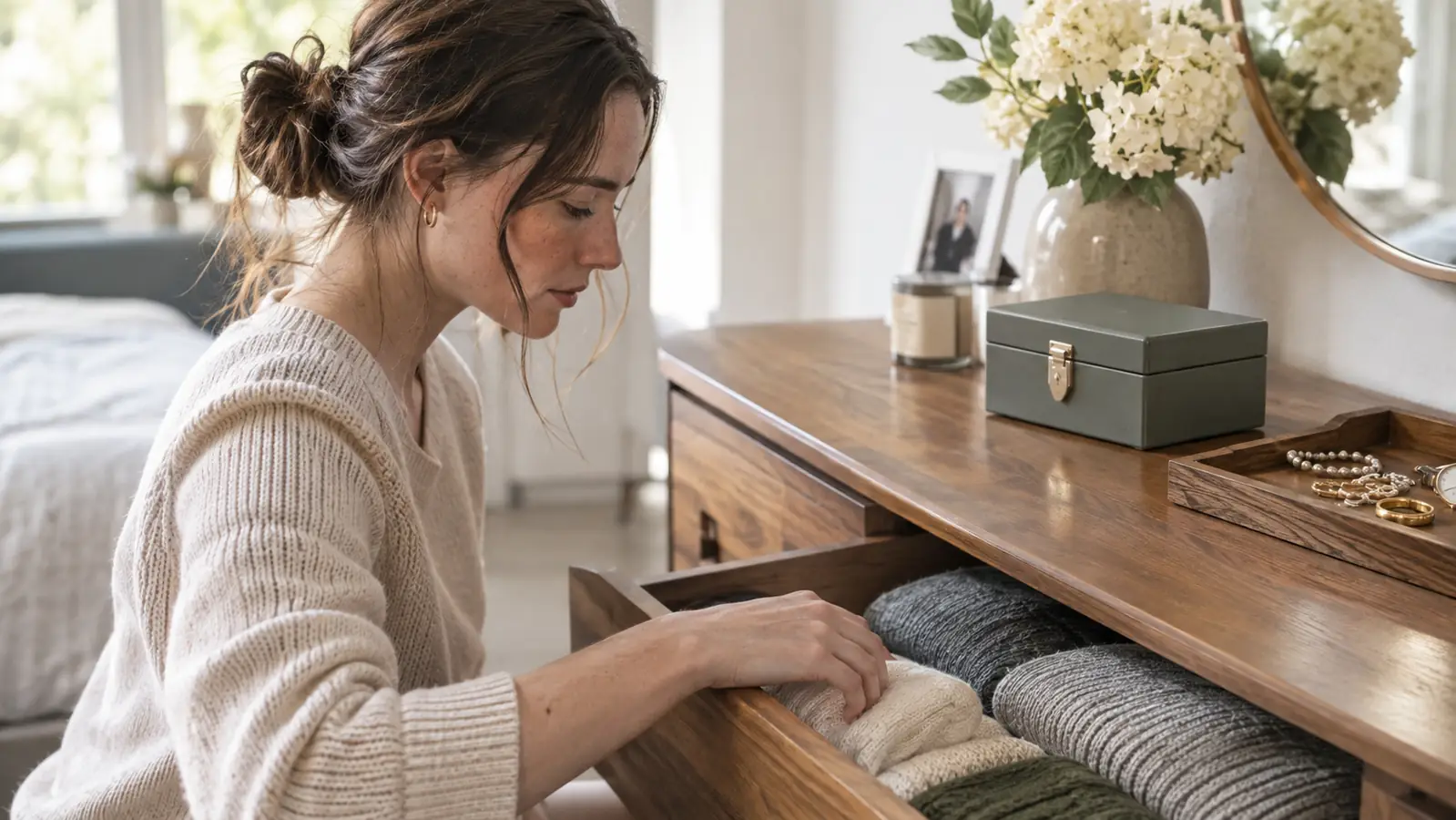
After thirty years of house calls, I can tell you where the jewelry is in most homes. Top drawer of the bedroom dresser. A shoebox on the closet shelf. A jewelry box sitting on the same dresser it has sat on since the Reagan administration. Anyone who breaks in knows this too, because they have stood in a hundred bedrooms and they need about ninety seconds to pull every drawer and dump the contents into a pillowcase.
Carol's mother's rings sat in a drawer like that for years, with my father's watch next to them. Nothing happened, which is the trap. Nothing happens right up until it does. Here is what a small lock box genuinely solves, and what it does not. It will not stop a determined burglar who brought tools and has ten minutes. It removes the two things that make a quick burglary worth attempting: visibility and speed. A locked box on a cable, tucked where the hand search does not reach, turns a ninety second job into a five minute one, and most of them will not spend five minutes. The Master Lock Portable Safe is the one I keep in my own house for that job. What follows is how I set one up, in the order I would do it.
Make the drawer search take longer than they are willing to spend
The 5900D is a cable-anchored combination box: 0.08 cubic feet of capacity, a resettable four-digit code you set yourself, and no key to carry or lose. It is not a fire safe and it is not a bank vault. It is the thing that keeps an honest drawer search from paying off.
Amazon Check Today's Price on Amazon →Five Steps, In the Order I Would Do Them
Step 1: Take an honest inventory before you buy anything
Get a legal pad and empty the drawer onto the kitchen table. Sort into three piles: what you wear in a normal month, what you have not touched in two years, and what could not be replaced at any number. That third pile is usually smaller than people expect. Three or four pieces, maybe, plus a watch and a passport.
Write down what each item would cost to replace, and photograph every piece on the table with your phone. The photos are for the insurance conversation, not for the box. Then measure the pile with a ruler, because box capacity is a volume, and volume is the number people guess wrong every single time.
The reason to do this first is that a safe is a container, and a container is only as good as the decision about what goes in it. I have watched people buy a big box, fill it with costume jewelry and old tax returns, then leave the rings in the drawer because the box was full. Decide what the box is for before you buy the box.
Step 2: Match the box to the job, and be honest about the size
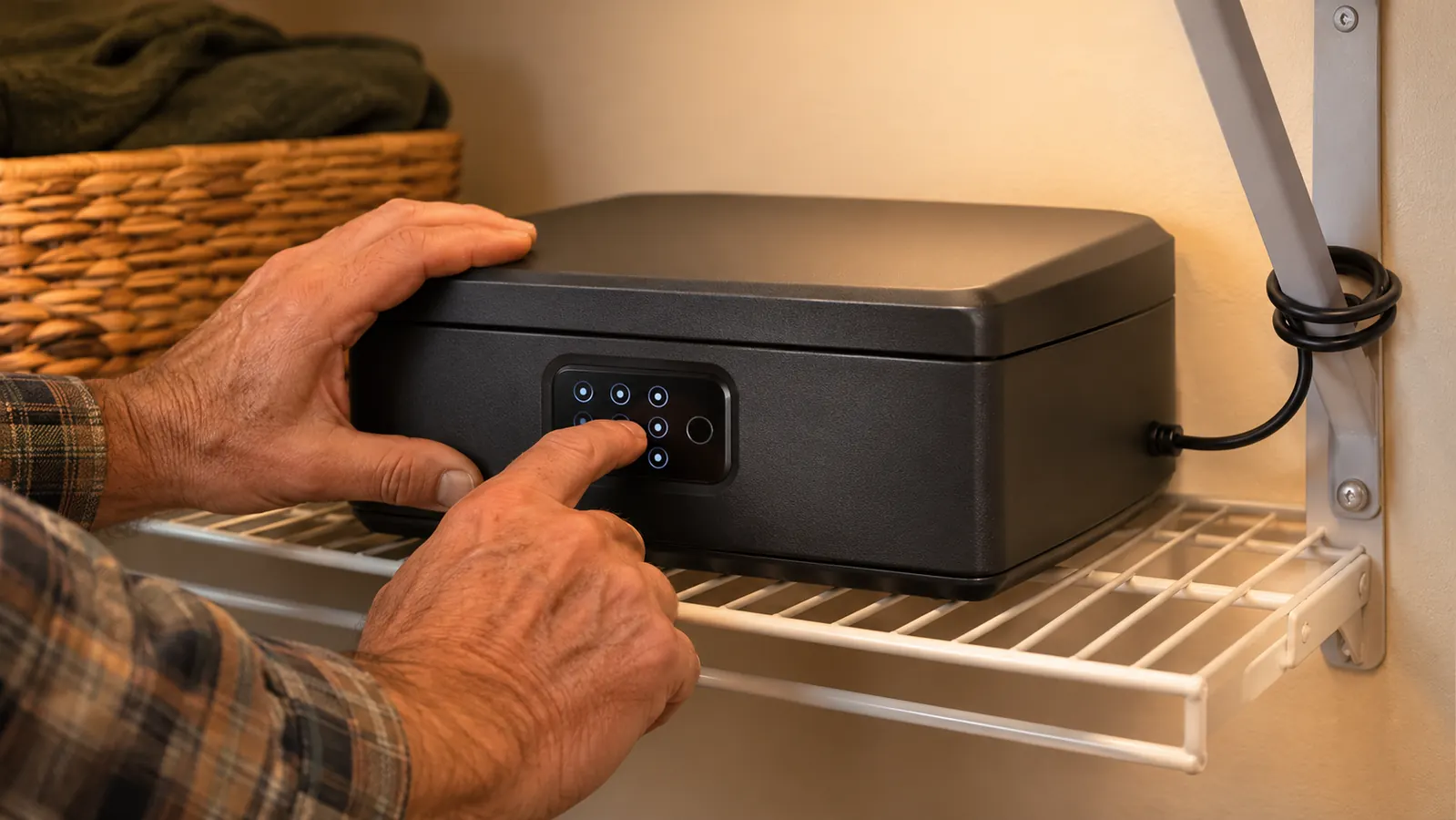
The Master Lock Portable Safe lists 0.08 cubic feet of capacity. The interior chamber measures 8.13 inches wide, 3.5 inches deep and 1 inch high. The case outside is 9.31 by 3.5 by 2.25 inches, and it weighs 0.71 kg. That one inch of interior height decides everything, and it is the specification nobody reads before ordering.
Inside that inch you can lay rings in a soft pouch, a chain, a watch, a folded envelope of cash, a phone, and a passport lying flat. You cannot fit a document folder, a coin collection in albums, silver flatware, or a stack of anything with bulk. If your inventory came back heavy on paper, this box is the wrong tool for the paper and the right tool for the rest of it. I learned that the dumb way, standing at the kitchen table with a tape measure and the wooden jewelry tray from the dresser, which is two inches deep and did not go in. The tray is still on the dresser. The rings go in a soft pouch beside it, and the pouch fits with room for a passport on top. Measure your tray before you order, not after.
Two more things the listing says plainly and people hear wrong. It is water resistant, which means a splash or a damp shelf, not a flooded basement floor. And it is not a fire safe. A case like this in a house fire does not protect a thing, no matter what the drawer it came out of used to suggest. The lock is a resettable four-digit code on a touchpad, with no key to carry, and there is an audible alarm on it. Treat the alarm as a noisemaker that might shorten somebody's visit, not as a promise that anyone will come running.
Step 3: Set the four-digit code properly, then test it under pressure
Set the code before the box ever holds anything you care about. Pick four digits you can produce without looking, then reject the first four you thought of. No street address, no birth year, no last four of a phone number, no 1-2-3-4. I spent three decades opening other people's mistakes, and the only useful thing I can tell you is that the obvious code is obvious to everyone.
Follow the reset instructions that come with it, then test the box twice in a row. Set the code, close it, spin the dial off the numbers, open it, then do the whole sequence again. If it fails on either pass, start over before anything goes inside. A combination box that has never been tested is a box with a decorative dial on it. On the one in my closet the first pass went fine and the second did not, because I had rolled the numbers through without stopping and the box never fully took the new code. Ten minutes with the instruction sheet at the kitchen table fixed it. Ten minutes at a kitchen table is a much better place to find that out than a hotel room two states away with a passport shut inside.
Then record the code somewhere that is not the box and not the drawer under the box. A sealed envelope in a filing cabinet is fine. Your daughter's house is better. If two of you live here, both of you learn the code, because the entire point of a combination is that nobody gets locked out of their own rings six weeks after a hip replacement.
Step 4: Anchor the cable to something that will not walk away
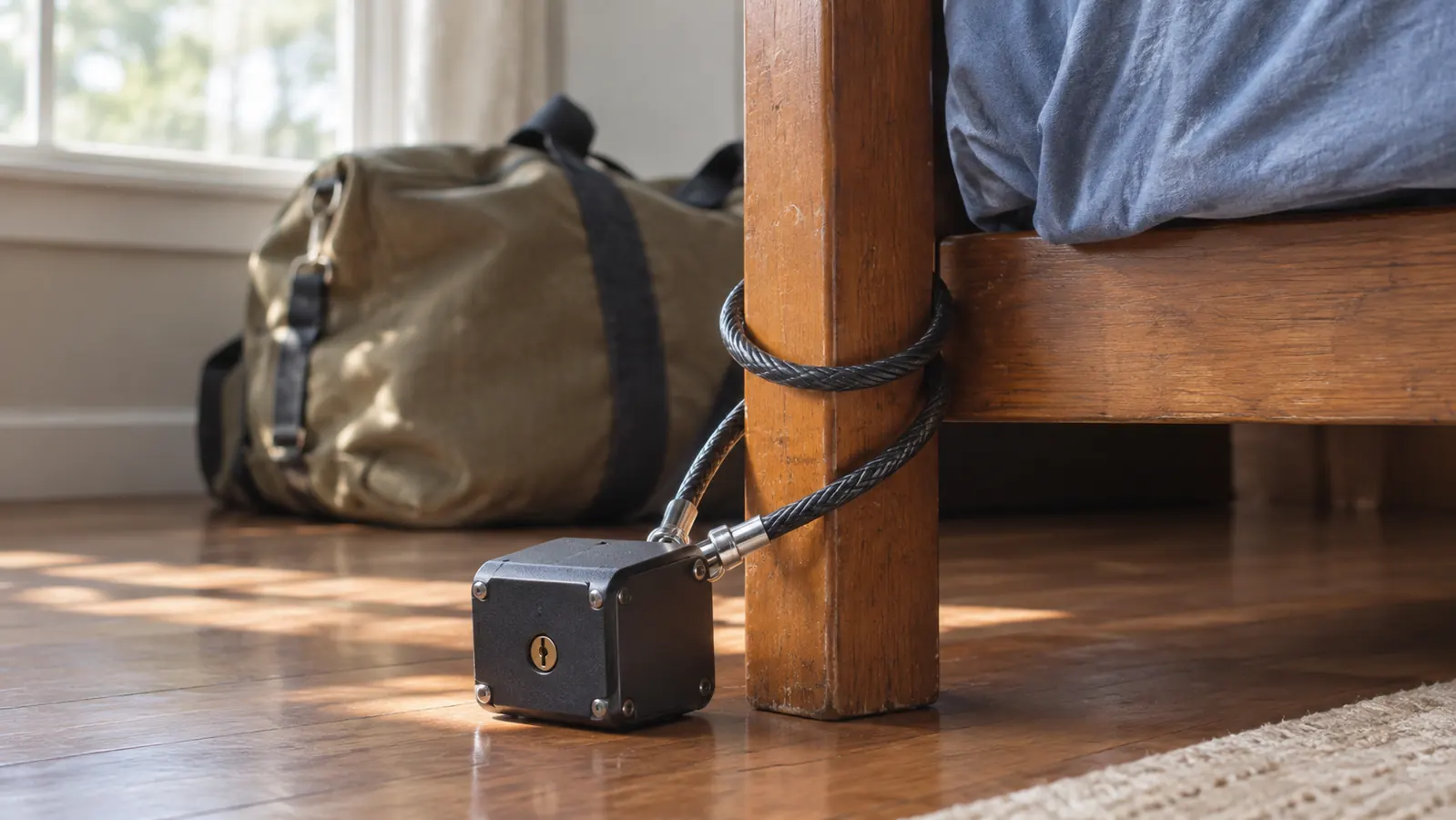
The cable that comes with the Master Lock case is the part of the design doing the actual work. The box by itself can be picked up and carried out in a jacket pocket. Wrap that cable around a bed frame leg, a closet rod bracket, a radiator pipe, a car seat rail, or the frame of a pool chair, and the arithmetic changes.
Test the anchor like an impatient person would. Grab the box and pull it hard, in the direction someone would pull if they wanted the whole thing in one motion. A shelf bracket screwed into drywall is not an anchor, and neither is a bed frame leg that is loose in its socket. Cast iron pipe is an anchor. A steel bed frame is an anchor. The bracket holding up a closet rod usually is, if it went into a stud, and most of them did. I have pulled a closet rod bracket out of drywall with one bare hand on a call, and it was holding up a rod with coats on it at the time. That is the test: if you can move it with one hand, it will not hold against two hands and a bad attitude. In my own basement I ended up wrapping the cable twice around the cast iron stack, and the box lives on a shelf within arm's reach of that pipe.
Be clear with yourself about what a cable does. It defeats the grab and the pocket. It does not defeat a man with bolt cutters and a minute to spare. That is why placement matters as much as anchoring, and why the best installation is one nobody ever sees.
Step 5: Place it, then build the routine that protects it
Placement is where most people undo all the work above. The top dresser drawer is the first place a searching hand goes. The nightstand is second. A box sitting in the open on a closet shelf is just a labeled container. Put it where a hand search does not reach in ninety seconds: behind the paint cans on the basement shelf, behind the winter blankets on the top shelf, inside a toolbox in the garage, or under a bathroom vanity with the cable wrapped around the supply line.
Then build a routine instead of trusting memory. The box only works if the good pieces go back into it the same day they come off, not the same week. Carol and I settled this the hard way, with a ring that lived on the windowsill for four days because opening the box twice was too much trouble. That was a Tuesday in April, and I remember it because I was the one who set it down there after a funeral and then walked past it all week. Four days of nothing happening is four days of luck, and luck is the thing people mistake for a system. Take the extra twenty seconds. The box has to be easier to use than the drawer, or the drawer wins.
Leave a decoy in the obvious drawer. A small amount of cash, a couple of costume pieces, something that looks like the answer to a hurried search. A person who finds what he came for tends to leave. A person who finds nothing starts opening closets. And keep the box quiet. Do not show it to the man installing the water heater, and do not mention it at a dinner party. The best-protected container in the house is the one nobody knows is there.
What Else Helps
The paper problem needs a different tool, and it is worth naming. Birth certificates, deeds, insurance policies and anything with a raised seal want a fire-rated document safe or a fire bag, both built to hold paper below its scorching point for a stated number of minutes. The portable box is not that. Put a deed in it and you have protected the deed from a drawer search and from nothing else.
For the pieces you never wear, the ones with a story attached, the honest answer is often a safe deposit box at a bank or a fire safe at a family member's house. Keeping Carol's mother's rings in a plastic box inside a house that could burn is a bet that nothing happens. I would rather the heirlooms sit in a bank and the everyday pieces sit in a box I can reach at two in the morning.
Two habits are worth more than another piece of hardware. Photograph everything and keep the photos off site, in cloud storage or at your daughter's, along with serial numbers and any appraisal paperwork. And keep the box off a basement floor and out of a garage that takes on water, because water resistant is a rating about splashes, and a box bobbing in four inches of standing water is a different test entirely.
A cable does not make the box impossible to steal. It makes it a five minute problem instead of a five second one, and five minutes is the whole game.
One hour of setup, and the dresser drawer stops being the plan
The 5900D is small on purpose: 0.08 cubic feet, a four-digit combination you set yourself, a cable that anchors to something bolted down, and a one year limited warranty. Put a fire bag in the closet for the paper and a bank box away for the heirlooms, and you have covered the three ways people actually lose things.
Amazon Check Today's Price on Amazon →