
Most people buy a fireproof box twice. The first one gets bought in a hurry, usually the week after a neighbor's kitchen fire or a cousin's flooded basement, and it gets bought on price alone. The second one gets bought years later, by somebody who finally read the label carefully and worked out that the first box had been protecting a stack of paper about as well as a shoebox would have. I would like to save you the first purchase.
I spent close to thirty years as a residential locksmith in Columbus, Ohio. A good slice of that work was opening things, rekeying things, and telling people the honest truth about a safe they had already bought and could not return. I am Gordon Pike, 58 now, retired, and the box in my basement is a SentrySafe fireproof and waterproof file box. It has been in the same spot long enough that I have stopped noticing it, which is the highest compliment I can pay a piece of safety equipment.
This is the version with the key lock and the hanging file interior. It is not the smallest box SentrySafe makes and it is not the biggest. It is the size that matches the paperwork a normal household actually accumulates, which is a shorter list than people think and a longer list than they hope.
The Quick Verdict
A real UL classified fire rating and a water rating on the same label, sized for hanging files, heavy enough to be a nuisance to carry off. It is a paper box. Buy it for paper.
Amazon Check Today's Price →The box I stopped thinking about, which is the whole point
Thirty minutes of rated fire protection, a verified water seal, and room for hanging folders. Two keys, no batteries, nothing inside it to fail.
Amazon Check Today's Price on Amazon →How I've Used It
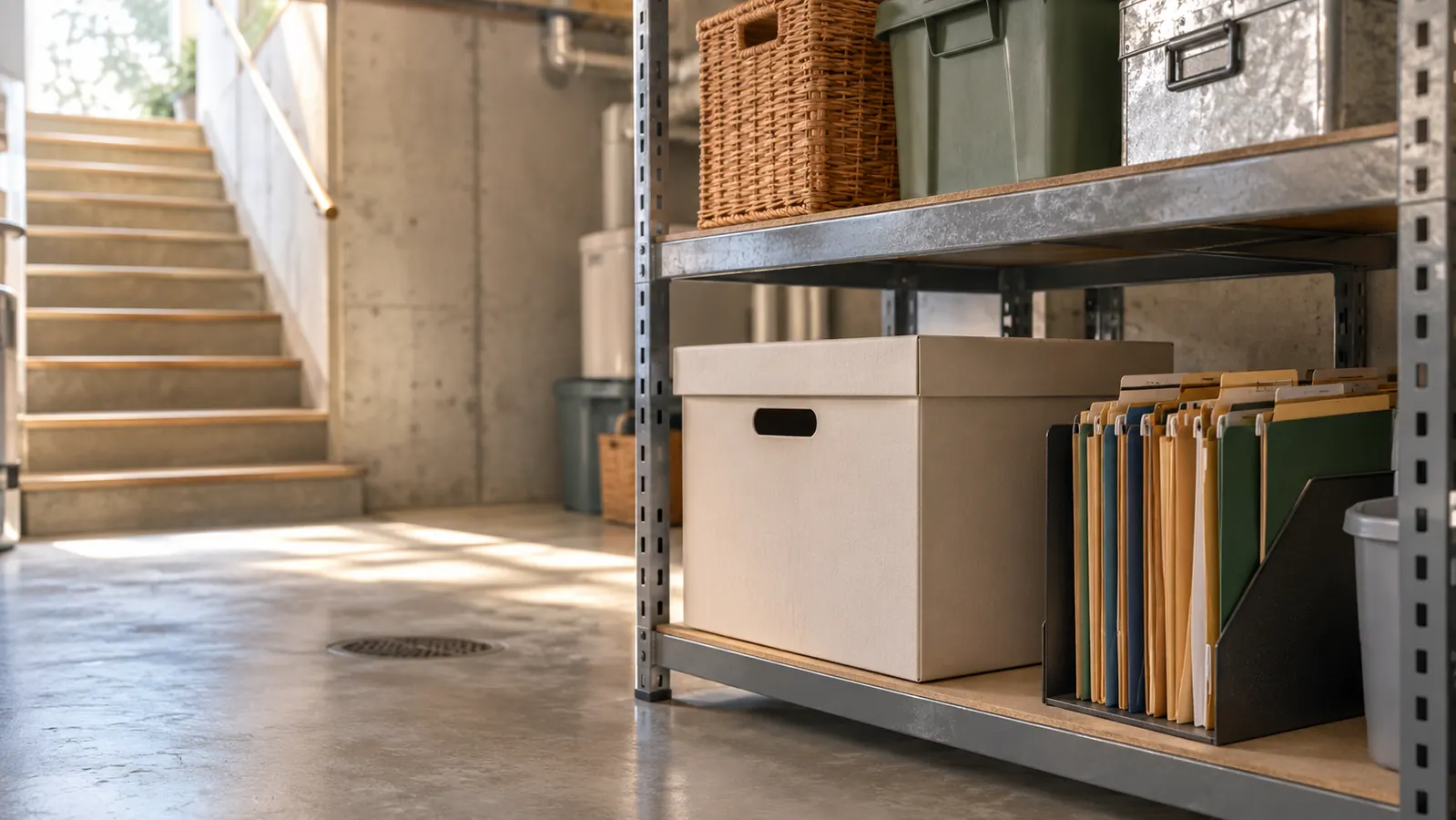
The box sits on the bottom shelf of a steel utility rack in my basement, about four feet from the floor drain that has backed up twice in the years we have lived here. Inside it: the deed, the insurance policy, both passports, birth certificates, Carol's mother's rings in a cloth pouch, and my father's watch. That is not a boastful list. It is the list of things that would be painful to replace and impossible to replace twice.
What I have learned from owning it is mostly about the routine. Every January I open it, check that the papers are still flat and dry, drop in the new insurance declarations page, and shut it. The whole job takes four minutes. I bother because I have opened boxes for people after fires and after floods, and the difference between a document that survived and one that did not was almost never luck. It was whether somebody had spent a little more on a box with an actual rating printed on it.
One thing I want to be clear about up front. I did not buy this to stop a burglar. I bought it so the papers would still exist after the kind of event that ends with a fire engine in the front yard. The theft question is a different question with a different answer, and I will get to it further down.
What the Fire Rating Actually Means
The label says UL Classified to withstand high temperatures for up to thirty minutes. People read thirty minutes and hear short. It is not short. In a house fire, thirty minutes is often the entire window between the alarm going off and the fire being put out. The rating is not a promise that the box survives the fire. It is a promise that the inside stays cool enough, for at least that long, that paper does not do what paper does.
Paper does not need flames to be ruined. Heat alone browns it, curls it, and fuses a stack into something closer to a brick than a file. I have pulled folders out of boxes that carried no rating at all, and the outer pages were brown and crisp all the way through while the middle of the stack had welded together. A rated box buys you the difference between a document you can read and a document you can only identify by its shape.
Where people go wrong is assuming that every product with fireproof on the package has that classification. Plenty do not. Some are described as fire resistant, which is a phrase with no testing standard behind it. If the box does not name the testing body on the label, assume nobody tested it.
The Water Rating Is the Part Most People Skip
The second half of the label is the half I care about more, and it is the half almost nobody asks about. This box is ETL Verified to protect contents during water exposure. That matters because the thing that ruins papers at a fire is more often water than flame. Hoses put an astonishing amount of water into a house. A box with a good seal comes out of a burn with the contents dry, and I have seen exactly that happen.
It matters just as much for the quieter disaster, which is a basement that takes on two inches of water in a spring storm and nobody notices until the following weekend. If you want to know whether your box is really sealed, put a sheet of paper in it, close it, and set it on the floor near the drain for a season. That is the test that matters for most households, and it does not require a fire.
Living With 38.8 Pounds
The box measures 13.5 inches deep, 15.5 inches wide and 14.3 inches tall. Capacity is 0.65 cubic feet, and the chamber width is 12 inches, which is the number that decides whether hanging file folders fit. They fit. That is the reason I picked this shape over a smaller cash box. Hanging folders mean the papers stay organized instead of turning into a pile you have to sort through at the worst possible moment.
It weighs 38.8 pounds. That is heavy enough that I would not want to carry it up a flight of stairs in a hurry, and light enough that a determined person could walk out the front door with it under one arm. The listing gives the mounting type as floor mount, and if theft is what keeps you up at night, that is the feature to use. A box attached to something is a very different problem for a burglar than a box that is not.
The compact footprint is honest, at least. Mine sits under the bottom shelf of the utility rack and takes up about as much room as a nightstand. It is portable enough to move when we paint or when the basement gets rearranged, which sounds like a small thing until you have tried to shift a real safe.
The Lock, and What It Won't Stop
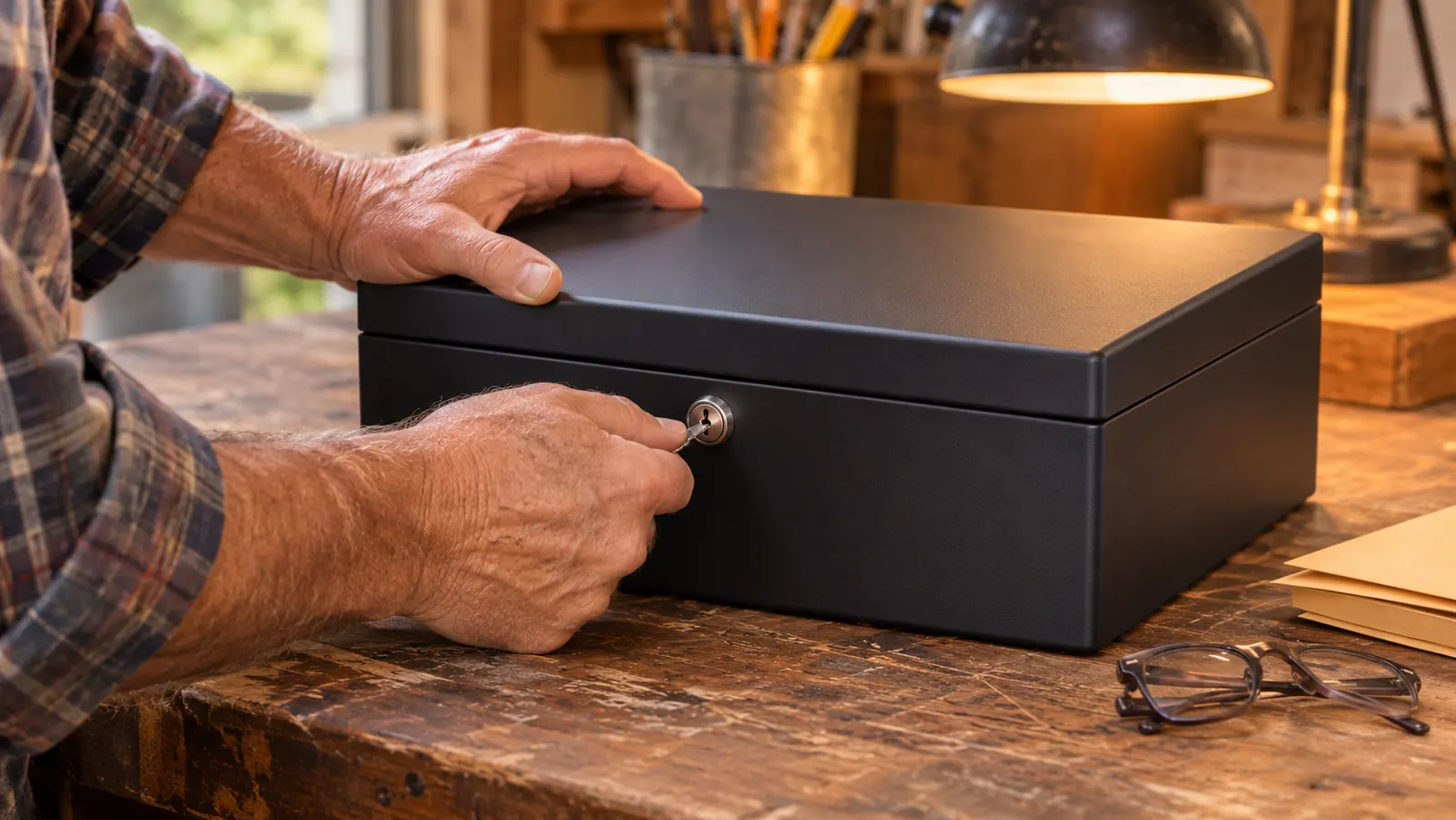
This is a key lock. Two keys come in the box, which is the right number, because one lives on my ring and the other lives in the kitchen drawer Carol knows about. There is no keypad and no combination. If you lose both keys you are going to have a bad afternoon, so decide where the spare goes before you put anything inside.
What a key lock on a box at this level actually buys you is privacy. It stops the curious houseguest, the teenager, the contractor who needs the bathroom, and the friend who is helping you move. It does not stop anyone who has decided they want what is inside and has brought a tool. SentrySafe calls it a privacy key lock on the included components list, which is the honest name for it, and I give them credit for using that word instead of a grander one.
So do not put Carol's mother's rings in here and call the job finished. The box is one layer. Keeping the truly irreplaceable pieces somewhere else, or in a second container that is not sitting next to this one, is the other layer. A thief takes what he can find in one trip, and one trip is all he needs if everything is in the same box.
What It Does Not Do
It does not protect a hard drive or a laptop. Paper and electronics fail at different temperatures, and a box rated for documents is rated for documents. If digital files matter to you, back them up off site. That is a boring answer and it is the correct one.
It does not survive an unlimited fire. Thirty minutes is thirty minutes. If you live a long way from a staffed fire station, factor that in. The rating buys time, and time is the only thing anyone can honestly sell you.
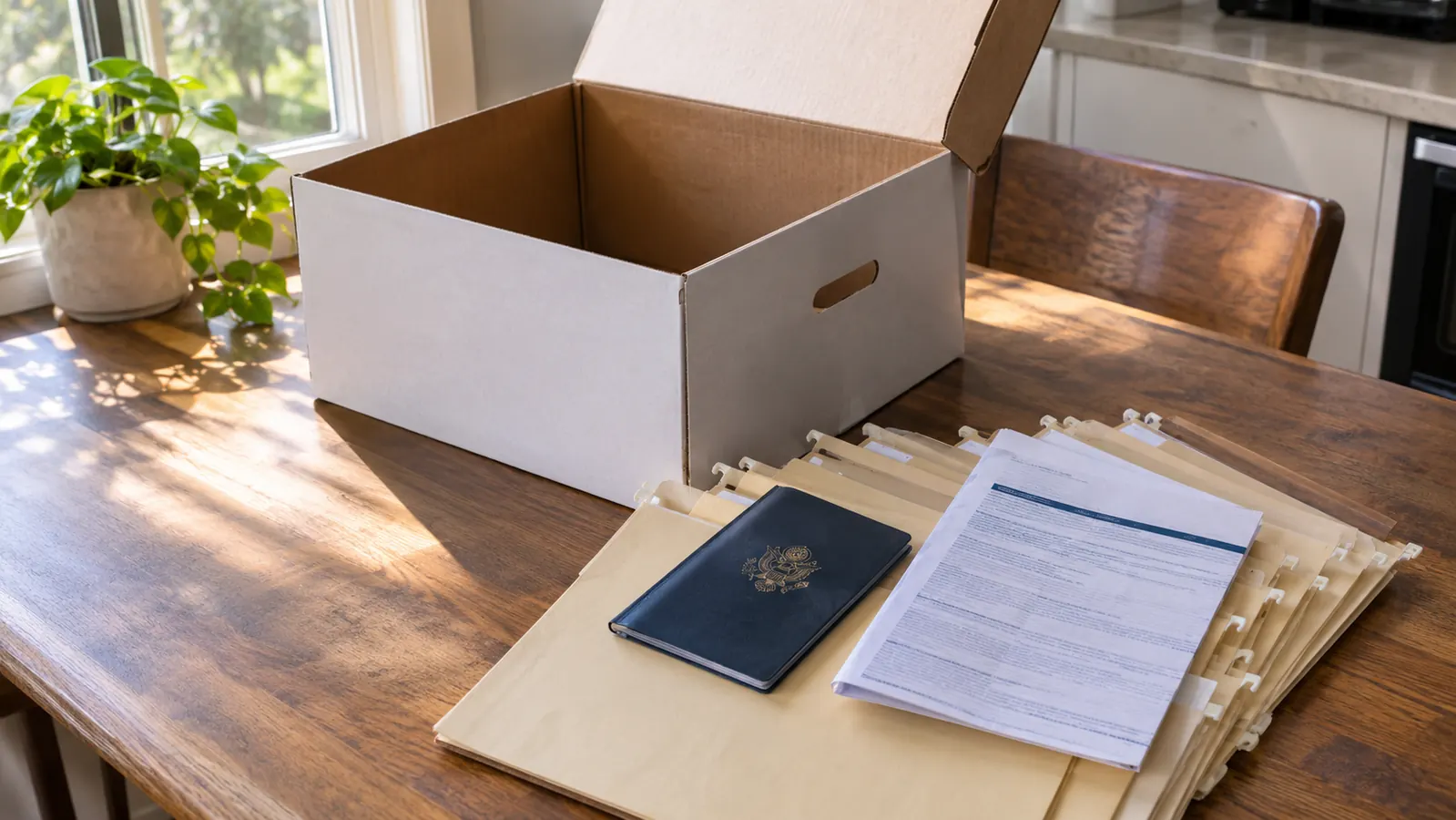
It does not organize anything for you, either. The folders are your job, and a box full of loose paper is only marginally better than a drawer full of loose paper once you are standing in the driveway at two in the morning trying to work out what you need to grab.
Two Things I Would Change
The first is the lock. I understand why a key is on a box at this level, and I understand that a keypad brings a battery and a failure point. But two physical keys means two chances to lose one and one chance to lose both. A keypad would remove the only thing about this box that genuinely worries me.
The second is the mounting. The included components list is the privacy key lock, the box itself and the warranty, so if you want to use that floor mount feature you will be supplying your own hardware. I would rather have seen it in the box, because the day I brought mine home I had to go dig through the garage for something to fasten it with.
What I Liked
- UL Classified for thirty minutes of high temperature, printed on the label rather than implied
- ETL Verified for water exposure, which is the failure mode most buyers never consider
- 12 inch chamber width fits hanging file folders, so documents stay sorted
- Two keys included, no batteries, no electronics, nothing inside to fail
- 38.8 pounds of real weight, awkward to walk off with in a hurry
- Compact enough for a closet shelf, under a desk, or a basement rack
- One year limited warranty
Where It Falls Short
- A privacy key lock, not real security. A pry bar ends the conversation
- 38.8 pounds is heavy to move and still light enough to carry out the door
- No keypad or combination, so losing both keys is a genuine problem
- 0.65 cubic feet fills faster than people expect once folders go in
- Does nothing useful for jewelry, coins or anything with resale value
I have pulled folders out of unrated boxes where the outer pages were brown and crisp and the middle of the stack had fused into a brick. That is what thirty minutes of rating buys.
Who This Is For
Homeowners and renters who have a folder of documents that would be genuinely painful to replace: deeds, policies, passports, birth certificates, tax records, a will. If you have ever carried those things out of the house in a plastic bag during a storm warning, you are the person this box is for. It is also a good fit for anyone whose basement has taken on water, or anyone who has been meaning to sort this out for three years and keeps not doing it. It takes four minutes a year to maintain and it removes one entire category of worry.
It is a reasonable pick for a renter too, which people forget. It is portable, it does not need to be bolted to anything to do its main job, and it moves with you. The interior is small enough that one person can be fully packed and out the door with it in a couple of minutes.
Who Should Skip It
Skip it if what you are really worried about is burglary. A key lock box in a closet is not a defense against somebody who has already decided to go through your house. For that you want something bolted down, heavy, and honestly rated for security, and I would tell you to spend your money there first. Skip it too if you are storing jewelry, coin collections or anything with real resale value, because that is a different job and this box does not do it. And skip it if you need more than 0.65 cubic feet. Two adults with a house, a business and grown children will fill this faster than you would think, and there is no shame in going up a size.
If the papers matter, give them a box with a rating on it
Thirty minutes of classified fire protection, a verified water seal, and a folder that stays a folder. SentrySafe has been building this one for a long time, and the label is honest about what it does and does not do.
Amazon Check Today's Price on Amazon →