A key lock has one job, and it does that job by handing you a single small piece of metal to keep track of. Lose that key, lend it, copy it, or leave it under the mat for a week because your daughter is driving up from Cincinnati, and the lock turns into a formality. I spent close to thirty years as a residential locksmith in Columbus. The safes I was called out to open were almost never opened by a stranger. They were opened by whoever had the key.
So when the key lock on the safe in my own bedroom closet started feeling like theater, I swapped in the TIGERKING 20 lb biometric safe and bolted it down. That is the only test I trust: use a thing in my own house, in my basement and my garage, long enough that the novelty wears off. What follows are ten reasons the fingerprint lock is the better arrangement, in the order I would explain them to a neighbor who asked over the fence. Some of the reasons are about security. A few are just about not being annoyed every morning.
The reason I stopped keeping a spare key on a nail in the garage
Fingerprint first, combination and two emergency keys as the backup path. Bolted down, one cubic foot of space you can actually organize.
Amazon Check Today's Price on Amazon →Ten Reasons, In The Order I'd Explain Them
No key to lose, copy, or stash in a predictable place
Every key lock in the country is protected by a piece of metal the owner either carries or hides, and hiding spots are predictable because people think alike. Under the mat, on a nail in the garage, in the junk drawer, on the same ring as the car key. The TIGERKING asks for a fingerprint instead, and a fingerprint is attached to you. You cannot leave it in a desk at work, and you cannot hand a copy to a contractor and forget you did. That single change removes the failure I saw most often on house calls.
You get in during the two minutes that actually matter
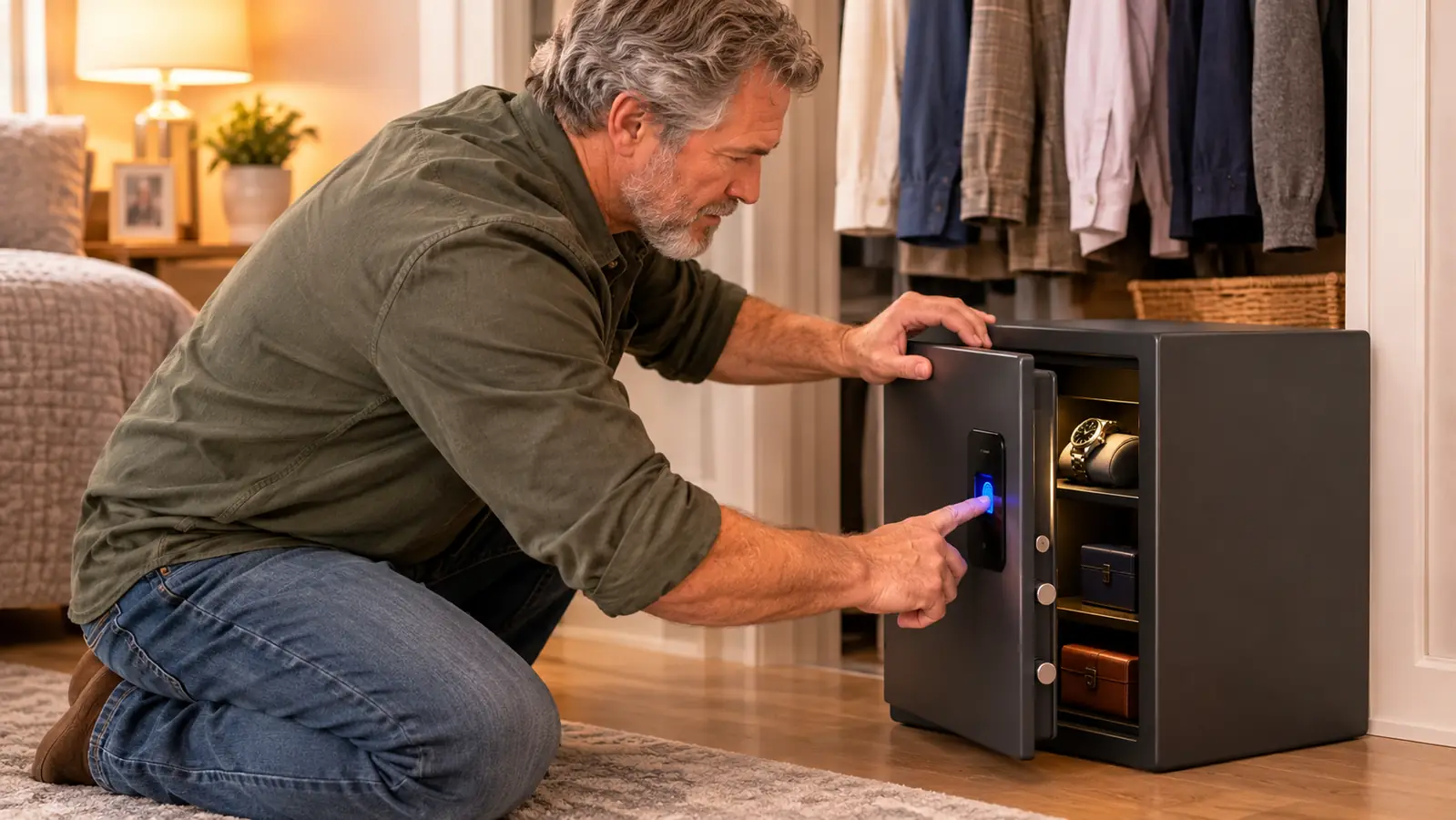
Picture standing in your closet at 6:40 in the morning with a passport to find and a ride already in the driveway. With a key, that is a pocket search and a bad word. With this, it is one press of a thumb and the door swings. The difference is not glamorous. It is the difference between a safe you use and a safe you quietly stop using because the key lives somewhere you can never remember.
There is no keyhole to pick, bump, or impression
The keyhole is the part of a keyed lock that does the work and the part that can be worked on. I made a living off that fact for three decades, first opening things for their owners and later explaining why the lock on the back door was not the lock they believed it was. A biometric safe presents no keyhole at all. No tension wrench, no bump key, no impressioning a copy from a photo. You remove the whole conversation instead of arguing with it.
The backup is a separate system, not a second guess
Any honest talk about a fingerprint safe has to cover the day a finger will not read. On this one you are not stuck. TIGERKING ships it with a combination lock and two emergency keys, and that is a different road into the box rather than a second attempt at the same road. Worn fingerprints from years of manual work, a bandaged thumb, cold hands in January, all handled by going around the reader instead of through it.
The vibration alarm reacts while someone is still standing there
There is a vibration alarm on this safe, and I want to be straight about what that is. It is not a monitored alarm. It does not call anyone. It is noise and a startle inside the room where the safe sits, at the moment somebody starts working on it, which is better than silence. A safe that makes a sound while it is being attacked buys you seconds. Seconds are the entire currency in that situation.
20 pounds of alloy steel, a 50 mm door, two 25 mm locking bolts, four expansion bolts into the framing. That is the argument, and it is short.
It is anchored, so carrying the whole thing off is off the table
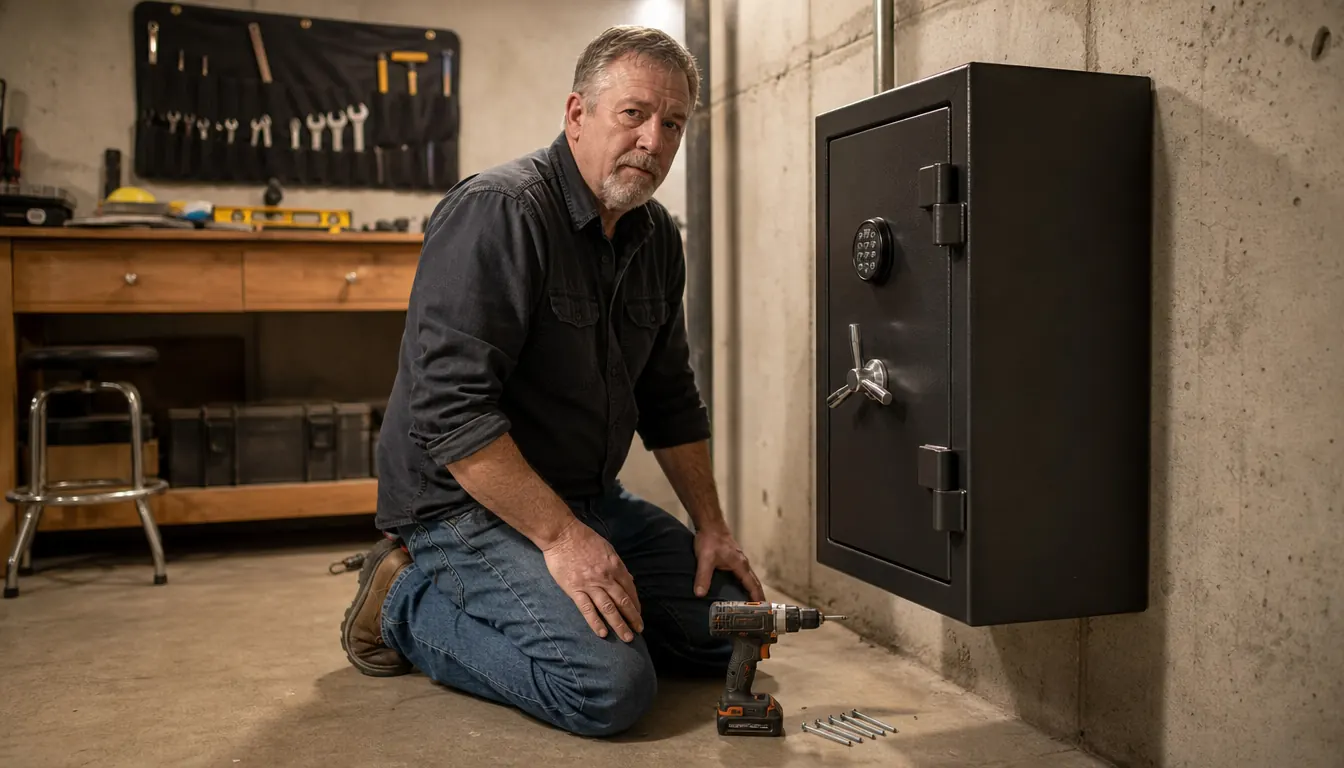
Most small safes are beaten by being picked up and carried out, and a 20 pound box is carryable. This one has pre-drilled holes in the back and the bottom and four expansion bolts in the box. I ran the TIGERKING into the closet floor. If you rent, the wall works and the holes are small enough to patch with a little spackle. The point is that somebody has to work on the safe where it sits, on your floor, instead of in a truck.
The door and bolts are sized like a safe, not a cash box
Plenty of biometric boxes on the market have a thin door and one small latch, and the fingerprint reader is the best part of them. On the TIGERKING the body is alloy steel, the door construction is 50 mm, and there are two 25 mm locking bolts. Those numbers matter more than the reader does. A lock is only as good as the material it is mounted in, and this is that question answered properly at the size of a home safe.
The shelf turns it into something you can organize
One and two tenths cubic feet is not a vault and I will not pretend it is. What makes the space useful is the removable shelf. Papers and passports and cash on one level, Carol's mother's rings and my father's watch on the other, nothing stacked on top of anything, nothing slid into a dark corner. Pull the shelf out and you have one deep compartment, which is what you want for a document envelope. That flexibility is the difference between a safe and a pile.
You are not chained to a code you have to write down
Keypad safes have one quiet failure mode: the code gets written on a sticky note or shared with three people and never changed. Here the code is the backup and your finger is the way in. You are not memorizing anything and you are not handing anything out. If a contractor, a cleaner or a relative needs in once, you open it for them and nothing about your everyday access changes afterward. Small thing. It removes a fair amount of low grade worry.
It fits where a key lock box will not, and the record is not thin
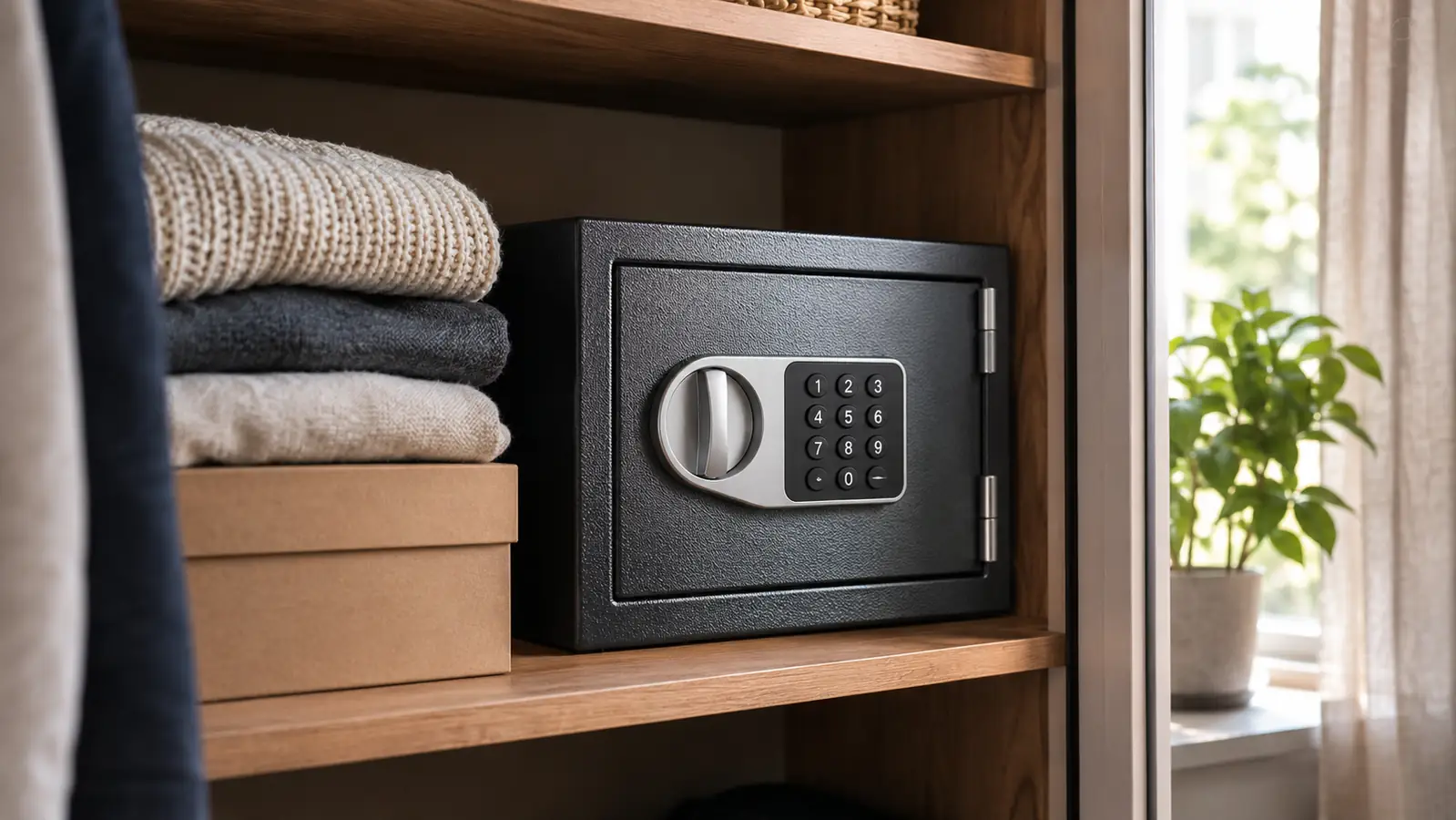
The outside measures 9.9 inches deep, 13.8 inches wide and 9.9 inches high, which slides onto a closet shelf or a garage shelf without a remodel. It carries 853 ratings at 4.4 out of 5 and a one year limited warranty, so you are not the first person to try it and there is a stated remedy if it fails. Those two facts do not make a safe good on their own. They do tell you the thing has been sitting in real houses.
What I'd Skip
Three cases where I would not buy this one, and I would tell you the same thing standing in your hallway. If your main worry is fire, the TIGERKING does not claim a fire rating, and a passport that survives a break-in and burns in a house fire is still gone, so buy for the fire rating first if that is the threat in your head. If you need to store documents flat and unbent, the 9.9 inch height will make you fold or roll, and a wider document safe is the better answer. And if several people need in and out all day with wet or dusty hands, a reader will frustrate you on the bad days and you will end up using the combination anyway. None of that is a knock on the safe. It is a description of the job it was built for.
Ten reasons, and the first one is that the key is gone
Bolts into a closet floor or a garage wall, opens on a fingerprint, holds what you would actually keep at home. One year limited warranty, 853 ratings at 4.4.
Amazon Check Today's Price on Amazon →