
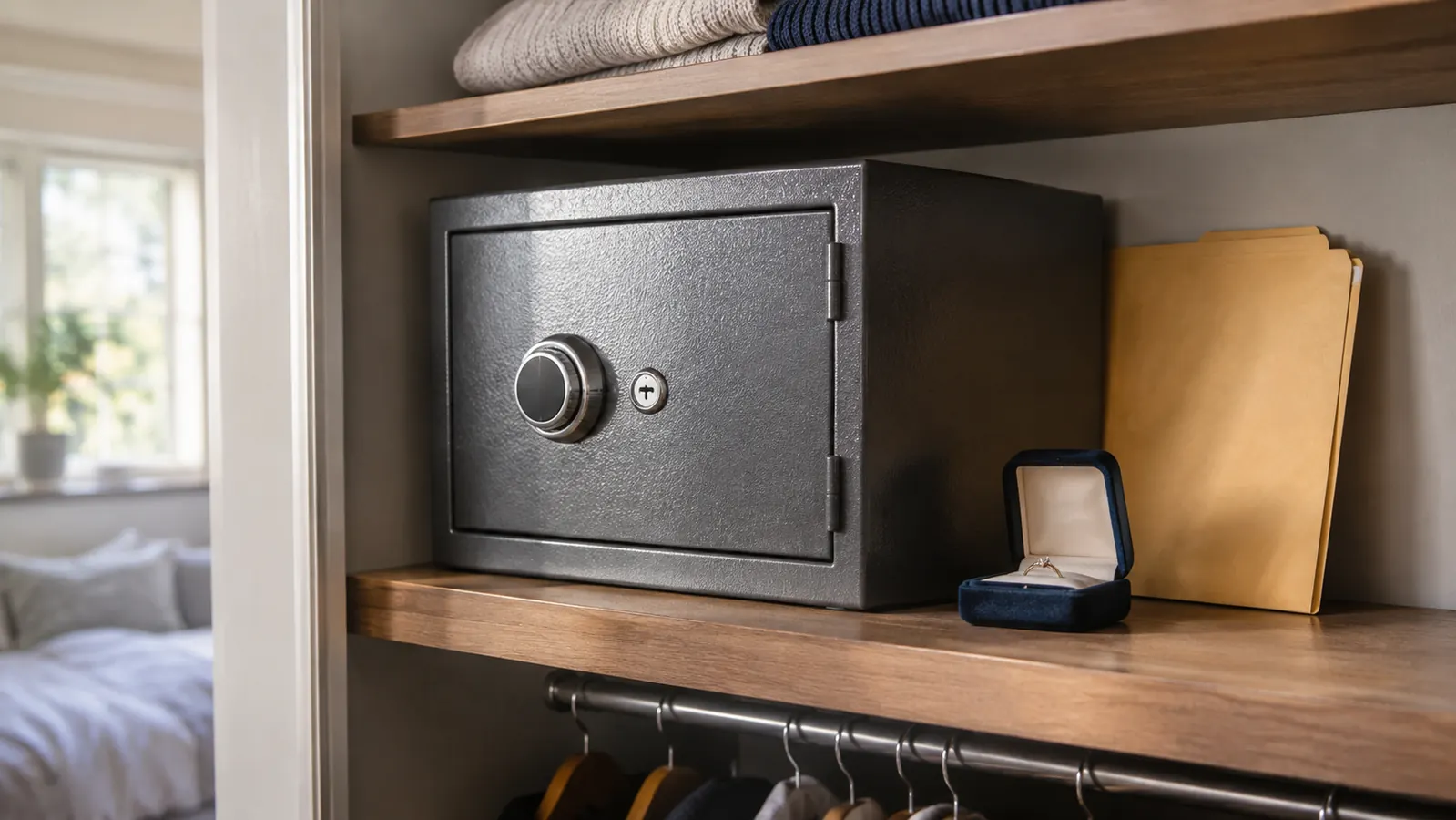
Two locks, two different ideas about how a safe should open. The TIGERKING 20 lb Biometric Safe opens on a fingerprint, with a combination code and two emergency keys standing behind it. A keypad home safe opens on four to eight digits and a key override. I spent about 30 years as a residential locksmith in Columbus, opening other people's locks and installing a fair number of these boxes, and the short answer is this: the TIGERKING is the better built box of the two, and the keypad is the better lock for certain households.
Put another way. If the safe lives on a closet shelf and you want in and out in a couple of seconds without hunting for a key, the TIGERKING wins and it is not close. If three or four people need access, or the person using it has thin, worn or often damp fingers, a keypad is easier to live with. That is the honest split. What follows is the reasoning, including the parts of the TIGERKING I would change if I had designed it, and the two jobs neither box will do for you.
| TIGERKING Biometric Safe | Keypad Home Safe | |
|---|---|---|
| How it opens | Fingerprint, plus a combination code and two emergency keys | Keypad code, plus a key override |
| Speed at the door | Finger down, door open, about a second on a good print | Enter the digits, wait for the bolt to retract |
| Sharing access with guests | Enrolling a visitor means someone has to be standing at the safe | Hand over a code, delete it later, nobody has to be present |
| Worn, thin or damp fingers | A faded or wet print can fail and send you to the key | A code is numbers, so dry skin, scars and gloves do not matter |
| Body and bolts | Alloy steel, 20 lb, 50 mm door construction, two 25 mm locking bolts | Varies enormously, read the door thickness and bolt count before buying |
| Mounting | Pre-drilled on the back and bottom, 4 expansion bolts in the box | Often no holes and no hardware, check the listing closely |
| Alarm | Vibration alarm built in | Rarely included at all |
| Interior | 1.2 cubic feet with a removable shelf | All over the map, trust the cubic feet, not the photo |
| Warranty | 1-year limited | Read the fine print, most land at one year either way |
| Best for | A closet shelf, fast private access, one or two people | A shared house, a rental, anyone who distrusts fingerprint readers |
How a Biometric Lock Actually Works
A fingerprint lock is a small camera and a small computer sharing a housing about the size of a matchbook. The camera takes a picture of the ridges on your finger. The computer reduces that picture to a pattern of numbers and stores the pattern. When you put your finger down again it takes a new picture, reduces it the same way, and compares the two. Nothing about your actual fingerprint is kept, only the pattern. That is why these locks feel remarkable for about a week and then feel like a normal latch. They are fast, they are private, and they fail in one specific way you should understand before you spend anything.
The failure is the finger itself. Prints fade with age and with work. Thirty years of handling keys, screwdrivers and lock cylinders left my own fingertips smoother than they were at twenty five, and a print that has been sanded down by a trade or by housework reads badly on any sensor made. Winter in Ohio is worse. Dry skin cracks, and a cracked print is a partial print. A cut on the wrong finger on the wrong day is a partial print too. None of this makes biometric locks unreliable. It makes them unreliable in the hands of a real slice of the population, and usually at the worst moment, which is when you are in a hurry and the doorbell is ringing.
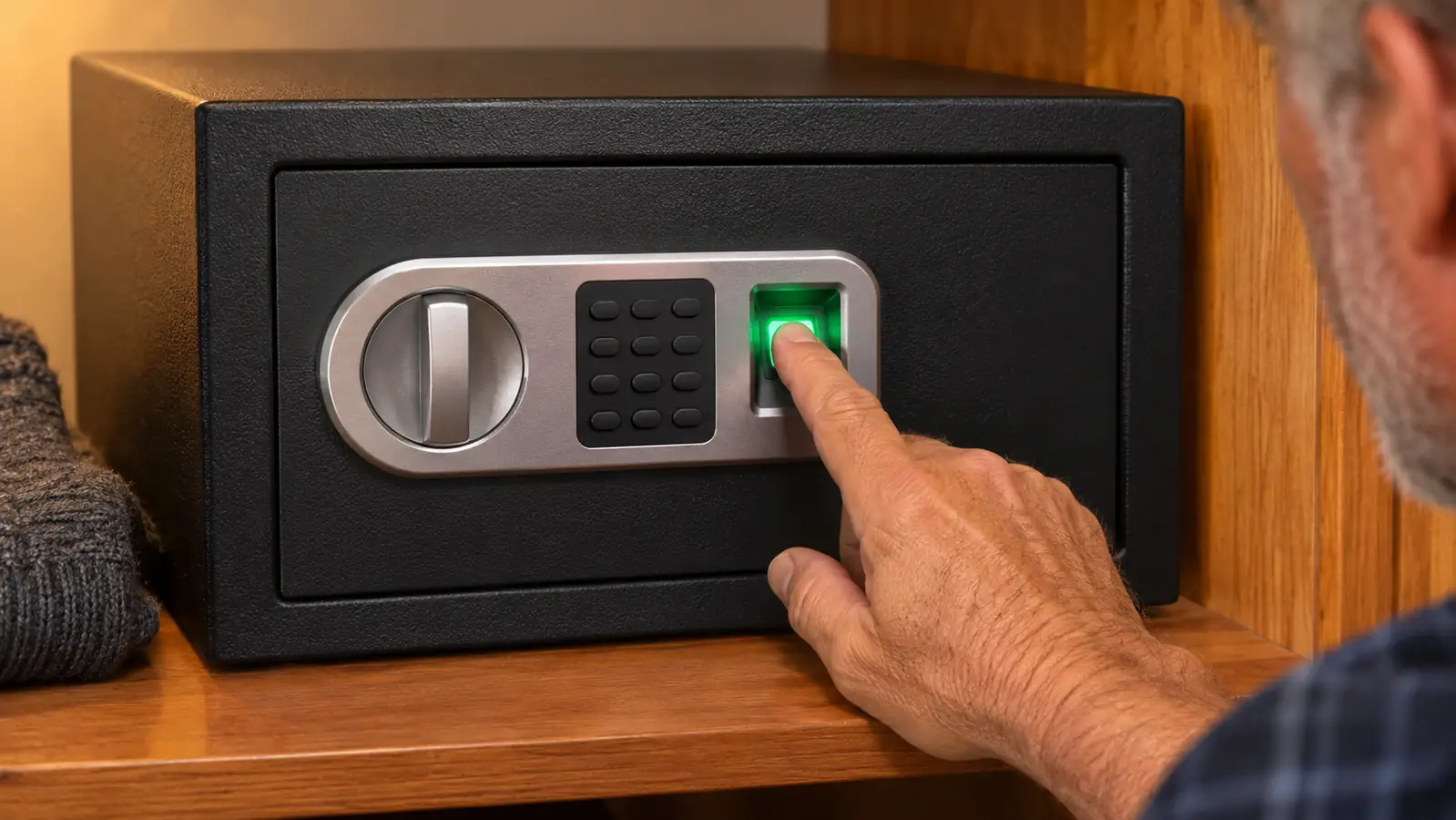
That is the reason I care as much about the backup as the sensor. The TIGERKING gives you three ways in: the fingerprint, a combination code, and two emergency keys that live on your keyring or in a drawer across the house. The key override is not an afterthought on this box, it is the thing that makes the fingerprint acceptable in the first place. A safe with a sensor and no key is a safe that can lock you out of your own passport on a cold morning, and I have taken that phone call more than once.
Where the TIGERKING Wins
The body is the first place it wins. Twenty pounds of alloy steel, door construction built to 50 mm, and two locking bolts measuring 25 mm each, straight off the listing. Bolt diameter is the number most buyers skip and the one that decides how a pry bar behaves. A 25 mm bolt is a serious piece of steel to shear, and two of them, one on the hinge side and one on the latch side, is the right arrangement for a box this size. I have opened plenty of light steel cabinets that a teenager could fold with a screwdriver. This is not that. The door sits close to its frame too, which is the other half of the story, because a bolt is only as good as the gap it has to cross.
Then there is how it stays put, which matters more than the steel. A 20 lb safe is a carry-out item for anyone with two hands and a minute alone. The fix is the pre-drilled holes on the back and the bottom plus the four expansion bolts in the box. Bolt it to a closet floor or to a wall stud and it stops being a box somebody can walk off with and becomes part of the house. The vibration alarm belongs in this same paragraph, because it is the one feature that turns a quiet burglary into a loud one. Somebody who bumps that box while you are at the grocery store gets a sound, and sound is what makes people leave.
Access is the last win, and it is the one you will notice every single day. No key to hunt for at eleven at night, no code to hand out. A finger goes down and the box is open. Inside you get 1.2 cubic feet and a removable shelf, which is enough for a deed folder, a couple of passports, a jewelry box and a folded envelope of cash, sorted so the shelf keeps the small things from sliding under the big ones. In practice that is what most people actually need a home safe for. Not a rifle, not a coin collection. Just the papers and the few things you would be sick about losing.
A 20 pound safe is a carry-out item for anyone with two hands. Four expansion bolts into a floor joist turn it into part of the house.
Where the Keypad Safe Wins
Now the honest part. A keypad is the better lock for a shared house. If your grown daughter in another city stays over twice a month, or a cleaning service comes on Thursdays, or you have a contractor in and out for a week, a code is simple. You give out four digits and later you change them. Nobody has to be standing at the safe to enrol a fingerprint, and nobody has to be present to take one away. I have watched families tie themselves in knots over a biometric lock because one person's print would not enrol and the only other person who could open the box was out of town. A code sidesteps that entirely.
The finger problem is the second win, and it is the same problem I described above, just from the other side of the table. Keypads do not care about dry skin, calluses, scars, gloves, bandages or age. Numbers are numbers. If your hands are rough from work, if arthritis makes it easier to press a keypad than to hold a finger flat and steady on a small glass square, or if you live somewhere cold and dry for four months a year, a keypad removes a failure point the biometric lock keeps. That is not a small thing. A safe you can open reliably is worth more than a safe with a cleverer lock you cannot open at all.
Third, fewer moving ideas. A keypad safe has no sensor to cloud over, no print to re-enrol, and no learning curve for a guest. It is the sort of thing you can hand to a neighbour with one line of instruction, and it is the sort of thing you can move twice in five years as a renter without thinking about it. There is real value in that plainness, even if it costs you the second or two you would have saved.
Three ways in, and two of them do not care what your fingers did today
The TIGERKING 20 lb Biometric Safe gives you the fingerprint, a combination code, and two emergency keys behind both, in an alloy steel body with two 25 mm locking bolts. Four expansion bolts come in the box. Check today's price on Amazon.
Amazon Check Today's Price on Amazon →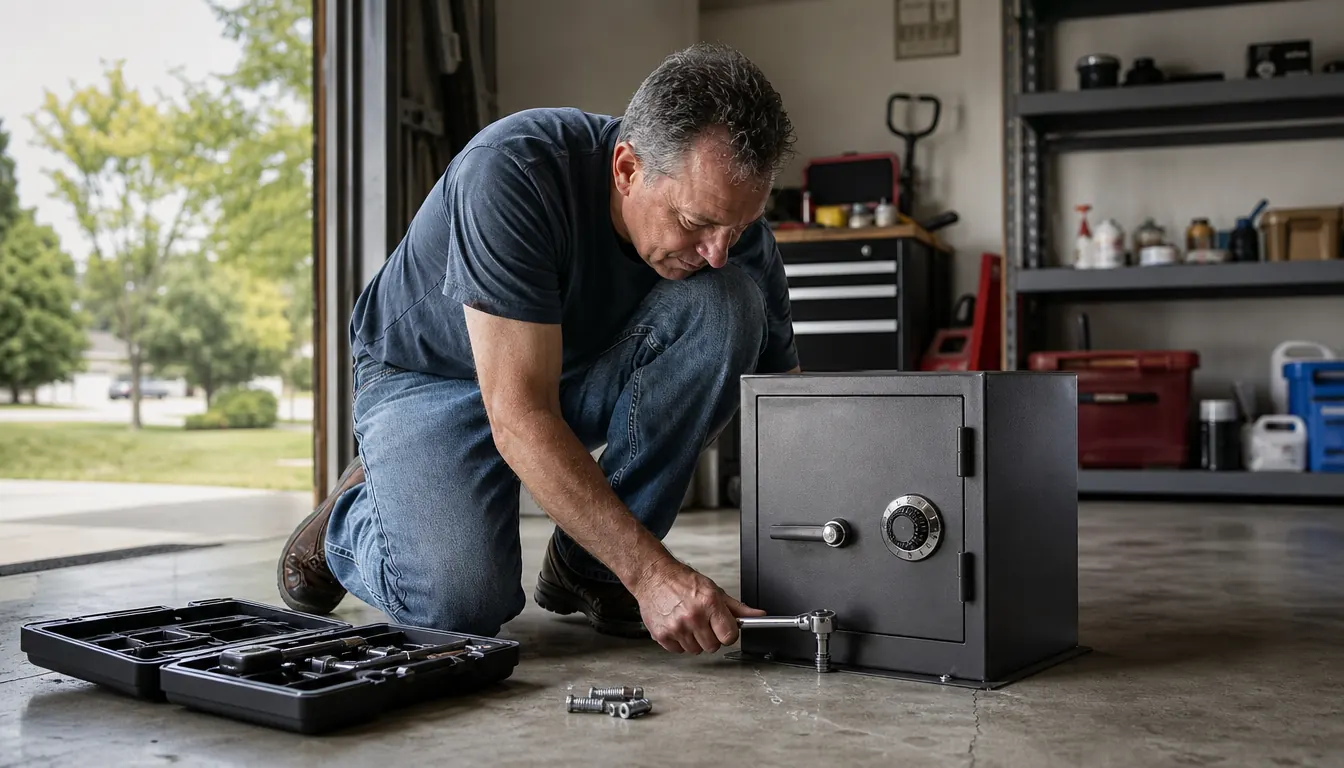
What Neither Safe Will Do
Neither box is a fire safe. A 1.2 cubic foot steel box with a biometric or keypad lock will keep a burglar out for a while and keep a child out for certain, but there is no fire rating on this listing, and no rating means no tested time and no tested interior temperature. Paper scorches well below the heat a house fire reaches, and a steel box in a burning closet gets hot enough to ruin a passport long before the flames arrive. If documents are the entire reason you are shopping, buy a rated document safe with a stated hour rating and a stated interior temperature. If the box is for jewelry, cash and everyday papers, an unrated safe is a sensible purchase. You should just know which one you are getting.
Neither box is waterproof either. Basements flood, and a safe sitting flat on a concrete basement floor takes on water through the gap around the door. If your basement has ever had an inch of water in it, mount the safe on a shelf or bolt it to a wall a foot off the floor and leave the bottom holes for a drier day. And neither box will stop a determined thief who has time and tools and no fear of noise. What these boxes do is buy minutes and remove opportunity, which is the honest description of every home safe that does not weigh several hundred pounds. Any article that tells you otherwise is selling something.
Who Should Buy Which
Buy the TIGERKING if the safe goes in a closet or a bedroom, if one or two people need in it, and if you want the door open in a second. Buy it if you will actually bolt it down with the four expansion bolts, because that is half the security and skipping it wastes the other half. Buy it if you like having a vibration alarm, a code and a key as fallbacks for the day the sensor will not read your thumb in February. It is a good box for a will, a deed, passports, your father's watch and the rings your wife's mother left her. That is the work it was built for, and it does that work well.
Buy the keypad safe if the box is shared, if the people using it have rough or unreliable fingerprints, or if you want the plainest possible thing to operate and hand off. Buy it if you are renting and will move it twice, or if you have a teenager and would rather change a code than argue about a print. And buy a rated fire safe instead of either one if the contents are documents you cannot replace and fire is the risk that keeps you up. Those are two different problems and they call for two different boxes.
The box I would bolt to my own closet floor
Alloy steel, 20 lb, 1.2 cubic feet with a removable shelf, pre-drilled for the wall or the floor, four expansion bolts included. A fingerprint reader with a code and two keys behind it, and a vibration alarm for the day someone bumps it. Today's price is on the listing.
Amazon See the TIGERKING Safe on Amazon →