
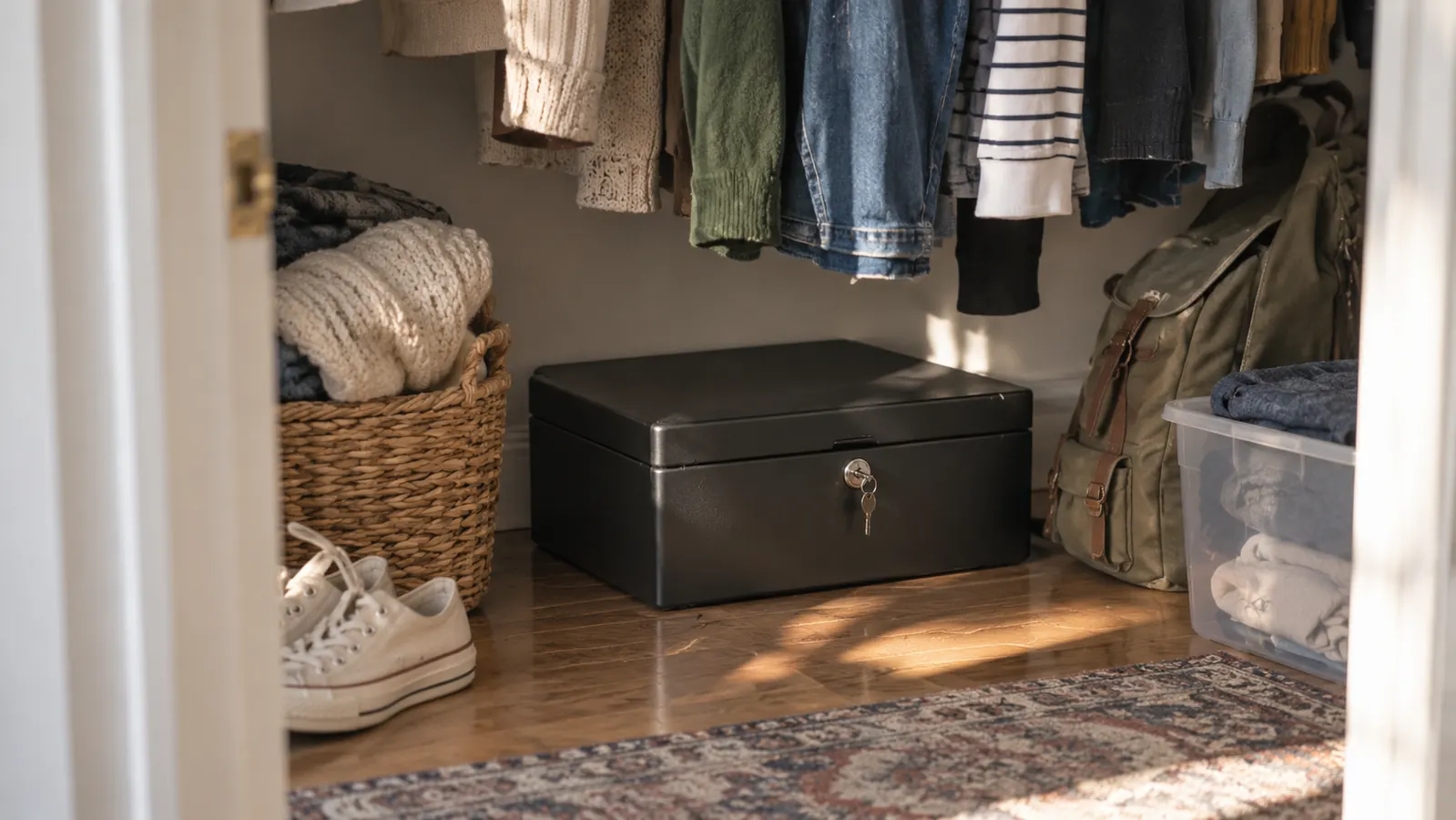
Most houses I walked into had the same setup for important papers. A shoebox on the top shelf of a closet. A plastic tote in the basement next to the holiday decorations. A kitchen drawer that also held takeout menus and a dead flashlight. Nobody had ever decided that was where the papers should go. It just happened, one envelope at a time, until there were thirty years of documents sitting in a container a child could open. That is the problem a SentrySafe fireproof box solves, and it is the reason there is one sitting on the floor of my own closet in Columbus.
I spent about thirty years as a residential locksmith here, and I have let families back into a lot of houses after a fire, a flood, or a death. The papers were almost never the thing anyone had thought about first, and they were often the thing that hurt most to lose. A filing cabinet does not protect paper from anything except being misplaced. A bank box works fine until you need a birth certificate on a Saturday evening, or until the account is frozen in probate and your daughter in another city cannot get at the deed. What most households actually need is a small box in their own house with a real lock and a real fire rating. The SentrySafe fireproof and waterproof file box with the key lock is the one I point people toward when the question comes up at a cookout.
One box, one key, thirty minutes of rated protection
If your papers are in a shoebox right now, the fix takes one afternoon. The SentrySafe file box holds standard hanging folders, locks with a real key, and carries UL and ETL ratings you can look up yourself. Two keys come in the box. Today's price is on the listing below.
Amazon Check Today's Price on Amazon →What the Fire Rating on the Box Actually Tells You
Almost every fireproof box sold in this country leans on the same handful of test standards, and they are worth understanding before you spend anything. UL Classified means an independent lab put the box in a furnace and measured the temperature inside it. The SentrySafe box is UL Classified to withstand high temperatures for up to thirty minutes. That is the number that matters, and it is not about flames. Paper does not burn the way a two by four burns. It discolors and turns brittle at a temperature well below the flash point of the room around it, and it is useless long before fire ever touches it.
The second rating is water, and this box is ETL Verified to protect contents during water exposure. That covers a burst supply line, a sprinkler head, a basement that takes on an inch during a spring storm, and the hose the fire department leaves running down your hallway. Between the two ratings you are covered for the two ways documents actually die. The physical numbers are honest rather than impressive. Capacity is 0.65 cubic feet, the outside measures 13.5 inches deep by 15.5 inches wide by 14.3 inches high, and the empty weight is 38.8 pounds. The interior chamber is 12 inches wide, which is exactly what lets a standard hanging file folder drop in and hang the way it is supposed to.
Step 1: Decide What Actually Belongs in the Box
Sit down with a legal pad and list the documents you would have a hard time replacing. Not the ones you would be annoyed to lose. The ones that require a courthouse, a phone tree, or an appointment across town to recreate. Birth certificates, Social Security cards, passports, marriage and divorce decrees, military discharge papers, the deed to the house, the title to the car, insurance policies, and the most recent version of your will.
Then think about the second category, which is harder because it is specific to your family. Advanced directives, powers of attorney, and a single sheet listing every account and institution with the account numbers on it. If your spouse has to step in tomorrow, that sheet is the difference between a difficult week and a lost year. I keep one page like that at the front of my own box for exactly that reason, and Carol knows it is there and knows what it says.
Leave out anything you need in a hurry on a weekday, because this is a key lock box and not a drawer. Leave out the passport you travel with every other month. Leave the original of anything your attorney is holding. And do not make a habit of storing cash or jewelry in here. The box is not bolted down by default and it weighs under forty pounds, so a determined person can carry it out the front door. This is a fire and water box first. Treat it that way and you will not be disappointed.
Step 2: Choose Where It Lives Before You Fill It
Walk the house and pick the spot, because the spot decides whether the box does its job. The worst place for a fire resistant box is the room most likely to burn hottest and longest, which is the garage, the kitchen, and any closet sitting directly above a furnace or water heater. A basement is a trade. It runs cooler and often survives the fire, but it is also where water arrives first, through the floor drain, the foundation crack, or the sump pit.
What I look for is an interior closet on the first floor, on the side of the house away from the kitchen and the garage, on the floor or a low shelf. Low matters more than people think. Heat rises, and a box on the top shelf of a two story closet is sitting in the hottest air in the building. The SentrySafe is listed for floor mounting. You do not have to anchor it, but the floor of a closet is both the safest position thermally and the least likely to get knocked over.
One more thing about placement. Put it where you can reach it in the dark. If the power is out and the hallway has a foot of smoke in it, you are not going to want to move two boxes of Christmas decorations to get to your passports. Reachability beats cleverness every time. I have crawled through enough smoke damaged hallways on service calls to be certain of that.
Step 3: Build the Folder System Before the Papers Go In
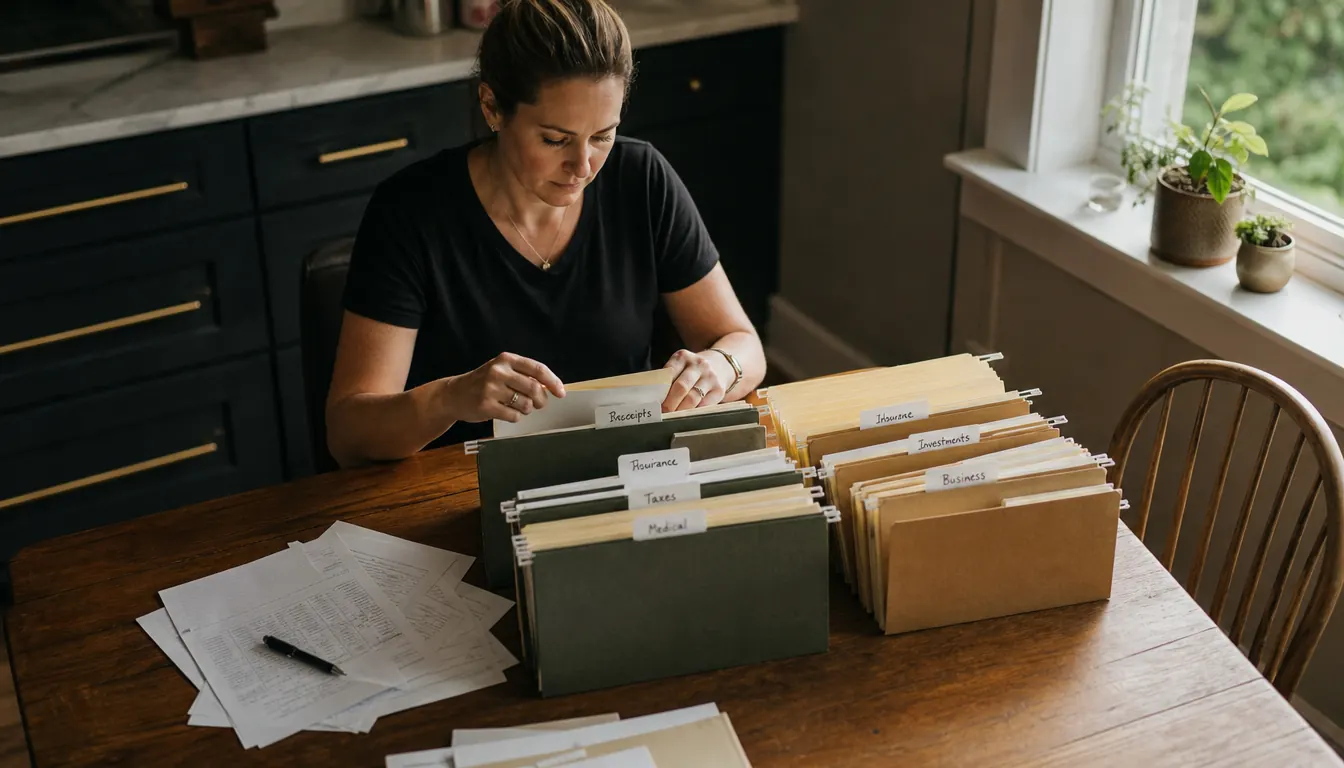
The box fits hanging file folders, and that is the entire reason the thing works. A box you dump envelopes into becomes a box you never open, and a box you never open is a box whose contents are out of date. Buy a small pack of hanging folders and label them before anything goes inside. Eight to twelve folders covers most households I have known.
My labels have not changed in twenty years. Identity. Property. Insurance. Taxes, last seven years. Medical. Legal, which holds the will and the directives. Financial, which holds the account sheet. Vehicle. Military. And one folder marked Family, for the baptism certificate, the naturalization papers, and the letter from a grandmother that is not legally worth anything and is the first thing anybody would carry out of a fire.
File the newest version of everything and shred the old one, with two exceptions. Keep the prior year of anything you might need to prove a timeline, and keep every will, even the superseded ones, because a court may want to see the order in which they were signed. Once a year, pull the whole stack out and go through it. That hour is the difference between a system and a pile.
Step 4: Photograph Everything and Keep a Copy Somewhere Else
This is the step people skip and it is the one that saves the most grief. Spread every document out and photograph each one flat, in good light, with all four corners in frame. Then back those photos up somewhere that is not your house. Cloud storage works. A thumb drive in your daughter's kitchen drawer in Cincinnati works too. What does not work is the only copy living in the same building as the original.
A photograph of a birth certificate is not a birth certificate, and no passport office will accept it. That is not the point. The point is that when the original is gone, the photograph tells you what you had, whose name was on it, what date it was issued, and which office to call. Replacing a document is far easier when you can describe it precisely instead of guessing at it over the phone.
Do the same for the box itself. One photo of the open box with the folders in place, taken from directly above, tells an insurance adjuster or a family member what was in there. It takes thirty seconds and it settles arguments that would otherwise run for months.
Step 5: Tell Two People Where It Is and How to Open It
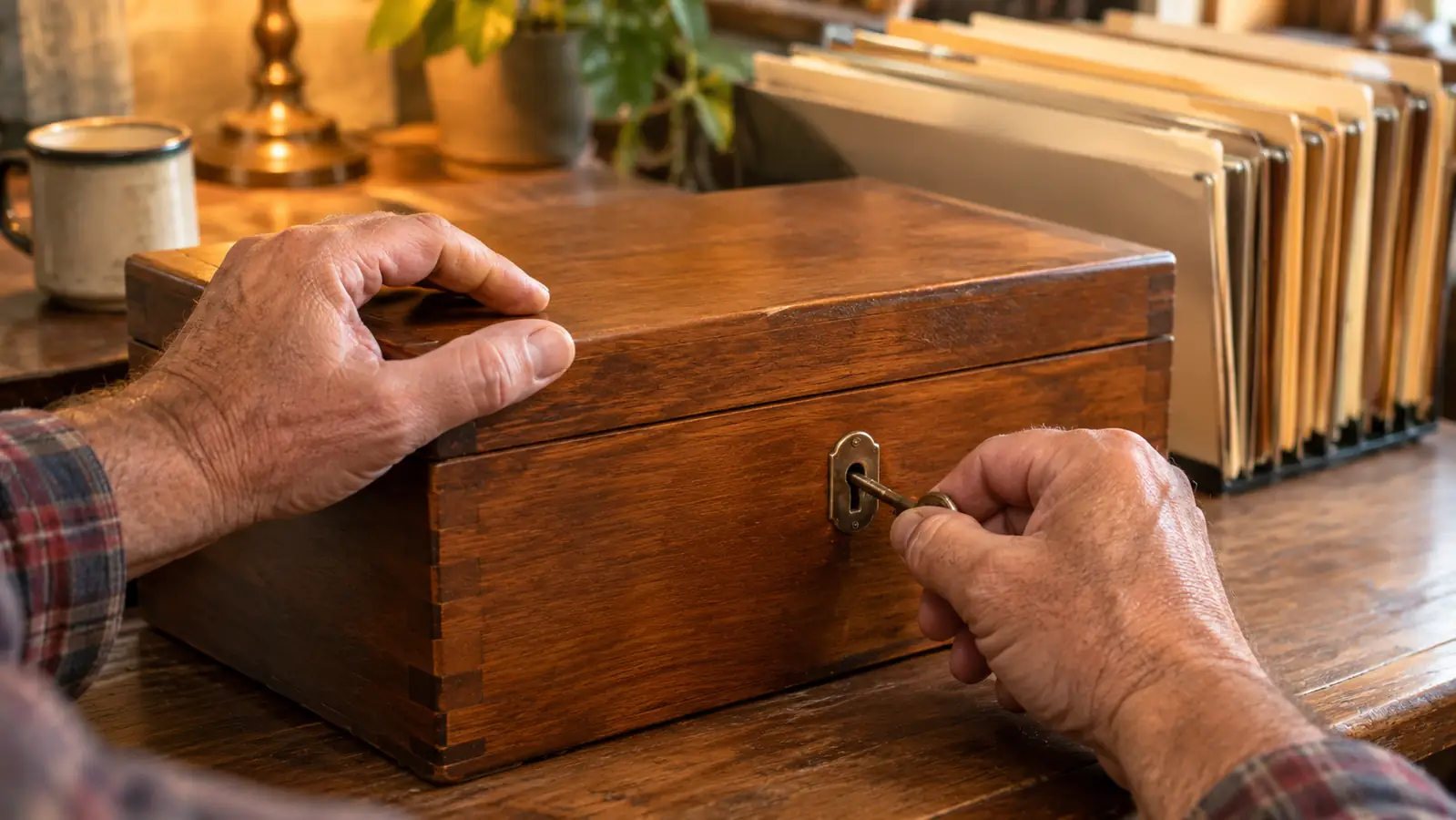
Two keys come in the box, and one of them should not live in your house. Give it to your grown daughter, your attorney, or a neighbor you already trust with a spare house key. The second key stays with you, somewhere that is not taped to the underside of the box. I have found that tape job more times than I can count and it has never once fooled anybody who was looking.
Then have the conversation. Tell two people that the box exists, which room it is in, and roughly what is inside. If your spouse handles the money, point them at the folder marked Financial. If your daughter is the executor, tell her about the folder marked Legal and where the original will actually sits. It is uncomfortable for about ninety seconds. The alternative is a family spending six months rebuilding a paper trail during the worst week of their lives.
Write the key location down as well. Not inside the box. In the will, in a sealed envelope with your attorney, or in a note with whoever holds the spare. A locked box nobody can open is just a heavy box, and I have opened more than one of those for a family that had already torn the house apart looking for a key.
Thirty minutes of UL rated fire protection does not mean the box survives the fire. It means the paper inside never reaches the temperature where it chars and turns unreadable.
What Else Helps
A few additions cost very little and close the gaps the box leaves open. A waterproof document bag inside the box, for the items you would grab if you had ten minutes to evacuate. A bag survives being carried out into the rain and it survives the box being dropped in a puddle in the driveway. A small zippered pouch for the passports is worth it too, because passports are the thing most often needed with the least warning. And photograph the exterior of the house plus the contents of each room once a year. That is an insurance task rather than a safe task, but it belongs in the same afternoon.
Then read the warranty before you file the receipt. The SentrySafe box carries a one year limited warranty, which covers the lock and the box, not the contents. No box on the market insures what is inside it. If the contents genuinely matter, that is a rider on your homeowners policy and a five minute call to your agent. Put a reminder in your phone for the first weekend in January, labeled with something dull enough that you will actually do it.
Where This Box Falls Short
I would rather tell you the limits than have you discover them yourself. At 38.8 pounds empty, this is not a burglary safe. The key lock is a privacy lock, well made and perfectly adequate for keeping family, guests and contractors out, but it is not a high security cylinder, and a person with tools and time will get past it. If burglary is your main concern rather than fire, you want something bolted through the floor with a different lock entirely, and that is a separate purchase with a separate conversation attached.
The thirty minute rating is also a real limit and not a marketing hedge. A house fire that burns for two hours will exceed it, and no affordable box changes that. What this box buys you is time, protection from water, and protection from the ordinary chaos of moving twice in a decade. That is a great deal for the footprint. It is not a promise that paper survives everything, and anyone who tells you otherwise is selling something.
Put the papers in something rated before the next storm season
An interior closet, a pack of hanging folders, one key with your daughter and one with you. That is the whole job, and it fits in an afternoon. The SentrySafe file box has the ratings, the folder width and the lock to make it stick.
Amazon Check Today's Price on Amazon →