
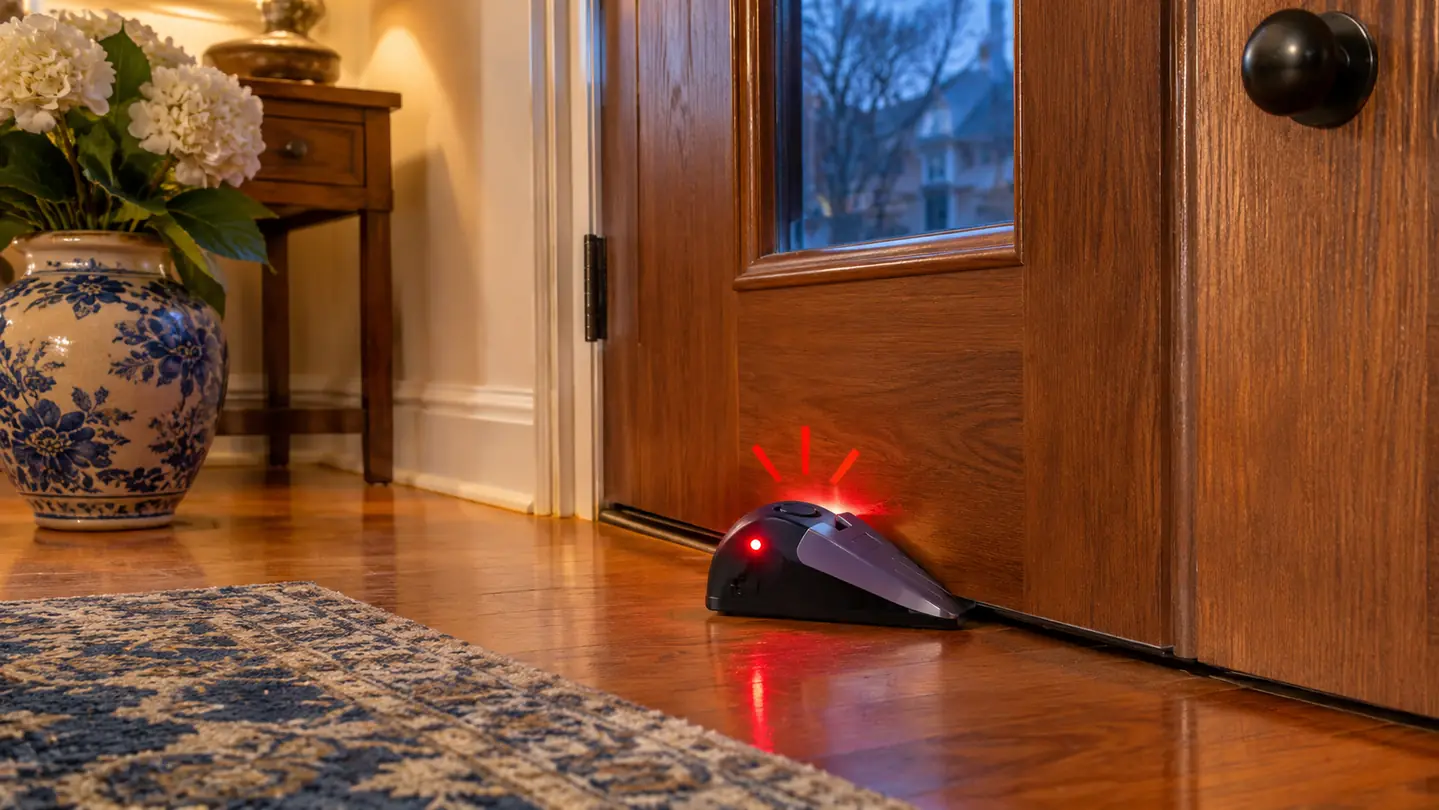
I have installed a lot of deadbolts in Columbus, Ohio. I have also stood in a lot of hallways explaining why a good lock does not help if the door frame is soft, the strike plate is short, or the door itself is hollow. When I retired from residential locksmith work, I kept a small box of tools and a shorter list of products I still recommend. The SABRE 120 dB Wedge Door Stop Security Alarm is on that list, with caveats. It is not a lock. It is not a replacement for a lock. It is a battery powered wedge alarm that sits under a door and sounds when pressure is applied, and after using one in my own house for the better part of a year, I can tell you where it earns its place and where it does not.
Most people buy one for a hotel room or a rental, and that is how I first used one. Carol and I took a trip to see our daughter in Cincinnati, and I brought the SABRE along because hotel doors often have gaps that would make a locksmith wince. The alarm did its job. It also taught me a few things about floors, door clearances, and the difference between a product that makes noise and a product that buys you time. That distinction is the whole review.
The Quick Verdict
A loud, simple, battery powered wedge alarm that adds a warning layer to a door. It is not a lock, the 90 day limited warranty is short, and it needs a floor that lets the wedge sit flat, but for travel and a bedroom door it does one job well.
Amazon Check Today's Price →If you want a door alarm that works without wiring, start here
The SABRE wedge alarm takes one 9V alkaline battery and no installation. Set it behind a door, check the low battery indicator now and then, and you have a 120 dB warning layer that travels in a suitcase.
Amazon Check availability on Amazon →How I've Used It
I have used the SABRE in three places: the basement door, our bedroom door when Carol was visiting our daughter, and the garage entry door. The basement door is the best test in my house because it has a gap just under 7/8 inch, which is the kind of gap the listing mentions. The floor there is concrete and not perfectly flat, so I had to seat the wedge with a little care. Once it was in place, pressure on the door set off the alarm. I did that on purpose once with my hands over my ears, and once by accident when I was carrying a box. Both times, the alarm was immediate and loud.
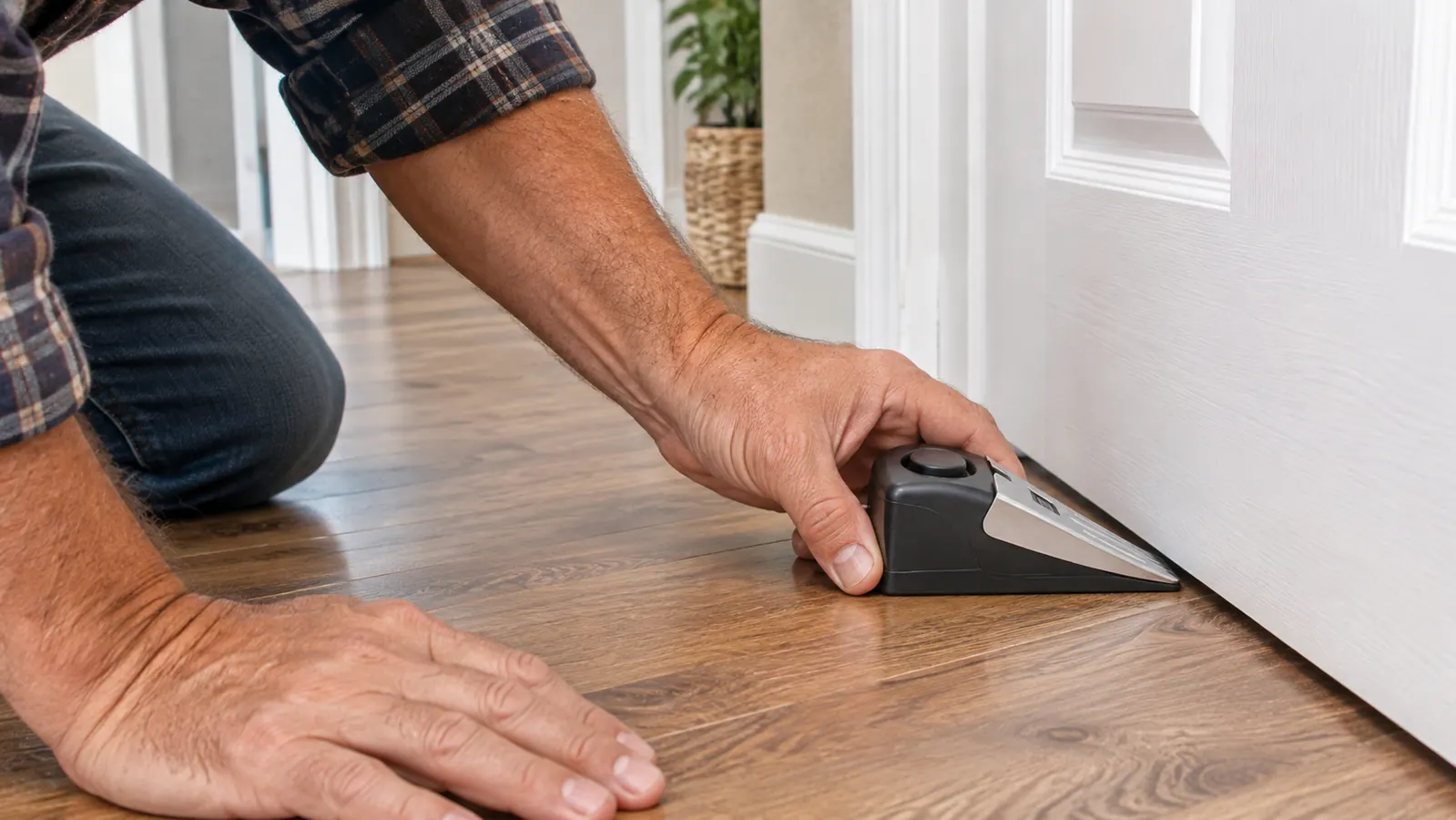
The bedroom door is a better everyday fit. The floor is hardwood, the door swings freely, and the wedge sits flat. I put it on the inside when I sleep, and I take it with me when I travel. In a hotel room, I set it against the entry door after I lock the deadbolt. It does not stop someone with a key from opening the door. It does make the first inch of movement loud enough that I wake up. That is the job I want from it.
The garage entry door has a metal threshold, and I was less sure about that one. The wedge sat on the hard floor and the non-skid pad held when I pushed the door. I would not use it as the only security on that door because it is an exterior door and it needs a real lock. I use it as a second layer when I am home and working in the basement. It tells me if that door moves. That is all it tells me.
One thing I did not expect: the alarm is loud enough that it made me jump even when I was the one who set it off. That is not a technical specification, but it is a real part of ownership. If you are easily startled, you will only make that mistake once. You will learn to put the wedge down and step away before you test the door.
What the SABRE Alarm Actually Does
The SABRE is a wedge that goes under a door. When the door is pushed, pressure on the wedge triggers a 120 dB alarm. The non-skid pad is meant to keep the door from opening while the alarm sounds. It is battery powered and needs no wiring. The whole unit is 6.5 inches long, 1.75 inches wide and 1.75 inches tall, and it weighs 4.8 ounces. That is small enough to drop in a carry on bag and heavy enough that it does not feel like a toy.
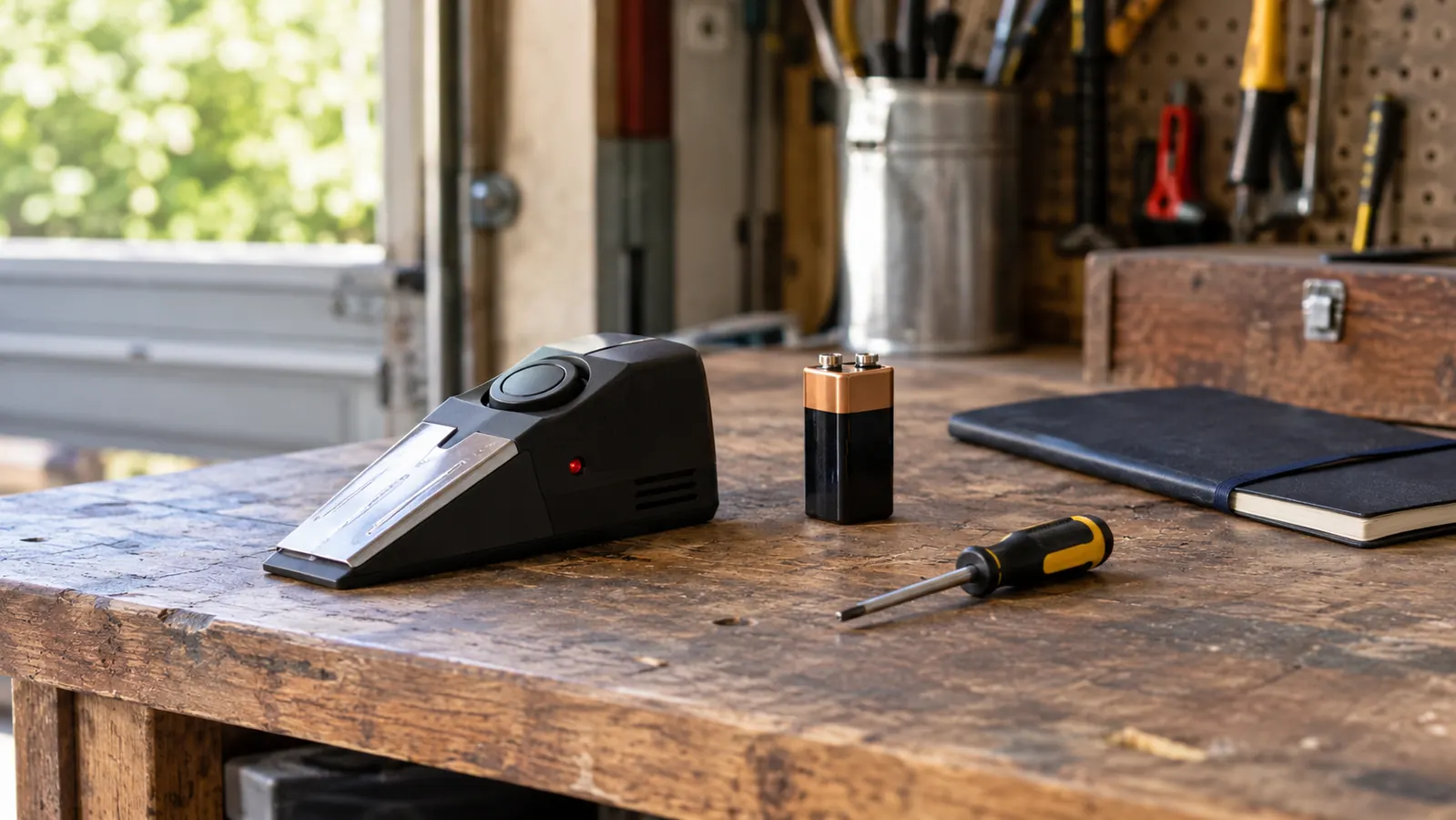
It takes one 9V alkaline battery. The battery compartment is held by a small screw, so you need a small screwdriver to open it. That is a minor hassle, but it also means the cover is not going to pop off in a suitcase. There is a low battery indicator, which matters more than people think. An alarm that is silent because the battery is dead is worse than no alarm at all, because you are relying on it.
The listing says the siren is audible up to 600 feet. In a house, walls and doors cut that down. In my basement, I could hear it clearly on the first floor. From the garage, I could hear it in the kitchen. That is the practical test I care about: can I hear it from the rooms where I actually spend time. The answer was yes.
The 120 dB Number in a Real House
120 dB is loud. I have fired a nail gun and I have set off a smoke alarm while cooking, and this alarm belongs in that category. I would not test it without hearing protection. In a quiet house at night, it is startling. That is the point. A door alarm is not there to fight someone. It is there to turn a quiet entry into a noisy one and to wake the people who live there.
The 600 foot rating is a manufacturer figure, and I take those with a grain of salt. Sound drops fast when it has to go around corners and through closed doors. What I can tell you is that the alarm was audible from every room on my first floor when it was set in the basement. It was muffled but clear from the far end of the garage. I also tested it with the basement door closed and the radio on. It was still audible. That is not a lab test, but it is closer to real life. If you live in a very large house or a house with thick masonry walls, do not expect the same result. Test it yourself before you rely on it.
A lock buys time by resistance. A door alarm buys time by noise. The SABRE does the second job, and it does it without wiring.
Door Gaps, Floors, and the Small Annoyances
The first thing to check is the gap under the door. The listing mentions a 7/8 inch gap, and that is a useful benchmark. If the gap is too small, the wedge will not fit. If the door drags on the floor, you may not get it seated. My basement door is close to that 7/8 inch figure and the wedge went under without forcing. The bedroom door has a little more clearance and the wedge sat easily. The garage entry door has a metal threshold and less room, but it still fit.
The floor matters as much as the gap. The non-skid pad held well on hardwood and concrete. On a low pile rug, the wedge shifted when I pushed the door, and I moved it back to the hard floor. That was not a failure of the alarm. It was a failure of my choice of surface. If you have wall to wall carpet, plan to put a hard tile or a thin board under the wedge, or plan to use it somewhere else. A door alarm needs a stable base.
The battery door screw is the annoyance I notice most. I keep a small screwdriver in the kitchen drawer, so it is not a real problem for me. If you travel with the SABRE, put a small screwdriver in your bag. The 90 day limited warranty is also short. I have seen worse, but I have also seen better. Treat the unit well, check the battery before a trip, and do not expect the warranty to cover years of use. It is a simple device and it is built to that standard.
What It Does Not Do
It does not call the police. It does not send a notification to your phone. It does not lock the door. It does not know the difference between a burglar and a family member who forgot to knock. Those are not flaws exactly. They are the limits of a simple wedge alarm. I mention them because people buy a device like this and then expect it to behave like a full security system. It will not. It is a local alarm with a pressure trigger and a loud siren.
It also does not work well as a travel alarm if you forget the battery. The low battery indicator helps, but only if you look at it. I check mine before every trip and I keep a spare 9V in the suitcase. That is the kind of small habit a device like this depends on. The same is true of a smoke alarm. The device is simple, but the maintenance is not optional.
And it will not stop a person who is determined to get in. A wedge under a door can be kicked aside. The alarm can be muffled by a thick door or a pile of laundry. I say that plainly because I spent 30 years looking at doors and I have no patience for security claims that ignore how a door actually works. The SABRE is a warning. Warnings are useful. They are not walls.
What I Liked
- 120 dB alarm is loud enough to wake a household
- No wiring and no installation
- Non-skid pad helps keep the door from opening while the alarm sounds
- Low battery indicator
- Portable enough for travel
- Simple enough to use without instructions
Where It Falls Short
- Not a lock and not a barrier
- 90 day limited warranty is short
- Battery compartment needs a small screwdriver
- Less stable on soft or uneven floors
- No monitoring and no phone alert
Who This Is For
This is for a renter who cannot change the locks, a traveler who wants a warning on a hotel door, or a homeowner who wants a second layer on a bedroom or basement door. It is also for someone who wants an alarm that does not need wiring, a subscription or a phone. It is a good fit if you understand that it is a warning device. It is a poor fit if you expect it to keep a determined person out. I recommend it to people who already have a good lock and want to know when the door moves. If you are in an apartment and the deadbolt is old or loose, this is a sensible thing to put behind the door at night. It is not a repair for the deadbolt. It is a second set of ears.
Who Should Skip It
Skip it if you need a lock, if you need a silent alarm, or if you need a product that works on deep carpet without any preparation. Skip it if you will not check the battery. Skip it if you need a long warranty or a monitored system. And skip it if you are looking for a barrier. The SABRE is not a barrier. It is a noise maker with a wedge and a non-skid pad. That is a useful thing, but it is a limited thing. I would rather you buy it for the right reason than be disappointed for the wrong one. If you want a device that physically resists the door, look at a door security bar instead. If you want a warning that fits in a bag, this is the one I would try.
A 120 dB warning layer for the door you sleep behind
The SABRE is the tool I keep in the travel bag and use on the basement door at home. It will not replace a deadbolt, but it will make a quiet door loud. Check the battery, set it on a hard floor, and know what it is for.
Amazon See the SABRE door stop alarm on Amazon →