
I have pulled a fair number of small safes out of bedroom closets. Not for people who forgot a combination. For people who came home to a closet door standing open and a shelf swept clean. Thirty years of house calls around Columbus taught me the same lesson every time, and it costs nothing to learn it from someone else's bad afternoon: the safe that gets carried off is the one sitting in plain sight, fastened to nothing, in the first room a stranger searches. Hiding beats hardening. It is not close.
That is the whole case for an in-wall safe, and it is why I keep coming back to the Paragon Lock & Safe unit in my own house. The body is 4 inches deep, the face measures 16.5 inches wide by 22 inches tall, and it holds 0.83 cubic feet. You cut the wall, you set it in, you hang something over it, and the room goes back to looking like a room. Below are ten reasons that arrangement hides valuables better than the closet box or the floor safe I used to recommend, plus an honest case for skipping it entirely.
Hiding beats hardening, every single time.
The Paragon Lock & Safe in-wall unit goes between the studs, runs on a keypad, and disappears behind a picture frame. Ratings and current price are on the listing.
Amazon Check Today's Price on Amazon →It is not in the room a burglar checks first
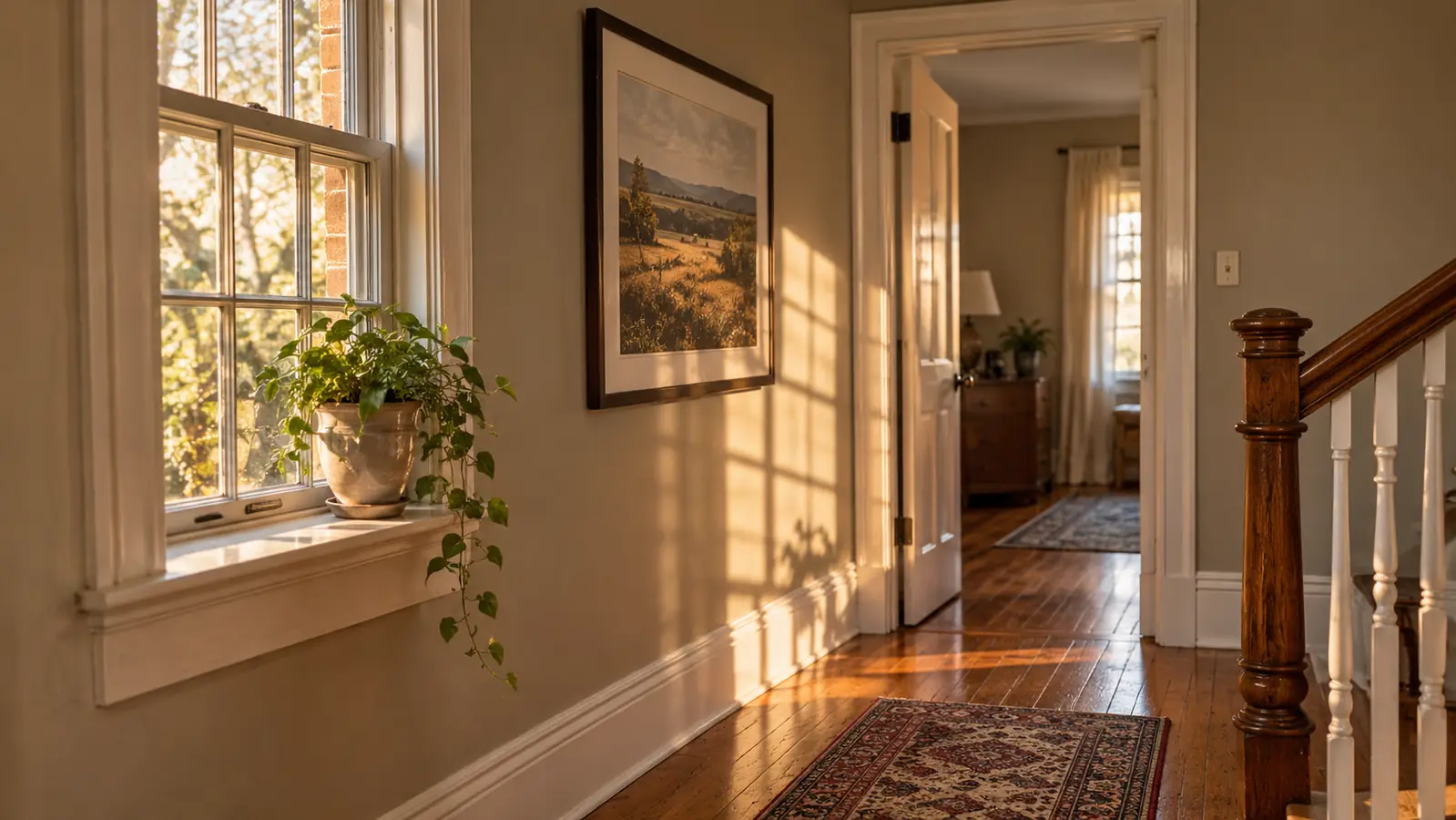
A closet safe is behind the sweaters. That is not concealment, it is a delay of about eight seconds. A wall safe lives inside the wall, so there is nothing to move aside and nothing to lift. The face measures 16.5 inches wide by 22 inches tall, small enough to sit behind a framed print in a hallway or a shelf of paperbacks in a home office. The valuables are still in the house. They are just no longer in a container with a handle on it.
Four inches of depth fits walls a floor safe cannot help with
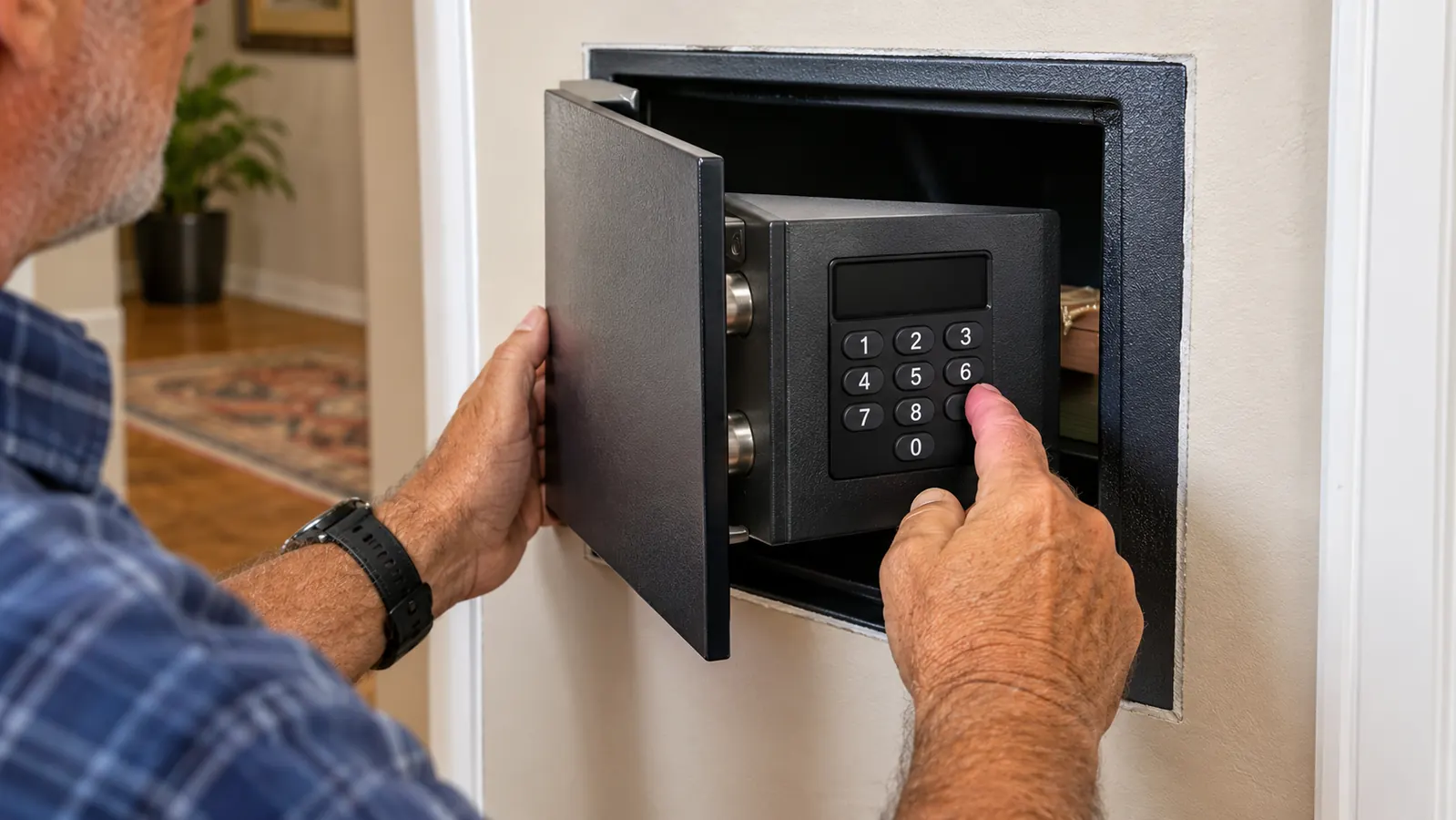
Depth is the number that decides whether a wall safe is even possible in your house. This one is 4 inches deep, so it goes into an interior partition without stealing the room on the other side. Two cautions from a man who has cut the wrong hole: check for a stud, a wire and a pipe before the drywall knife comes out, and measure the cavity instead of assuming all interior walls are built alike. Exterior walls carry insulation, and I would leave those alone.
0.83 cubic feet holds the paperwork you actually keep
The interior measures 14.25 by 3.75 by 20.25 inches, so a 9 by 12 folder slides in and lies down. That covers the deed, the insurance policy, passports, a birth certificate, and the envelope of cash you keep for a furnace that quits in January. What it will not do is swallow a three-ring binder standing upright. This is a safe for what matters, not for everything, and knowing the difference before you cut is worth more than a thicker door.
The keypad ends the spare key problem
The lock is a digital keypad, and you program your own master and guest passcodes from 3 to 8 digits. That matters more than it sounds. Nearly every safe I opened for a locked-out homeowner had the same story behind it, and the story was a key in a kitchen drawer, under a planter, or in a neighbor's junk bowl. A code lives in your head and nowhere else. There is a mechanical key override too, which I will get to.
A guest code you can hand out and take back
The keypad takes a guest passcode alongside the master code, so the HVAC man, the house sitter or your grown daughter visiting from out of town can reach the water shutoff without ever learning where the important envelope lives. When the work is done, reprogram it. I like this feature for a boring reason: people stop defeating their own security when it is convenient. Give someone a code they can delete and they will not leave the safe standing open.
Three wrong codes buys you twenty seconds of noise
Enter the wrong code three times and the built-in alarm sounds for 20 seconds. Twenty seconds will not bring a patrol car. What it does is end the quiet, and quiet is the thing a stranger in a dark hallway is counting on. A safe that shrieks turns a five-minute rummage into a decision to leave. That is the realistic job of an alarm on a wall unit, and this one does that job.
Anchor bolts turn a box into part of the house
The unit ships with anchor bolts, and this is the step people skip. A safe that is not fastened to the framing is a carrying case with a combination on it. Bolted in, it stops being a portable object and becomes a hole in the wall that has to be defeated with tools and time. Fasten it. Use the bolts that come in the box rather than the drywall anchors rattling around in your garage.
Alloy steel, with the wall doing the real work
The body is alloy steel rather than a molded shell, which is what you want in a unit this thin. I will be straight about the limits. The steel on any wall safe is thinner than the plate on a gun safe, because 4 inches of depth does not allow for more. The security here comes from the wall and from concealment, and the steel is there to stop the casual attempt. That is an honest trade, and it is the right one for papers and jewelry.
A key override for the day the battery dies
The listing puts battery life at 4 to 5 months, which means you will change batteries roughly twice a year and you will forget at least once. This is why I insist on a mechanical override, and the Paragon Lock & Safe unit has a key as well as the keypad. Put that key somewhere that is not the safe. Mine lives in a locked desk across the house, which sounds absurd until you have driven to a customer's home to drill a safe open.
It comes back out when you move
The unit is listed as portable and it mounts to the wall, which is a contradiction only until you have taken one out. Four anchor bolts come loose, the safe slides free, and you are left with a rectangular hole, a scrap of drywall and a pint of spackle. For a renter, that is a weekend repair and a deposit that survives. For a seller, it is a patch job before the listing photos. Either way, the safe goes with you.
What I'd Skip
Two things, and I would rather tell you than have you discover them later. The unit is not water resistant, and the listing makes no fire rating claim, so do not treat it as a document safe in a house fire or in a basement that takes on water. If the papers are the whole point, buy a fire-rated and water-resistant box for those and use the wall safe for what fire does not destroy anyway: cash, jewelry, a watch, spare keys. Carol's mother's rings live in ours, next to my father's watch, and neither of those is replaceable by a claims adjuster. Skip this one too if you want a single safe for a rifle, a coin collection and a passport. A 0.83 cubic foot wall unit is not that safe, and no amount of wishful thinking changes the interior dimensions.
Twenty seconds of noise in a quiet house is a long time. Not because anyone is coming, but because the man in the hall no longer knows whether he is alone.
One hole in the wall, and the valuables stop being portable.
The Paragon Lock & Safe in-wall unit: 4 inches deep, 0.83 cubic feet, keypad with a guest code, a 20-second alarm after three bad entries, anchor bolts in the box. Ratings and current price are on the listing.
Amazon Check Today's Price on Amazon →