
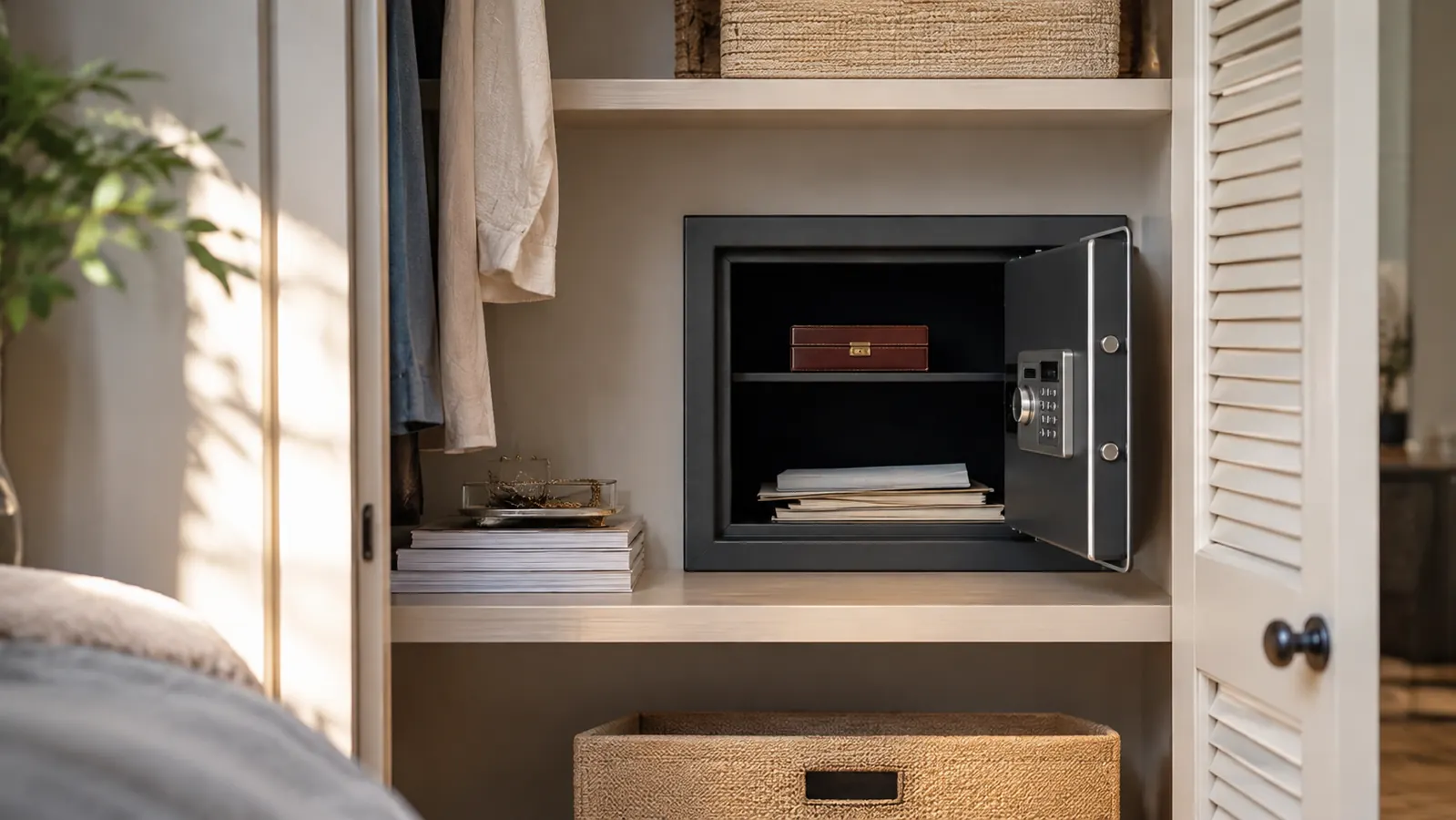
I have installed both kinds. The wall safe that disappears behind a closet wall, and the floor safe that gets bolted into a basement slab. When a homeowner asks me which one protects better, I tell them the question is wrong. Better against what? A teenager looking for cash in a sock drawer is not the same threat as a fire that starts in the kitchen at two in the morning. The safe has to match the job.
For most people in a normal house, the Paragon Lock & Safe In Wall Safe with Electronic Keypad protects better against the common burglary, because it is hidden and quick to use. It is not a fire safe and it is not water resistant. A floor safe protects better against a thief who has found the safe and brought tools, and it is the better choice if you are storing items that must survive a fire and you buy a model with a real fire rating. The rest of this article is the reasoning behind that split. I am not going to sell you one box and pretend it does everything.
| Paragon Lock & Safe In-Wall Safe | Floor Safe | |
|---|---|---|
| Concealment | Sits inside a wall cavity behind a closet or cabinet, off the usual search path | Visible once someone reaches the basement or utility room |
| Everyday access | Keypad at chest height, 3 to 8 digit master and guest codes, plus key override | Lid at floor level, so you kneel or bend to open |
| Lock and alarm | Electronic keypad and key; alarm sounds for 20 seconds after 3 incorrect codes | Depends on model; many have no alarm |
| Resistance to removal | Anchor bolts hold it to wall framing, but the wall itself can be opened | Heavy steel body set into and bolted through concrete |
| Fire protection | No fire rating; not water resistant | Can be fire rated if you choose a rated model; concrete alone is not a rating |
| Water protection | Not water resistant | Depends on placement and seal; a slab can let water in |
| Capacity | 0.83 cubic feet; interior listed at 14.25 by 3.75 by 20.25 inches | Varies widely; many in-floor units hold less usable volume |
| Installation | Cut drywall between studs; anchor bolts included | Cut and patch concrete; often a pro job |
| Best for | Cash, papers, jewelry, and keepsakes you want hidden and handy | Heavy items, documents in a rated model, and owners who want removal resistance |
Where the Paragon In-Wall Safe Wins
The Paragon Lock & Safe unit wins on concealment, and concealment is not a small thing. Most of the burglaries I dealt with were not planned by a professional. They were quick visits. A door gets kicked, drawers get pulled, a closet shelf gets swept onto the floor. The search follows a path. Bedroom, dresser, closet, maybe the freezer. A safe set into the wall behind a hanging shirt is off that path. It does not need to be stronger than a saw if nobody knows it is there.
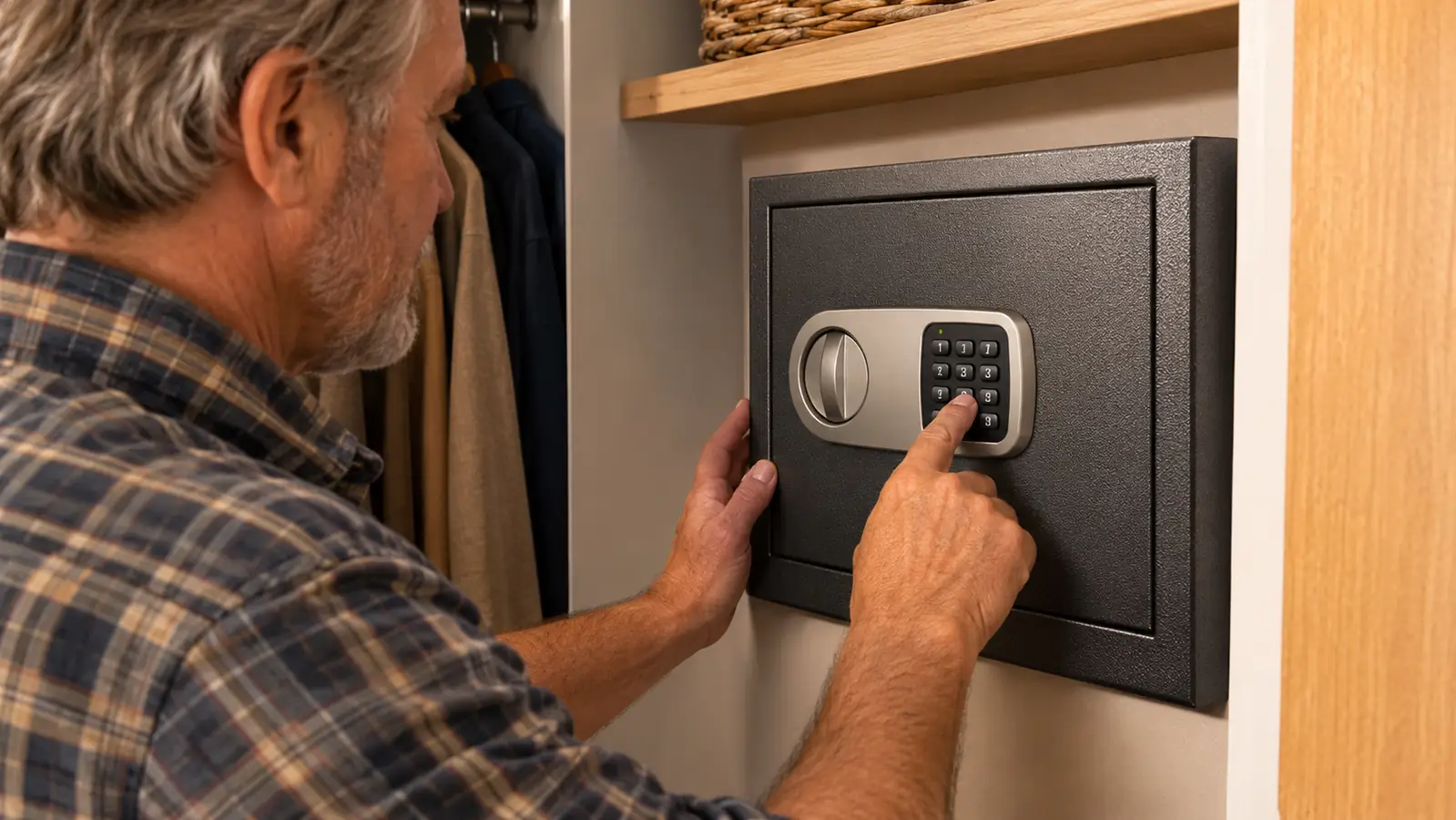
It also wins on daily use. The keypad takes a master and guest code from 3 to 8 digits. There is a key override, which matters when the battery dies or someone forgets the code. The alarm sounds for 20 seconds after 3 incorrect codes. That is not going to stop a determined thief, but it will make a curious kid or a nosy houseguest stop and think. A safe you actually open is a safe you use. A floor safe under a rug in the basement is one you stop checking.
Where a Floor Safe Wins
A floor safe wins once someone has found it. That is the honest trade. A floor safe is heavy steel set into concrete. Getting it out is work. A wall safe is anchored to framing with the included bolts, but the wall around it is still drywall. A thief with a utility knife and a pry bar can open the wall in less time than it takes to read this page. The lock may hold. The wall is the weak point.
It also wins on fire protection, but only if you buy a rated model. The Paragon Lock & Safe in-wall safe has no fire rating and is not water resistant. A floor safe can be a rated container, and concrete gives it some thermal mass. That is not automatic. Concrete alone is not a fire rating. If you want papers to survive a house fire, look for the label and understand what it covers. A floor safe also has a water problem. A slab can wick moisture, and a basement can take on water. Placement matters.
If hiding the safe is the point, start with the Paragon Lock & Safe unit
It fits between wall studs, runs on a keypad, and gives you a place for the items you want out of the usual search path. Check the cavity depth before you cut.
Amazon Check Availability on Amazon →What the Paragon In-Wall Safe Actually Is
The Paragon Lock & Safe In Wall Safe is a steel box meant to sit inside a wall cavity. The outside is listed at 4 inches deep, 16.5 inches wide, and 22 inches high. The listing gives an interior of 14.25 by 3.75 by 20.25 inches and a capacity of 0.83 cubic feet. That is enough for passports, a folder of papers, cash, a jewelry box, and a few keepsakes. It is not enough for a rifle, a large document box, or a shoebox of family photos. Measure what you have before you order.
The body is alloy steel. The lock is electronic and keyed. You program a master code and a guest code, each from 3 to 8 digits. The keypad is the everyday way in. The key is the backup. The alarm is built in and sounds for 20 seconds when a code is entered incorrectly 3 times. Anchor bolts are included, and they are not optional. A wall safe that is not bolted to the framing is just a heavy box in a hole.
I test a safe by using it the way a household uses it. Can Carol get the passports without me? Does the keypad wake up in a dark closet? Does the door open without scraping? The Paragon is a simple box, and that is a compliment. You press a code, open the door, and take what you need. The battery has to be changed on a schedule, so put a note in your phone.
What a Floor Safe Actually Does
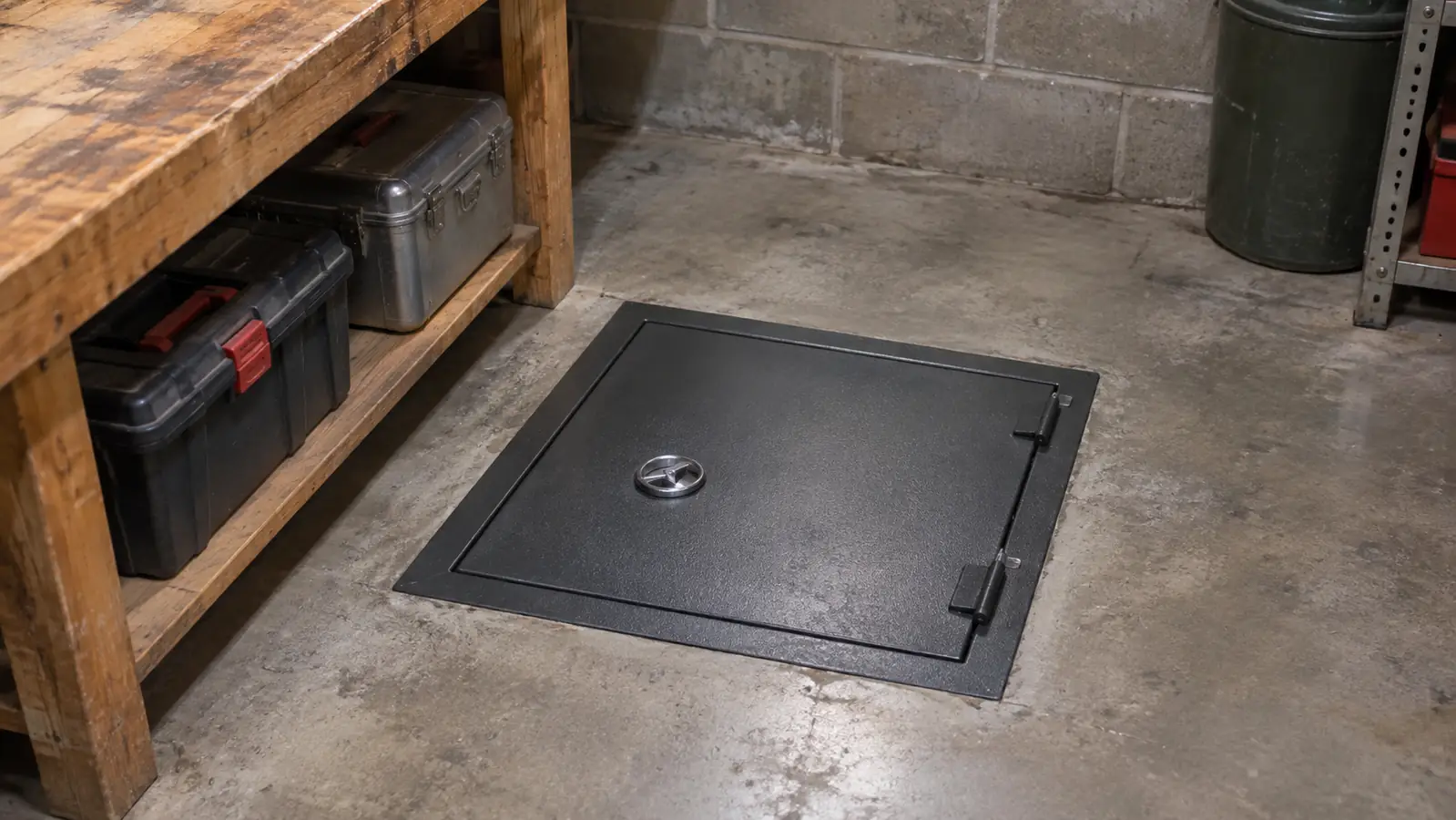
A floor safe is a different animal. It is a steel body set into a concrete slab, often with a plate that sits flush with the floor. The security comes from mass and from the concrete around it. You do not carry it out. You do not pull it through drywall. A thief needs a saw, a jack, or a lot of time. That is why businesses and serious collectors use them. It is also why they are a poor fit for an upstairs closet or a rental.
A floor safe is not automatically fireproof. Some are rated, many are not. A floor safe is not automatically waterproof either. A slab can hold moisture, and a basement can flood. If you are storing documents that must survive a fire, you need a rated container, not just a heavy lid. If you are storing tools or jewelry, a floor safe with a good lock may be enough. The category is broad. The label on the specific model is what matters.
A wall safe does not beat a burglar. It beats the four minutes he is willing to spend looking.
The Installation Question
Wall safe installation is a carpentry job with a lock at the end. You find the studs, check the cavity depth, cut the drywall, and set the body. The anchor bolts go into the framing. The patch work is small. The hard part is picking a wall that has the depth and does not have a wire or a pipe running through it. I have opened walls that looked perfect and found a drain stack. Check before you cut.
Floor safe installation is a concrete job. You cut the slab, dig out the hole, set the body, and patch the concrete. The dust is fine and it gets everywhere. The patch has to cure. If the safe sits in a basement, you also have to think about water. A floor safe installed in a low spot is a bucket with a lock. I have seen more than one that smelled like a damp basement when it was opened.
Which installation is easier? The wall, almost every time. A handy homeowner can do it in an afternoon with a drywall saw and a level. The floor is a pro job or a long weekend with a rented saw. That ease is part of the protection argument. A safe that is easy to install is a safe that actually gets installed. A floor safe that sits in the garage because the slab job never happened protects nothing.
Fire, Water, and the Limits of Both
Fire is where the two products separate cleanly. The Paragon Lock & Safe in-wall safe is not fire rated. It is also not water resistant. That is not a flaw in the design. It is a different product for a different job. If a fire starts in the kitchen, the wall safe is a steel box in a hot wall. The contents may survive or they may not. You should not bet passports on it. A fire-rated floor safe is a better bet, and a rated document bag inside either one is better still.
Water is less obvious. A wall safe sits above the floor, so a minor leak may not reach it. But it is not water resistant, and a burst pipe or a roof leak does not care about height. A floor safe is in the slab. If the basement takes on water, the safe is in the water. If the slab wicks moisture, the safe is in the moisture. If you live in a wet basement, fix the water first. No safe solves a wet basement.
The practical answer is to separate the jobs. Use the in-wall safe for the things you want hidden and handy. Use a rated container for the things that must survive a fire. Use a safe deposit box or a trusted relative's house for the irreplaceable paper you do not need at home. That is not a pitch for three products. It is how I would set up my own house, and it is how my own papers are split.
The Break-In Math
Most home burglaries are short. I am not going to quote a statistic I cannot verify. I can tell you what the damage looks like on a house call. The door is kicked or pried. The drawers are pulled out and dumped. The closet shelf is swept onto the floor. The search is fast and it follows a script. A hidden safe breaks the script. A floor safe changes the clock. The wall safe wins on the first, the floor safe wins on the second.
No small safe is a guarantee. Anyone with a truck, a saw, and unlimited time can get into almost anything in a house. The goal is to make your items not worth the time. A hidden wall safe does that by being absent from the search. A bolted floor safe does that by being heavy and slow. The worst choice is a portable lockbox on a closet shelf with a handle. That is not a safe. That is a carrying case with a lock.
Who Should Buy Which
Buy the Paragon Lock & Safe in-wall safe if you own your home or have permission to cut a closet wall, you want fast access to papers, cash, and jewelry, and your main worry is the quick burglar who goes through the usual spots. Buy a floor safe if you own the concrete, you are storing heavier items, you want the stronger resistance to removal, and you are willing to buy a rated model and deal with the installation. If you have both a closet wall and a basement slab, use both. Put the daily items in the wall and the documents in the floor. That is not overkill. That is matching the container to the threat.
The safe a quick burglar never sees is the one behind the wall
The Paragon Lock & Safe in-wall unit gives you a keypad, a key backup, an alarm, and a hiding place that fits between studs. Measure your cavity, check for wires, and anchor it to the framing.
Amazon See Current Availability on Amazon →