
A wall safe looks like a simple purchase until you are standing in a closet with a tape measure in one hand and a checkbook in the other. You have a short list of things you want out of the sock drawer: passports, a cash envelope, maybe a watch and a couple of rings. You do not want a four-hundred-pound floor safe bolted through the slate. You want something that disappears into the wall and opens fast. That is the job the Paragon Lock & Safe in-wall safe is built for, and after more than a year with one in my basement wall, I can tell you where it does that job and where it does not.
I am Gordon Pike. I spent about 30 years as a residential locksmith in Columbus, Ohio before I retired. I have opened a lot of cheap safes for people who lost a key or forgot a code, and I have installed a few good ones. When I bought this one, I wanted a shallow steel box for papers, cash, my father's watch, and Carol's mother's rings. The Paragon Lock & Safe unit has been in the wall long enough for the novelty to wear off, which is the only way to judge a safe. Either it still works without fuss or it becomes a story you tell at the kitchen table.
The Quick Verdict
A well-sized shallow wall safe for papers, cash and small keepsakes, with a keypad and a local alarm that do their jobs. It is not fire rated or water resistant, so buy it for concealment and quick access, not disaster protection.
Amazon Check Today's Price →The Wall Safe I'd Use for Papers, Cash and Rings
If you have a standard stud bay and a short list of valuables, this Paragon Lock & Safe model is a sensible starting point. Check the interior dimensions against your items before you cut the wall.
Amazon Check Today's Price on Amazon →How I've Used It
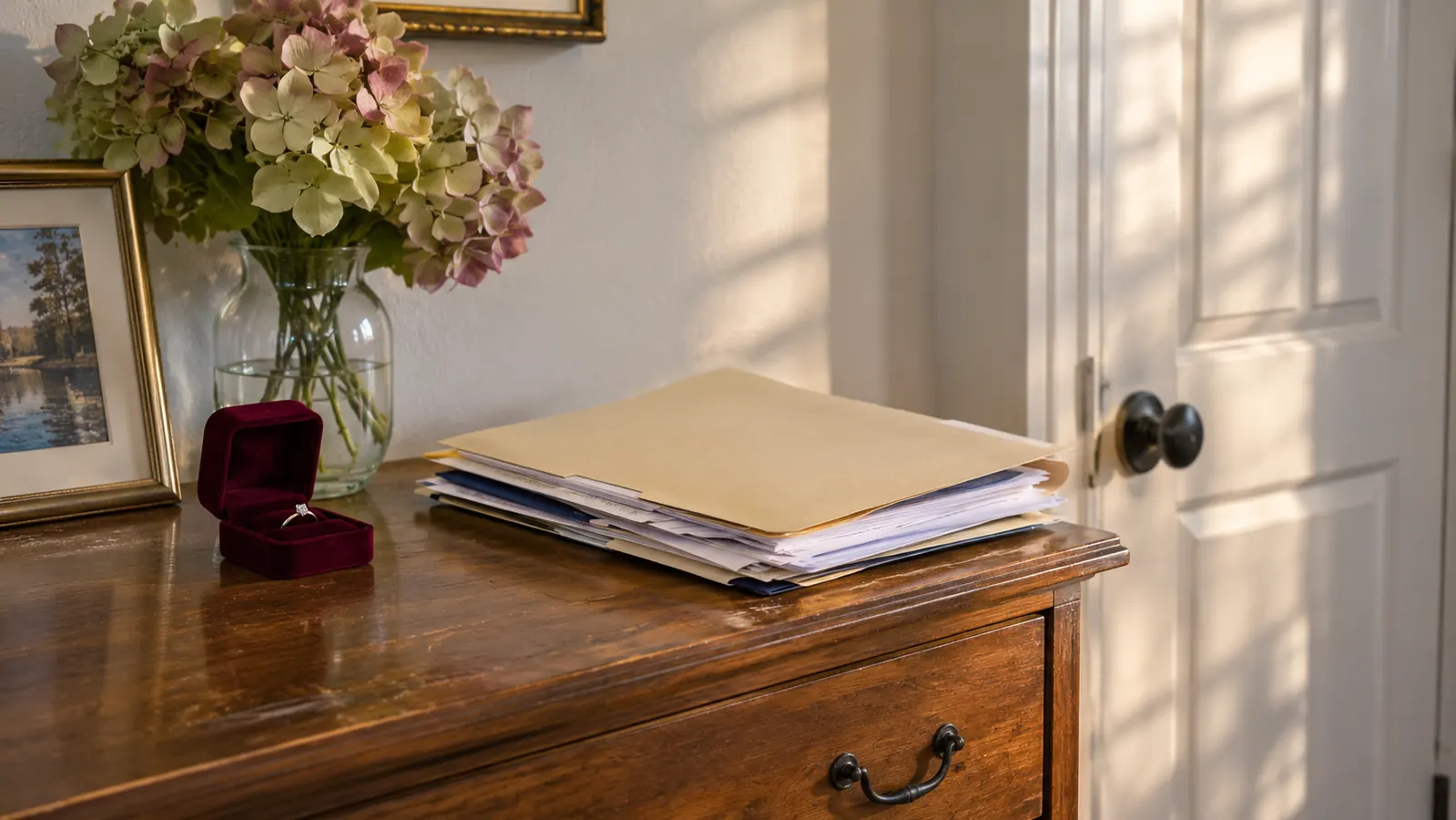
I mounted mine in the wall of my basement workroom, between two studs, at about chest height. I used the anchor bolts that came with the safe. The wall there is dry and away from the floor drain, which matters because the listing says the safe is not water resistant. I keep a folder of insurance papers, a cash envelope, my father's watch, and Carol's mother's rings inside. None of those things take up much room. That is the point.
Before this one went into the wall, those same papers lived in a plastic lockbox on the closet shelf. That lasted about a month. A lockbox is portable, which means it is portable for whoever picks it up, and I was forever sliding it out to hunt for a receipt I had already filed. I also tried a small steel box on a shelf in the den, and that one collected dust and spare keys and nothing else. The wall safe fixed both problems at once. It does not move, and it does not clutter a surface I have to look at every day.
I set a master code and a guest code. The listing says each code can be 3 to 8 digits. I use the guest code when our daughter visits from Cincinnati and needs to get to a document we keep for her. When she leaves, I change the guest code. That takes less time than finding a hiding spot for a key. The lock is listed as electronic and key, so I keep the key somewhere else in the house, not taped to the back of the safe.
Over the past year I have opened it in a hurry and with an arm full of mail. The keypad has taken the code every time. The door has not sagged. The alarm has gone off only when I tested it. That is a low bar, but a lot of inexpensive safes fail it. I have also had to explain to Carol why the guest code is not her birthday. That is a separate issue.
What the Keypad and Alarm Actually Do
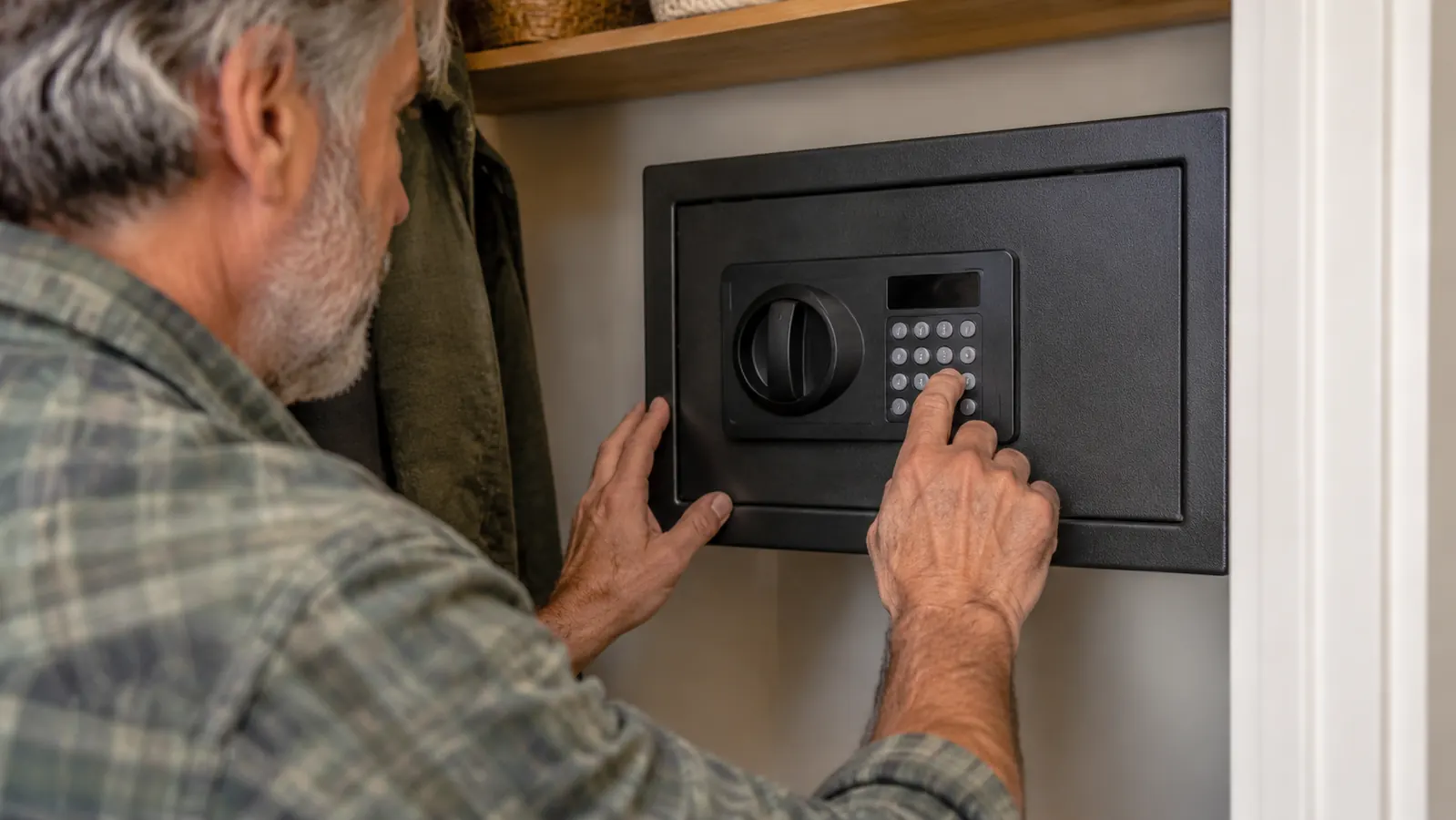
The interface is an LED keypad. You program a master code and a guest code, each from 3 to 8 digits. The safe is listed with touchpad control, so you are pressing a flat keypad rather than turning a dial. That is the right setup for a wall safe. A dial would be slow and awkward at chest height. The keypad is the reason this safe gets used instead of becoming a shelf for old receipts.
The alarm is the part people ask about. The listing says a built-in alarm sounds for 20 seconds when a code is entered incorrectly three times. That is a local noise maker. It is audible in the room and probably down the hall. It is not a monitored alarm, and the specs do not list an app, Wi-Fi, or phone alert. If someone is in your house and knows what they are doing, 20 seconds of noise may not stop them. It may shorten the visit. Treat it as a nudge, not a security system.
The lock type is listed as electronic and key. I like having both. Keypads fail, batteries die, and people forget codes. A key path gives you a way in without drilling the door. But the key is also a weakness if you leave it in the same room. I keep mine in a separate part of the house. That is basic locksmith advice, not a knock on this particular safe.
Sizing, Depth and Installation
The exterior is listed at 16.5 inches wide, 4 inches deep, and 22 inches high. The interior is listed at 14.25 inches by 3.75 inches by 20.25 inches, with 0.83 cubic feet of capacity. The 4-inch depth is the number that matters most. This is a shallow wall box. It is made to sit between studs, not to swallow a fireproof document bag, a laptop, or a long gun. If you are looking for a deep floor safe, this is not that product.
I measured a manila envelope and a passport before I cut anything. A passport is roughly 3.5 by 5 inches, a manila envelope is 10 by 13, and both fit flat with room left over in the 14.25 by 20.25 interior. What did not fit was the three-ring binder of insurance paperwork I had been hauling around since 2011. I pulled the pages, stapled each section in the corner, and laid them flat instead. That is the compromise this depth asks of you, and it is a fair one for a box that hides in a wall.
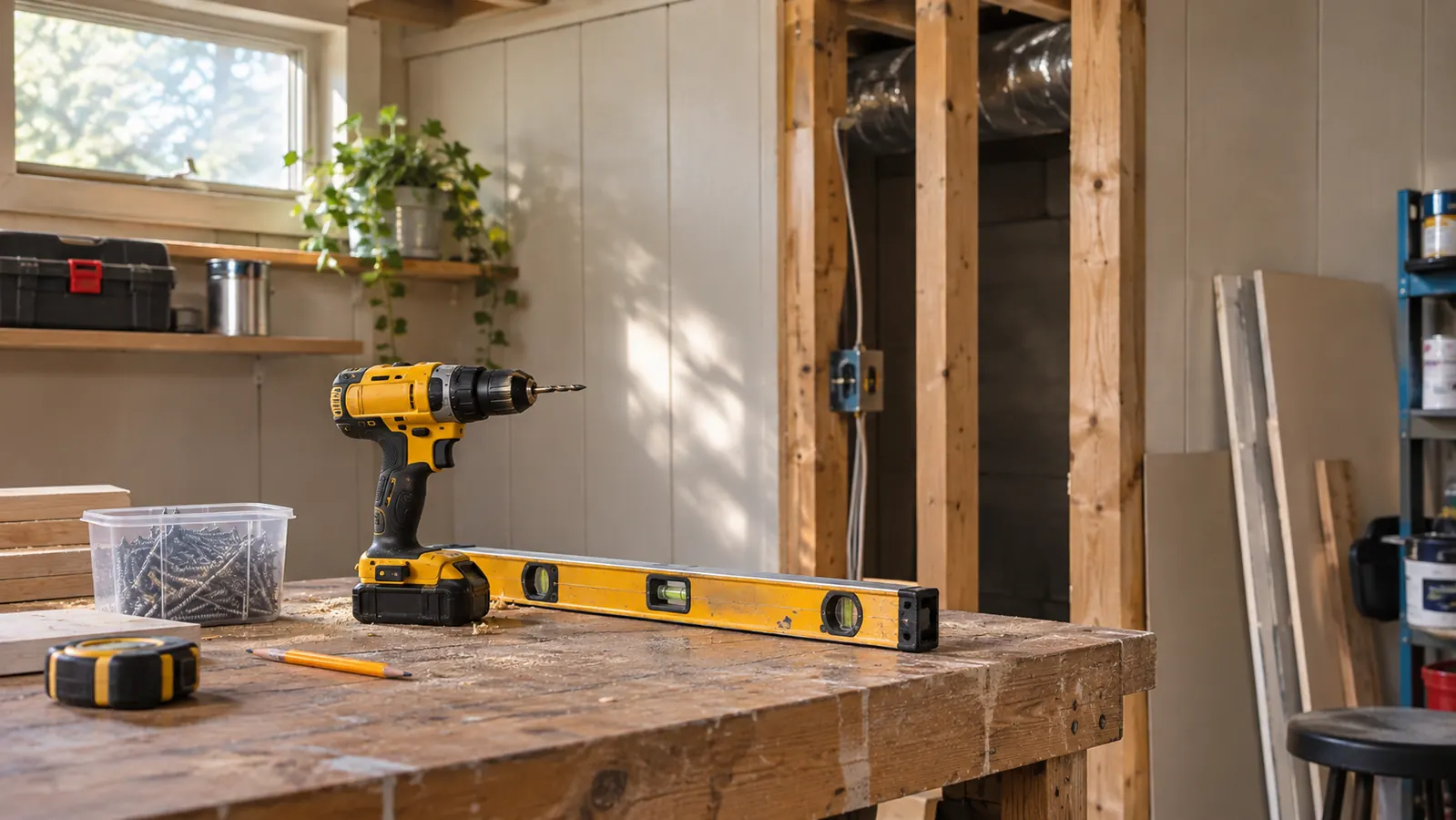
Before you cut, find the studs with a stud finder and check for wires and pipes. I have seen homeowners cut into a wall and find a drain stack or a cable run the hard way. The safe includes anchor bolts, and you should use them. The mounting type is wall mount, and the body is alloy steel. That does not make it a bank vault, but it keeps the box from sliding out of the wall when the door is pulled open.
The opening you cut should be tight enough that the face sits flush and the anchor bolts have solid wood to bite. If the drywall is old and crumbly, add a wood frame or back the anchors with a board. I used a level on both sides before I tightened anything. A wall safe that is a quarter inch out of level will annoy you every time you open it. The installation is a weekend job for a careful homeowner and a couple of hours for someone who has done it before.
One more installation note: this is not a job for a hammer and a hope. The safe is alloy steel, and the anchor bolts need solid framing. If you hit a stud bay that is packed with insulation, do not compress the insulation into the back of the safe. Leave the cavity clean so the box sits square. If the wall is plaster and lath, cut a test hole first and find the framing before you commit to the full opening. I have patched enough bad cuts to know that a ten-minute check saves a weekend of drywall work.
What Held Up Over Time
After more than a year, the keypad still accepts the master and guest codes on the first or second try. The door closes squarely. The lock has not needed adjustment. The anchor bolts have not loosened. The alarm still sounds when I test it. I have not had to repair anything, and I have not had to explain a failure to Carol. That is the whole review in one paragraph, but the details matter.
I installed it in March of last year and swapped the batteries in October out of habit rather than need. The listing puts battery life at 4 to 5 years, and nothing this past year argues with that. The keypad has never needed a second press to wake up, and it has never blinked a low-battery warning at me. When the time does come, I would rather change them early on a Saturday than stand in the basement with a dead keypad and a key I have hidden somewhere clever.
The inside is not large. A folder of papers fits, but a stack of binders does not. A watch and a few rings fit in a small box, but a jewelry case the size of a shoebox does not. I knew that when I bought it, because I measured first. If you skip that step, you will be disappointed and you will blame the safe. The capacity is 0.83 cubic feet. Write that number down and compare it to the pile of things you want to protect.
The safe is not water resistant. I keep that in mind in a basement. I would not mount it on an exterior wall where condensation forms, and I would not put it under a bathroom or a laundry room. If your basement floods, this safe will not keep the contents dry. The listing is clear about that, and I appreciate a product that does not pretend otherwise.
I would not put anything in this safe that cannot take a little humidity. Paper and jewelry are fine in a dry room. A vintage photograph, a leather document, or a piece that rusts easily deserves a sealed bag or a different location. The safe is a steel box in a wall, not a climate-controlled case. That is not a defect. It is a fact to plan around.
Where It Falls Short
The biggest limitation is disaster protection. The listing does not give a fire rating, and it says the safe is not water resistant. If your main concern is a house fire or a burst pipe, this is the wrong tool. A fireproof document box or a rated floor safe is a better answer for that job. This safe is for concealment, quick access, and keeping casual hands out of your papers. It is not a lifeboat for heirlooms.
The second limitation is size. The exterior is 22 inches high and 16.5 inches wide, but the interior is shallow. You are not going to store a large coin collection in albums, a full binder of certificates, or a box of family letters. You are going to store flat papers, cash, passports, a few pieces of jewelry, and small keepsakes. That is a real use. It is just not every use.
The third limitation is the alarm. Twenty seconds of noise is better than nothing, but it is not a monitored system. The specs do not list an app or a remote alert. If you want to know when the safe is opened, this is not that product. If you want a local deterrent and a keypad that is easy to use, it is fine. I would rather have a safe that gets used than a complicated one that does not.
It is worth being plain about which job you are buying. A box a burglar cannot carry off is one job, and this Paragon Lock & Safe unit does it well as long as the anchor bolts are biting real framing and not drywall dust. A box that survives the house falling on it is a different job entirely, and the two are not the same purchase. If you try to make this safe do both, you will end up with a box that does neither well.
The 4-inch depth is the whole story. This safe fits between studs, and it will not fit the fireproof box or the binder you were hoping to hide. Measure both before you cut.
What I Liked
- Shallow 4-inch exterior depth fits a standard stud bay.
- Electronic keypad with master and guest codes from 3 to 8 digits.
- Audible alarm sounds for 20 seconds after three incorrect codes.
- Lock type includes a key as well as the keypad.
- Anchor bolts included and alloy steel body.
- 0.83 cubic feet is enough for papers, cash and small jewelry.
Where It Falls Short
- Not water resistant.
- No fire rating listed.
- Interior is shallow and will not hold large binders or boxes.
- Alarm is local only, with no app or remote alert in the specs.
- Keypad is another point of failure, so keep the key elsewhere.
Who This Is For
This is for a homeowner with a dry interior wall and a short list of flat or small valuables. It is for the person who wants passports, a cash envelope, a watch, and a few rings out of the sock drawer but still close at hand. It is also for someone who has a closet or basement wall where a shallow box can disappear behind a hanging shirt or a shelf. If you can cut a neat opening, use a level, and tighten anchor bolts, you can install it. If you are a renter, get permission before you cut.
Who Should Skip It
Skip it if you need fire protection, water protection, or room for large documents and collections. Skip it if you want a safe that reports to your phone or a monitoring company. Skip it if you are not willing to measure the wall cavity and the contents first. And skip it if the wall is damp, on an exterior wall, or under a plumbing line. A safe that keeps papers dry in normal conditions is useful. A safe that traps moisture against them is a problem.
If You Have a Dry Stud Bay and a Short List, This Is a Good Fit
The Paragon Lock & Safe in-wall safe does the small job well: quick access, a keypad, a local alarm, and a shallow box that stays out of sight. Check the current price and confirm the interior dimensions before you cut.
Amazon Check Today's Price on Amazon →