
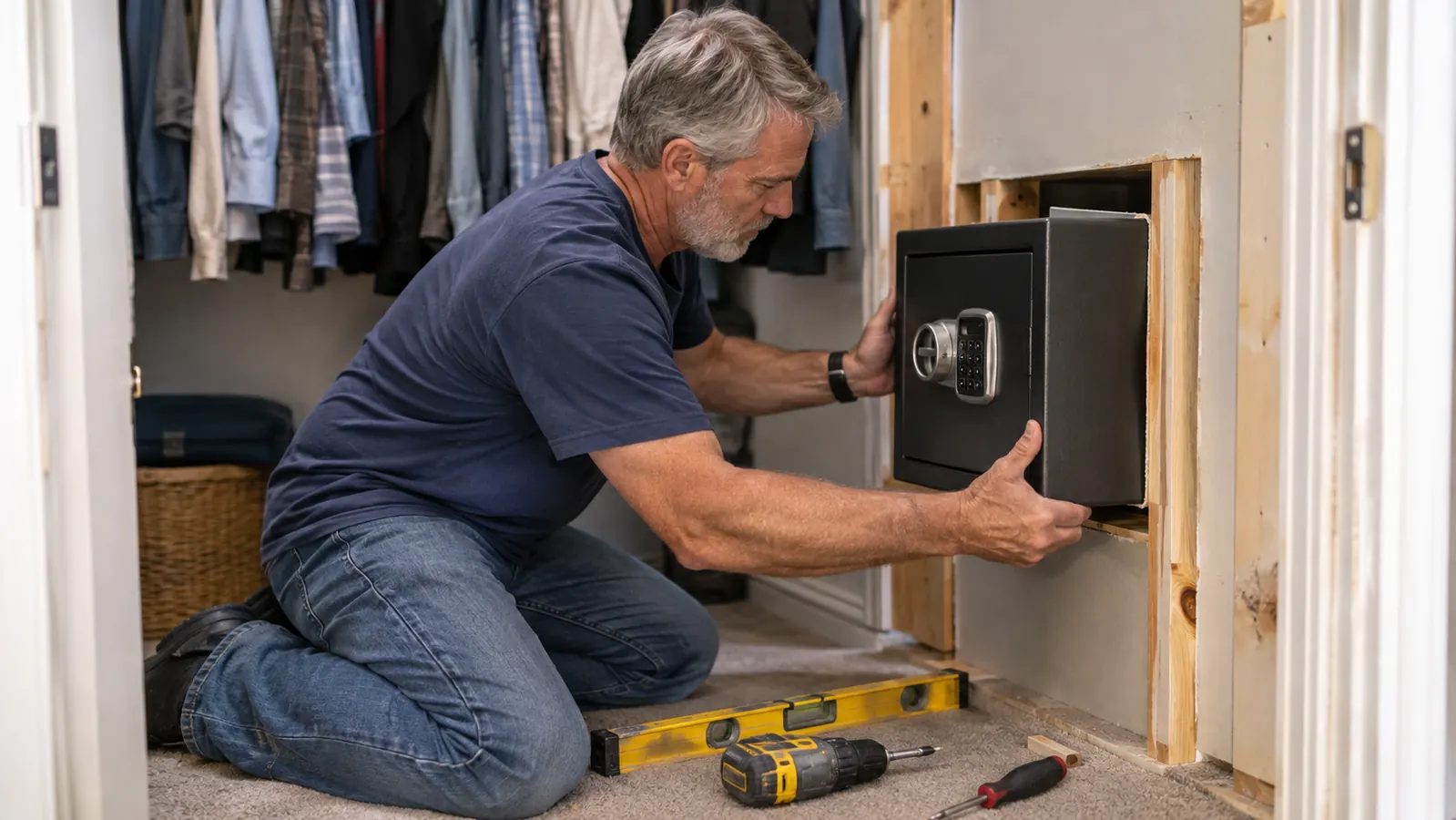
I spent about thirty years opening things for a living. Mostly I opened doors for people who had locked themselves out, but a good chunk of the job was opening safes for people who had lost a combination, or for people who had inherited a house with a safe in it and no idea what was inside. In three decades I drilled, pried, and defeated a lot of hiding places. The ones that gave me the most trouble were never the impressive ones. Which is why the safe in my own bedroom closet is a Paragon Lock & Safe in-wall model and not the big steel box a salesman would have sold me.
The impressive ones were usually in the bedroom, sitting out in the open, bolted to the floor with the bolts showing. Big steel box, heavy door, thick lip around the edge. I would look at it and think: that took the homeowner forty minutes to install and it will take me nine minutes to get into. Then I would get into it in nine minutes, because the owner had told me the combination was probably a birthday.
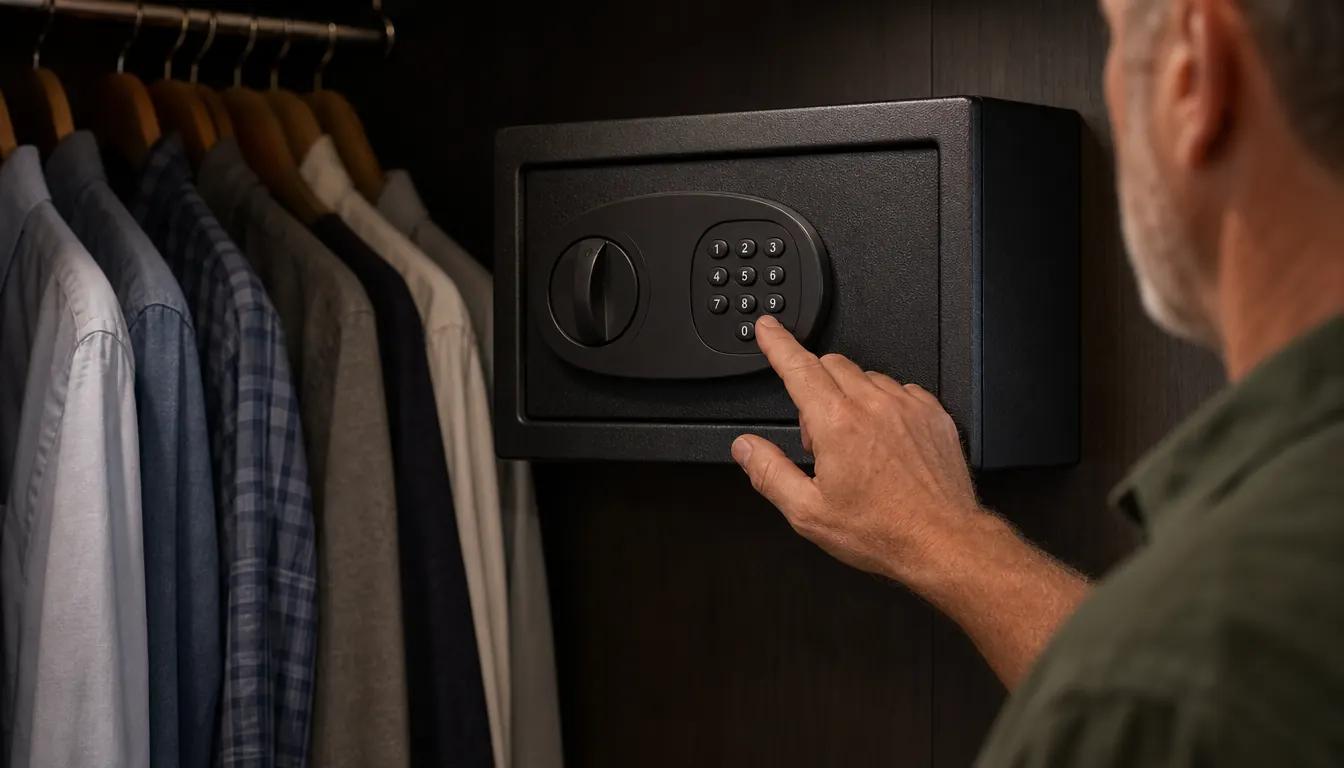
The ones that slowed me down were the ones where I had to stop and think about whether the thing was even there. A safe recessed into a wall cavity behind a hanging rod of shirts is that kind of safe. It does not look like much. It does not weigh much. But when a person is walking through a house in a hurry, they are not pulling clothes off a rod to check the drywall.
That is why that Paragon Lock & Safe unit is cut into the wall of my own bedroom closet, behind the shirts Carol keeps threatening to thin out. I installed it more than two years ago and I would install it again tomorrow.
A floor safe announces itself. A wall safe behind a rod of shirts just looks like a closet.
Here is what I tell people who ask me about the Paragon Lock & Safe in-wall model. It is an alloy steel box, 16.5 inches wide, 22 inches tall and 4 inches deep on the outside, with an interior chamber of 14.25 by 3.75 by 20.25 inches and a stated capacity of 0.83 cubic feet. That last number matters more than the others. Four inches of depth is the whole story. It goes between standard studs, which means it also holds about four inches of things.
Papers, yes. Passports, birth certificates, the deed to the house, a folder of insurance paperwork. Cash in a flat envelope. Carol's mother's rings in a small pouch, my father's watch in its box. What it will not take is a shoebox of silver dollars or a long gun or a big jewelry case. If you want to lay a rifle flat or store a document box upright, measure your things before you cut a hole in the wall. I have watched people get this backwards and then get angry at the safe.
The lock is a touchpad with a key backup. You program your own master code and your own guest code, three to eight digits each, and I would suggest you use all eight. Three digits is a number a bored teenager guesses before the pizza arrives. The keypad is the part I would have complained about twenty years ago, back when electronic locks were a coin flip. This one has behaved. Batteries, in my experience with it, run four to five months of regular use, and I change them on a calendar rather than waiting to find out the hard way.
There is also an audible alarm on the unit. Punch in a wrong code three times and it sounds for twenty seconds. I want to be honest about what that is worth: it is a noise in a house, not a security system. It does one useful thing, which is that it tells a person fiddling with the keypad that they are not going to quietly guess their way in. It also tells you, if you are home, that somebody is at the closet.
The safe I would cut into my own wall again
Standard stud spacing, 4 inches deep, keypad with a key backup. Check the current price and the mounting dimensions before you pick a wall.
Amazon Check Today's Price on Amazon →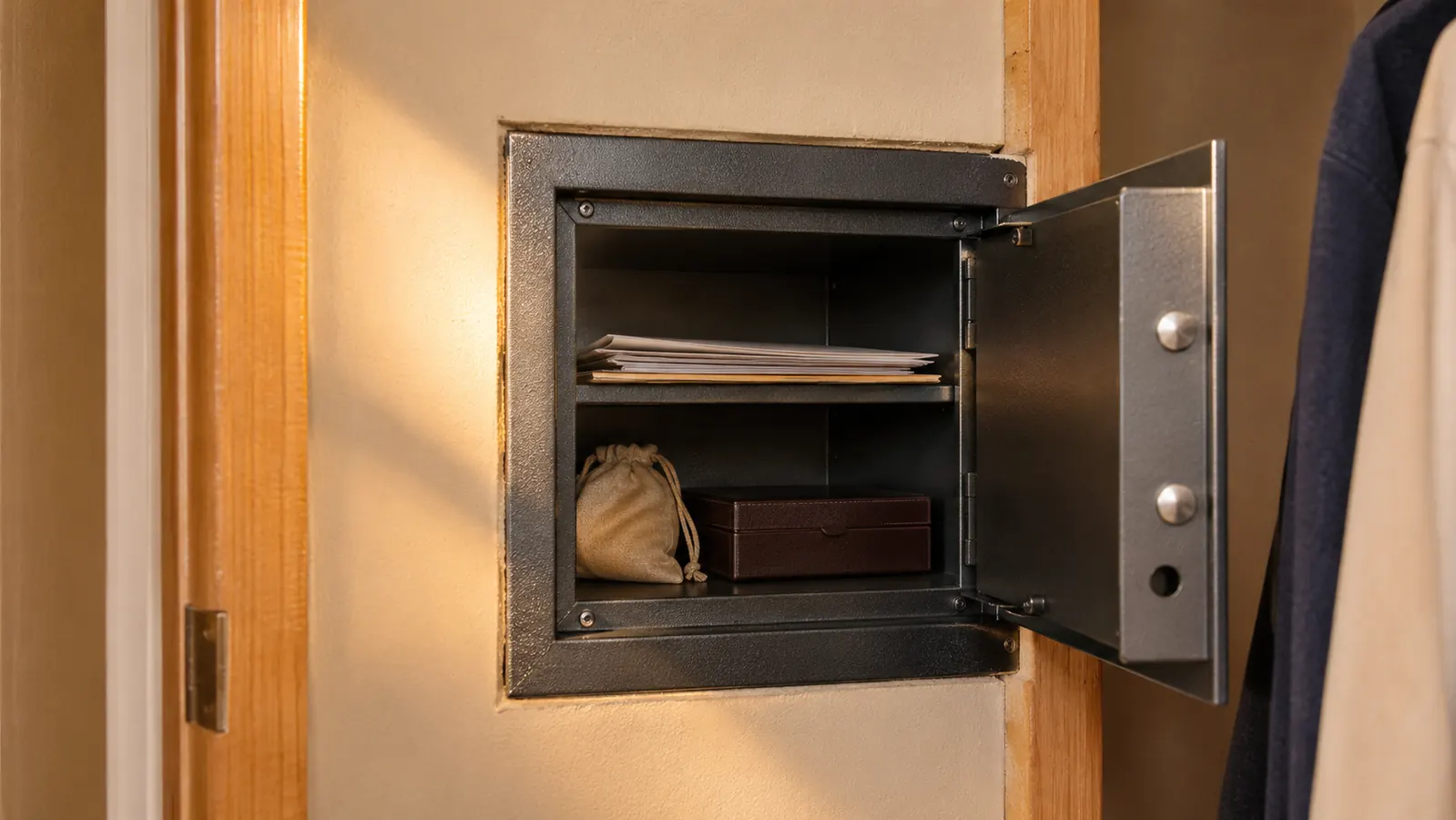
The install is the part nobody talks about, so let me talk about it. You need a wall with studs behind it, no wiring, no plumbing, and no ductwork running through the cavity. I have a two-story house with a basement, and I chose an interior wall in the closet rather than an exterior one, because an exterior wall is where your insulation and your vapor barrier live and I did not want to open that up in an Ohio January. Cut the opening, dry-fit the box, then anchor it. The Paragon Lock & Safe comes with anchor bolts and I used them. A wall safe that is not bolted in is a wall safe somebody can carry out under a coat.
Two years on, the honest downsides. It is not water resistant, and I have never seen a fire rating on it. Neither of those is a small thing, and I will not pretend otherwise. If a pipe lets go above that closet, water is going to find the box. If the house burns, the contents are at the mercy of the fire. My answer for the documents that would hurt to lose is a scan in the cloud and a paper copy somewhere off site. The wall safe is for the things you want out of casual reach, not for the things that need to survive a fire.
The other thing: four inches of depth means a determined person with a pry bar and unlimited time can get it out of the wall. Every safe in a house is a delay, not a wall of granite. The whole point is that the delay is long enough and the discovery is late enough that the person gives up and moves on. A safe nobody can find buys you more delay than a bigger safe sitting on the floor in plain view.
I have also heard the argument that you should just rent a bank box. Fine, if you like driving downtown during banker's hours to look at your own passport. The reason I keep papers at home is that the house is where I am at ten o'clock on a Sunday night when Carol asks where the insurance file went. Convenience is part of security. A safe you do not use is a metal box with a hole in your wall.
What I'd Tell You If We Were Sitting at My Kitchen Table
I would ask you what you are actually protecting, and I would not let you wave your hand at the room. Name the things. If it is the deed, the passports, a few hundred in cash and your mother's rings, then the Paragon Lock & Safe in-wall model is a sensible buy at 0.83 cubic feet and I would put you in one without hesitating. Find an interior closet wall, check for wires, cut it clean, bolt it in, use the full eight digits, and put a reminder in your phone to change the batteries every few months.
If what you are protecting is a coin collection, a full jewelry tray, or anything you need to come through a house fire, then this is not the box and no amount of clever mounting will make it one. Buy fire rated, buy deeper, and accept that it is going to be heavy and ugly and obvious. That is the trade. I would rather you hear it from me at the kitchen table than figure it out later.
Measure the studs, then measure your papers
0.83 cubic feet, 4 inches deep, interior 14.25 by 3.75 by 20.25 inches, anchor bolts included. The right box for documents, cash and keepsakes, and the wrong box for a coin collection.
Amazon See Today's Price on Amazon →