
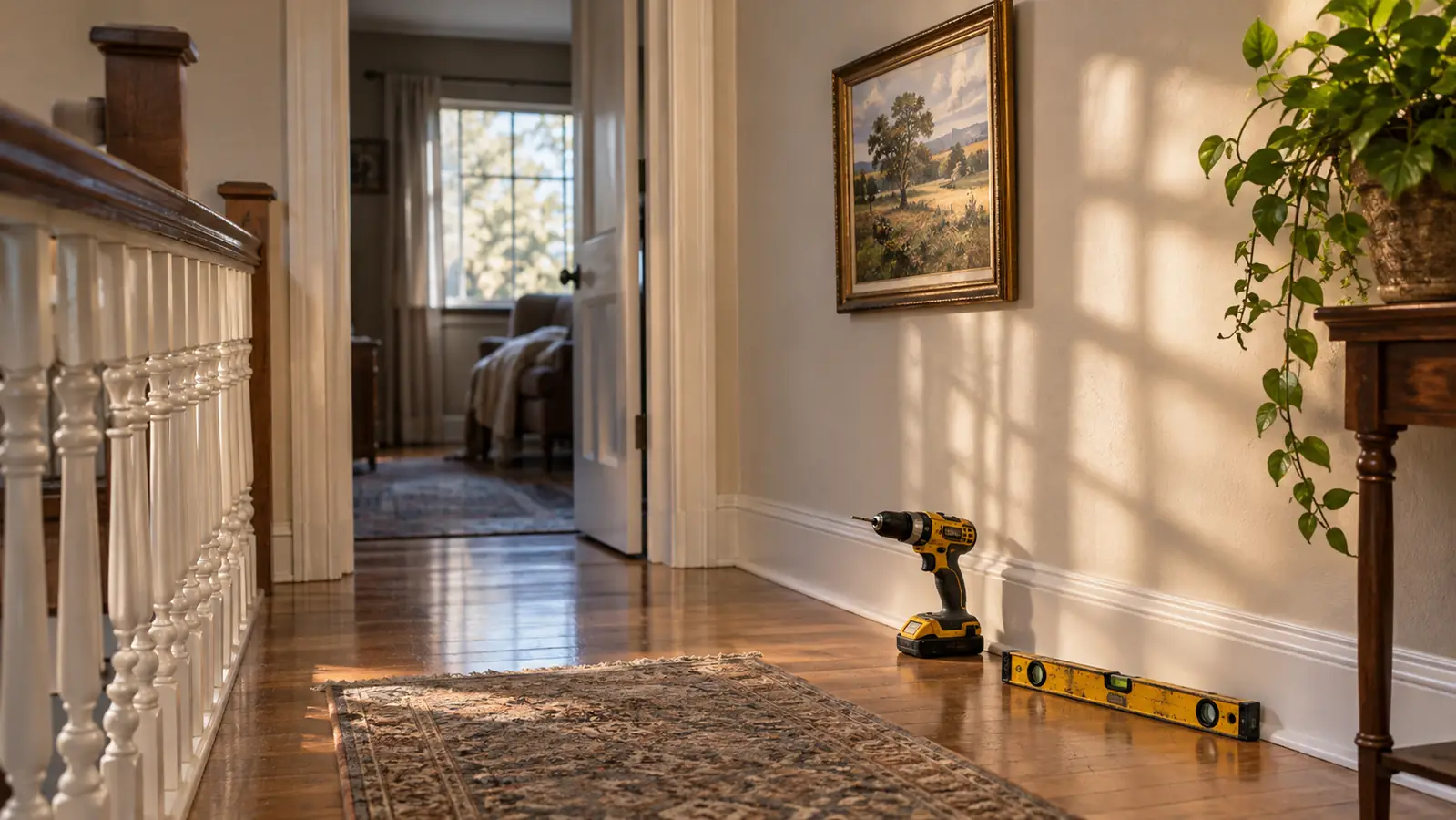
I have cut more holes in other people's walls than I care to count, and I have regretted two of them. Both times the homeowner picked the spot and I did not argue. A wall safe is only as good as the wall you put it in, and the Paragon Lock & Safe in-wall unit is a fair example of a box that rewards a patient install and punishes a rushed one. The cutting takes twenty minutes. Choosing where to cut takes the rest of the afternoon.
People ask me about this style of safe for a simple reason. A floor safe means moving furniture, cutting concrete, or surrendering a corner of the garage. An in-wall unit disappears behind a hanging picture or inside a closet and takes up no floor space at all. This one holds 0.83 cubic feet, opens with a keypad and a backup key, and ships with the anchor bolts in the box. It carries 4.4 stars across more than 4,700 reviews, which tells you the design is sound. What those reviews cannot tell you is whether the person installing it picked the right wall. That part is on you, and on me.
Four inches of wall is all this box needs
The Paragon Lock & Safe in-wall unit is 0.83 cubic feet of alloy steel, keypad plus backup key, anchor bolts included. If you have an interior wall and an afternoon, that is the whole project.
Amazon Check Today's Price on Amazon →What Actually Fits in 0.83 Cubic Feet
The interior measures 14.25 inches wide, 3.75 inches deep and 20.25 inches tall. Read that depth number twice, because it decides whether this safe suits you. Papers lie flat. A manila folder, passports, birth certificates, a deed, an insurance policy, a jewelry box, a cash envelope, a couple of family pieces: all of that fits comfortably and still leaves room to reach in after it.
What does not fit is a shoebox of coins, a binder standing upright, a laptop, or the bulky things you normally shove on a closet shelf. At 3.75 inches deep, this is a document safe that happens to hold jewelry, not a general storage box. That is not a flaw in the design. It is the trade you make for a box that vanishes into a wall. It is also worth saying plainly: the unit is not water resistant and carries no fire rating, so whatever goes inside needs its own protection, and I get to that below.
Three wrong codes and the alarm runs for twenty seconds. That will not stop a determined burglar. It will end an amateur's evening.
Step 1: Choose an interior wall, not a convenient one
Pick an interior partition, ideally between a closet and a hallway or between two rooms. Exterior walls carry insulation and a vapor barrier, and in an Ohio January you do not want a cold steel box interrupting either one. Skip any wall with plumbing or wiring inside it. Look at both sides before you commit: an outlet, a switch, a bathroom on the far side of the drywall, or baseboard heat all tell you to keep walking down the hall.
Height matters more than people expect. Chest to eye level is right. Too low and you are on your knees with a flashlight every time you want a passport. Too high and you need a step stool. Then check the bay itself. Studs are supposed to sit 16 inches on center, which leaves roughly 14.5 inches of clear space, but in a house built before 1960 the spacing wanders and you may find 14 inches in one bay and 18 in the next. The frame on the Paragon Lock & Safe measures 16.5 inches across and laps over your opening, so the clearance inside the bay is what matters, not the frame width.
Run a stud finder with an AC mode across the wall. If the reading is unclear, cut a small inspection hole and look inside with a flashlight before you commit to the full opening. I once watched a man put a saw blade through a drain stack because he was in a hurry. The drywall patch cost more than the safe did.
Step 2: Cut the opening
Set a level and trace around the inside of the frame, not the outside of it. Cut a little inside your line so the frame has drywall to sit on all the way around. A drywall saw with short, shallow strokes gives you control. The blade only needs to break through the far paper, and pushing deeper is exactly how you find the wire the stud finder missed.
Cut the top edge first, then the sides, then the bottom. Working in that order keeps the waste piece in place until you are ready for it, instead of letting it fold into the cavity and tear a chunk out of your opening on the way down. Pull the piece out, vacuum the edges, and test fit the safe before you touch anything else.
If the opening is tight, take a little more off the drywall rather than forcing the box. Drywall is cheap and forgiving. A frame that gets bent on the way in never sits flat again, and a frame that does not sit flat is a gap somebody can get a pry bar into.
Step 3: Put wood where the bolts go
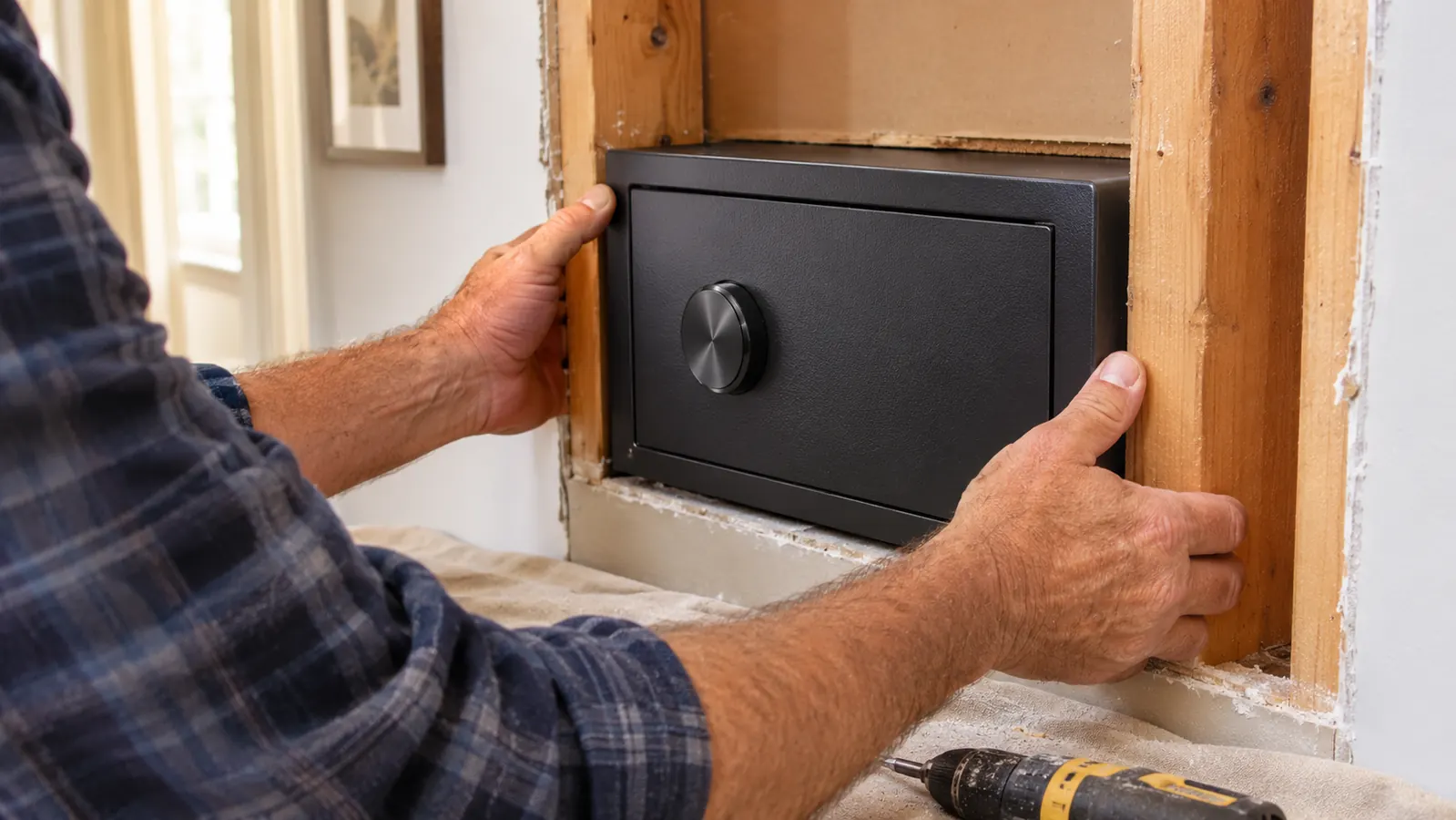
The safe arrives with anchor bolts, and the bolts are only as good as what they bite into. Drywall anchors hold a picture frame. They do not hold a steel box that somebody is working at with a pry bar. Your bolts need to land in studs, or in blocking you install yourself, and on most walls that means adding a little framing inside the cavity before the safe goes in.
Cut short pieces of 2x4 and screw them across the studs at the height where the mounting holes fall, then test fit again. The box is 4 inches deep and a standard 2x4 wall gives you about 3.5 inches of cavity, so expect the safe to sit slightly proud of the drywall or to kiss the back side of the wall. Neither is a problem. It does change how you trim it out later, and it is much better to learn that now than after the hole exists.
Step 4: Set the safe and drive the bolts
Slide the box in and check that the Paragon Lock & Safe frame sits flat against the drywall on all four sides. Shim behind it if the wall is out of true, which old plaster walls almost always are. Mark the mounting holes through the frame, pull the safe back out, and drill pilot holes smaller than your bolts. Then set it back in and drive them down.
Snug is the word I use. Steel frames will pull through drywall if you keep turning, and a bolt that strips out in a soft stud is worse than no bolt at all. Go until the frame stops moving, then stop.
Before you call it done, open and close the door a few times with the box in place. Check the swing, check that the frame does not bind, and check that the keypad face is not being pushed by the drywall edge. Ten seconds of testing here saves a service call later.
Step 5: Program the keypad, test the alarm, then hide it
Change the factory code before the safe goes into the wall, not after. The keypad takes a master code and a guest code, each between 3 and 8 digits, and the guest code is the one you hand to a grown daughter or a house sitter. Pick something you will remember without writing it on the frame.
Then test the alarm on purpose. Enter a wrong code three times and the built-in alarm sounds for twenty seconds. Do that at two in the afternoon, not at eleven at night with a sleeping spouse in the next room. Once it stops, clear it and confirm the correct code still opens the door. Battery life on this unit runs roughly 4 to 5 months depending on use, so set a phone reminder and change it on schedule instead of waiting for the low battery beep.
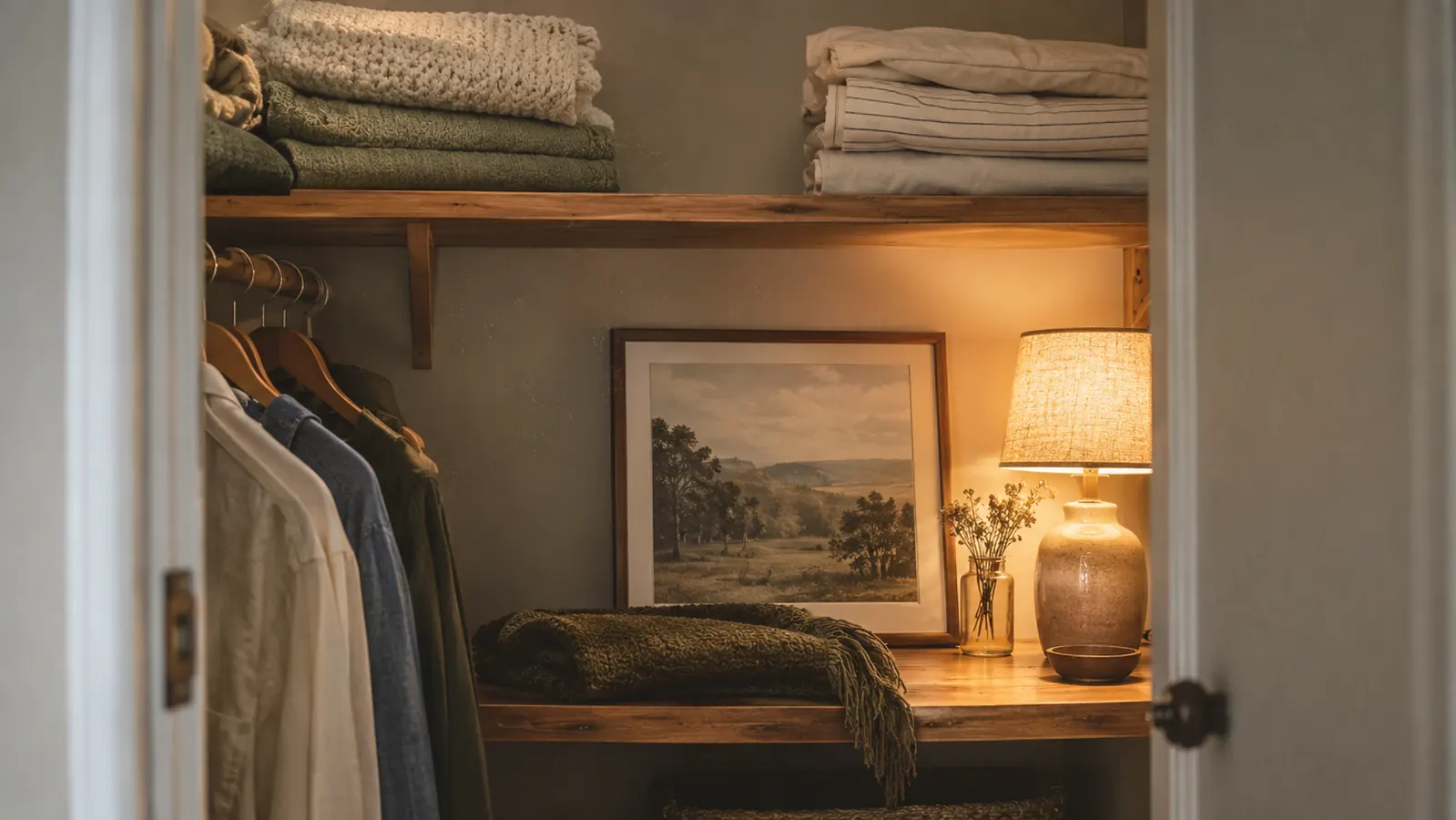
The last step is concealment, and it is the step that decides whether the safe does any work at all. Hang a framed picture over it, set a shelf in front of it inside a closet, or hang a short curtain. Keep the backup key somewhere other than the room the safe is in. And do not walk the whole neighborhood through the project while the drywall dust is still on your shoes.
What Else Helps
Because the unit is not water resistant, give the contents their own protection. A zippered document pouch or a heavy resealable bag costs little and handles the damp that finds its way into wall cavities during a wet spring. A silica packet in each bag is not a bad idea either, and it costs less than the gas to drive to the store.
Photograph everything before it goes in, front and back, and keep that list somewhere else. If the house is ever broken into, you will be filing a claim from memory at the worst possible moment, and memory is unreliable under stress. A folder of phone photos and a copy with your insurance agent solves that in ten minutes.
Two habits worth forming. First, do not store anything in the safe you need every week. A keypad box behind a picture is not a filing cabinet, and you will quietly stop using it if opening it is a chore. Second, decide now what happens to the wall if you ever sell the house. A neatly trimmed opening with a picture over it travels fine. A ragged hole with a safe hanging out of it does not.
Where This Approach Falls Short
I would be doing you a disservice if I let you believe a wall safe covers everything. This one is a burglary deterrent, not a fire safe. It has no fire rating and no water resistance, and a fire that takes the wall will take the box with it. If fire is your real concern, the right tool is a rated safe bolted to a floor, with a wall unit as a supplement rather than a replacement.
It is also small, and it is only as strong as the wall around it. Given time and a pry bar, a determined person can take the whole box, anchor bolts and all. What those bolts buy you is minutes, and minutes are what turn a burglary into an abandoned attempt. Weigh that honestly against what you are protecting. If what you have is a shoebox of silver rather than a folder of papers, this is the wrong box.
The keypad is the other soft spot. Electronic locks are convenient and I recommend them, but they run on batteries, and a battery that dies while you are out of town is a phone call to a locksmith. That is why the backup key exists. Use it once a year so you know it still turns.
Who This Suits, and Who It Does Not
This is the right box for a homeowner with documents, a few keepsakes, some cash, and no interest in giving up a closet floor to a gun safe. It is also the right box for a renter who has permission to cut drywall, which is a shorter list than you would think. It handles the everyday job most people actually have, which is keeping paper out of a drawer where a stranger will look first.
It is the wrong box for firearms, for a coin collection with real weight to it, for anything that needs to survive a house fire, and for anyone who wants to forget the safe exists for a year at a time. If you are in one of those groups, spend the money on a floor safe and bolt it down. If you are in the first group, an afternoon with a drywall saw gets you a better hiding place than most houses on your street have.
Measure the studs before you measure the valuables
0.83 cubic feet, 4 inches deep, keypad plus key, anchor bolts in the box. Pick an interior wall this weekend and the Paragon Lock & Safe disappears behind a picture frame by Sunday evening.
Amazon Check Today's Price on Amazon →