
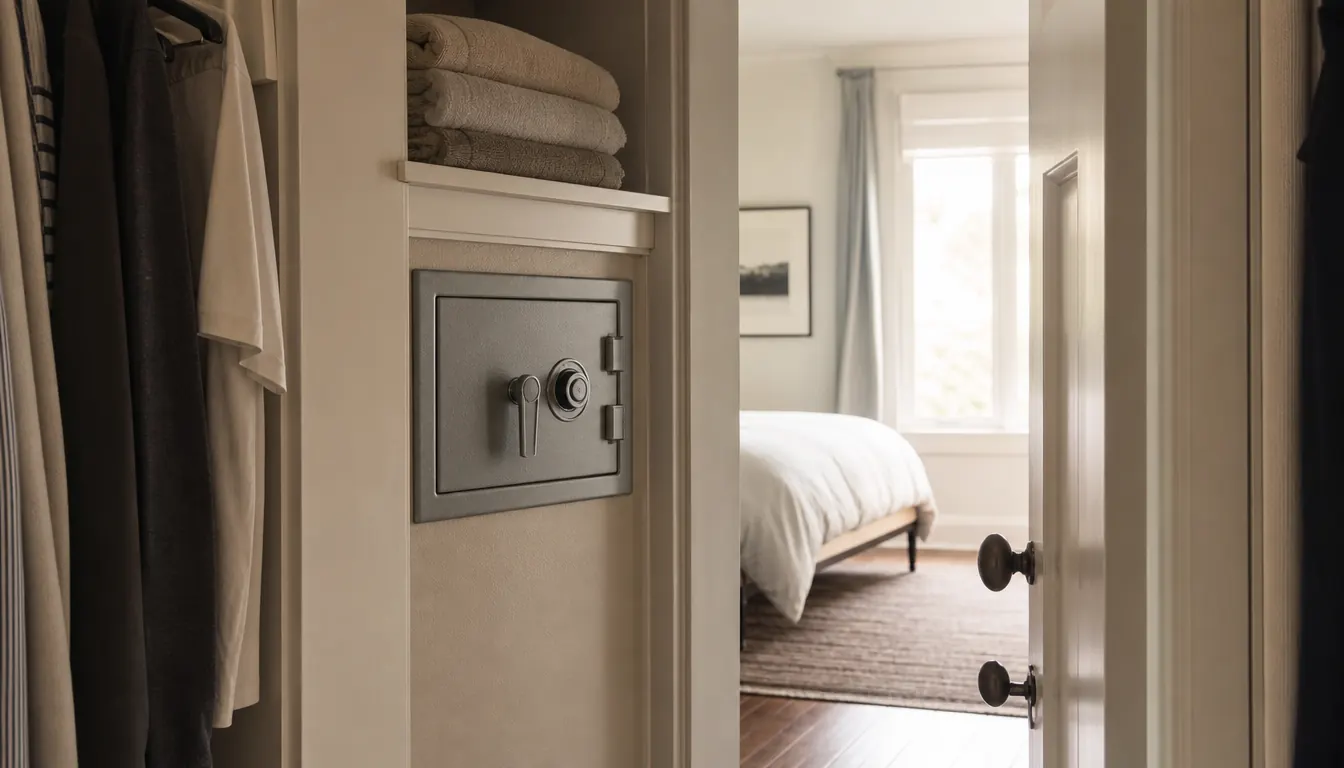
I have taken more wall safes out of walls than I have put into them. That is not a joke about my career. After thirty years of residential locksmith work in Columbus, the calls I remember are the ones where somebody had a wall safe installed by a contractor who never read the instructions, or by a homeowner with a drywall saw and a free Saturday. So when the Paragon Lock & Safe In Wall Safe with the electronic keypad landed on my bench, I did not reach for the drill. I reached for the tape measure.
What follows is the part of a review I usually wish somebody had written for me. The width against real stud spacing. What happens to a steel box in a wall cavity when a supply line lets go above it. How loud a twenty second alarm actually is from behind drywall. What 0.83 cubic feet holds once you subtract the room a door needs to swing. The Paragon Lock & Safe unit is sensible hardware for a narrow set of jobs, and it is the wrong purchase for a few others, and I would rather you hear both before you cut a hole in your house.
The Quick Verdict
A solid shallow wall box with a working keypad, a key override and a tamper alarm. It is not fire rated, not water resistant, and it will not drop between standard studs without carpentry.
Amazon Check Today's Price →The Wall Box Most Closets Actually Need
Four inches deep, so it lives inside the wall instead of eating your closet. Check the current dimensions and the return window before the saw comes out.
Amazon Check Today's Price on Amazon →How I Inspected This One
The unit arrived with anchor bolts in the box, and that matters more than it sounds. A wall safe that is not bolted is a heavy lunchbox. I have watched two of them leave houses in the back of a truck, safe and contents together, because the owner set it in the opening and called it installed. Paragon Lock & Safe includes the hardware to fix it to framing, so the only excuse for a loose install is impatience.
On the bench the exterior measured 16.5 inches wide, 4 inches deep and 22 inches tall, which matches the listing. The usable cavity is listed at 14.25 by 3.75 by 20.25 inches, with a stated capacity of 0.83 cubic feet. The body is alloy steel. The door closes against a stop rather than rattling loose in the frame, and the whole assembly has the feel of a steel box rather than a tin one, which is a low bar that plenty of inexpensive wall safes still miss.
I tested the lock the way I test any lock. Master code, guest code, three wrong codes in a row, and the mechanical key. The keypad is the LED type, and it takes a master passcode and a guest passcode from three to eight digits. The lock is listed as electronic with a key, so there is a mechanical override, and that is the part I care about most. A keypad with a dead battery and no override is a wall decoration with a handle.
The alarm fired on the third wrong code, exactly as the listing says, and ran for twenty seconds. From the next room it is a chirping buzz. Through a closed closet door with drywall between you and it, it is quieter than a smoke detector and it stops on its own. That is the honest read, and I would rather give it to you now than have you find out on the worst night of your year.
One thing I want to be straight about. This is not a burglar-proof box, and nothing in the listing claims it is. A wall safe of this size and depth is a delay device and a privacy device. It keeps the plumber, the babysitter, the visiting cousin and the guy doing your furnace from opening a drawer and finding your mother in law's rings. Against someone who has come to your house with tools and time, it buys you minutes. Steel in a drywall wall always buys minutes. If you want more than minutes you are shopping for a different product and a different budget.
The Fit Problem Nobody Mentions
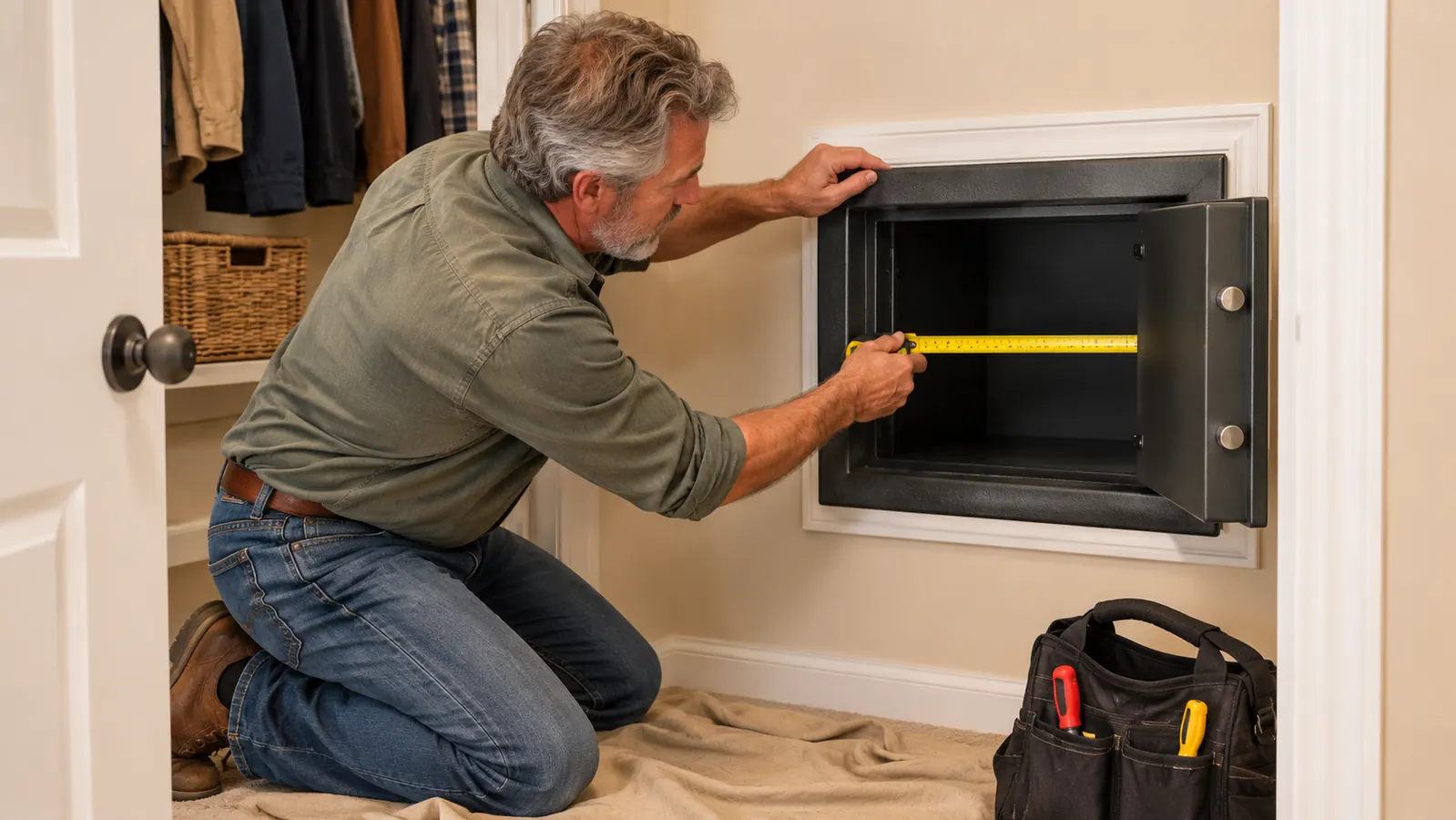
Here is the thing that sends more of these back than any other single issue. The safe is 16.5 inches wide. A wall framed with two by fours at 16 inches on center gives you roughly 14.5 inches of clear space between the studs. Sixteen and a half does not go into fourteen and a half, no matter how enthusiastic you are about it.
So the install is carpentry, not a cut and shove. You open the wall and reframe the bay with a header and trimmer studs. Or you build a cavity in a closet where you have room to work and patch afterward. Or you set it into a block wall or a purpose built recess. None of that is difficult for a competent carpenter. All of it is beyond a drywall saw and an afternoon, and I would not hand this job to somebody who has never framed an opening.
The depth is the friendly number. Four inches front to back means the body sits inside a normal interior wall, which runs about four and a half inches with drywall on both faces, so it does not tent out into the closet or need a bump on the far side. The 22 inch height is the number to check against your closet rod, your shelf line, and the outlet you forgot was there. Mark the studs with a finder, check for wiring and plumbing before the blade goes in, and measure twice. I have watched a Saturday project turn into a drywall repair and an electrician's bill over exactly this step.
Placement deserves a minute of thought too. The instinct is the master closet, and it is not a bad instinct, but it is the first place anyone with bad intentions looks. A hall linen closet, the back of a coat closet near the front door, or a wall behind a hinged picture are all better hiding spots, and all of them are still places you can reach on a Tuesday morning without moving furniture. Pick a spot you can stand in front of comfortably, at chest height, with a light nearby. A safe you have to kneel on a hard floor to open at 6 a.m. is a safe you will stop using.
Sixteen and a half inches of safe does not go into fourteen and a half inches of stud bay. This install is carpentry, not a cut and shove.
The Keypad, the Key and the Twenty Second Alarm
The lock is listed as electronic with a key, and that combination is right for a house. The electronic side handles daily use: a master passcode you set yourself, a guest passcode for the person who feeds the cat or the daughter who visits from Cincinnati, and codes anywhere from three to eight digits. I set a six digit master and a four digit guest code on the bench and both took on the first try.
The alarm sounds for twenty seconds when a code is entered wrong three times in a row. Understand what that is before you buy. It is a tamper noise, not a burglar alarm. Nobody is called. Nothing is dialed. It makes a racket inside a wall for twenty seconds, then it stops, and the safe stays locked. If somebody is standing in your closet in the dark, twenty seconds of unexpected noise is a genuine deterrent, and it may be the most useful feature on the unit. If you are expecting it to summon help, you will be disappointed. No wall safe at this size does more than this one does.
Two chores for day one, before the safe goes into the wall. Change the master code from whatever it ships with. Everybody who has ever bought this model knows the factory code, and it is the first thing anyone with a search engine will try. Then find the mechanical key, test it in the lock, and put it somewhere that is not taped to the safe, not in the drawer directly beneath it, and not in the little bag the safe came in, which is where nine out of ten people leave it.
Batteries are the other small thing. The listing puts battery life at four to five and does not say whether that means months or years, which is not helpful, so plan for the shorter reading. Keep a spare set on the shelf above the safe. A keypad that dies while the override key is in a drawer in the garage is an irritating Tuesday, and it is entirely avoidable.
It Is Not Water Resistant and It Is Not Fire Rated
The listing is refreshingly blunt about water: not water resistant. Most buyers skim right past that line. A wall cavity is exactly where a house routes its plumbing, its condensate line and its roof leak, and water inside a stud bay runs downhill until something stops it. Your safe is the something.
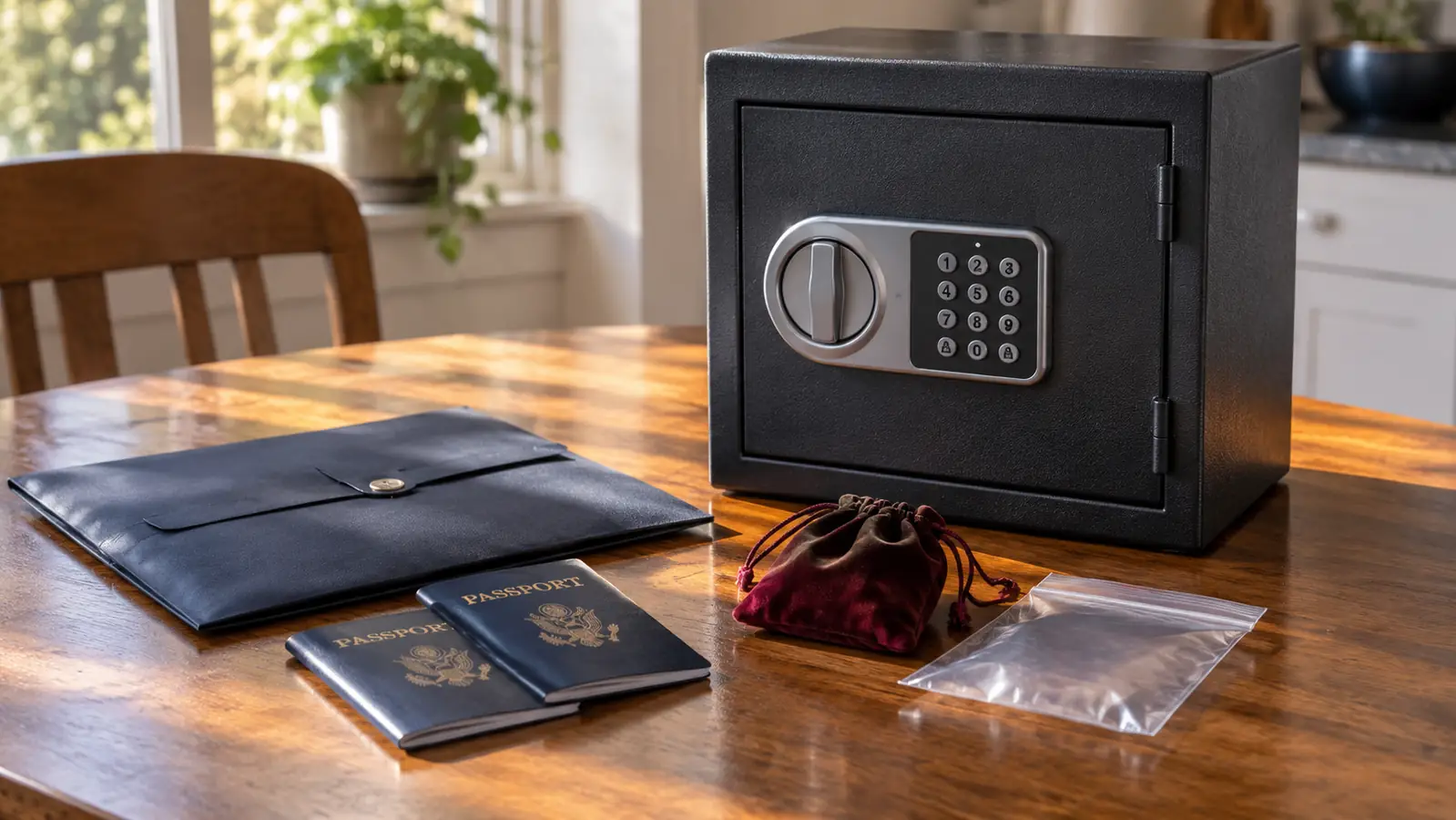
In practice that means three things. Do not mount this on a wall with a bathroom, a laundry or a water heater on the floor above it if you have any other option. Give a wide berth to an exterior wall, where the back of the box gets cold in an Ohio January and the warm damp air from the room meets it and condenses, quietly, for months. And put the passports, the birth certificates, the deed and anything with a photograph on it inside a sealed freezer bag before it goes in the safe. The bag costs almost nothing and it is the difference between a damp envelope and a ruined one.
Fire is a separate honest conversation. Nothing in the listing claims a fire rating, and a plain steel box set into drywall does not have one. Steel conducts heat. Drywall buys a few minutes in a small fire and not much in a big one. Paper in a cavity like that does not survive a house fire, and I would not tell you otherwise to make a sale. If fire is your main worry rather than burglary and casual snooping, you are shopping for a rated chest or a rated floor safe, and a wall box is the wrong tool for that job. This product is about keeping hands off your things, not flames off them.
I will add the obvious. Insurance paperwork, a photographed inventory and a backup of the digital copies off site will do more for you after a loss than any box at this size. The safe protects the originals from the everyday risks. The paperwork protects you from the bad day.
What Actually Fits Inside
The interior is listed at 14.25 by 3.75 by 20.25 inches with a stated capacity of 0.83 cubic feet. In plain terms, it is tall, it is shallow, and it rewards planning. You are packing a stack, not filing a drawer, and the 20.25 inch height is the number that governs how you load it.
What goes in comfortably: a deed folder, birth certificates and passports in a bag, a cash envelope, a small pouch for Carol's mother's rings, and my father's watch in its box. What does not: a shoebox of receipts, a laptop, a binder of coin sleeves, the envelope your tax preparer hands you in April, or anything long and rigid. If you are picturing a shelf you can slide a rifle onto, this is not that safe and no in-wall unit at this depth is.
Do the loading on the kitchen counter before the safe goes into the wall. Lay everything out, decide what actually earns a spot, and photograph the pile with your phone. In three years you will not remember whether the second passport is in there, and the photo answers the question in ten seconds. It also tells your family what to look for if something happens to you, which is the part of this nobody likes to think about.
What I Liked
- Keypad plus mechanical key override, so a dead battery is not a lockout
- Alarm sounds for twenty seconds after three wrong codes, a real deterrent in a closet
- Only 4 inches deep, so it sits inside a normal interior wall without eating closet space
- Anchor bolts included, which is not universal at this size and price point
- Alloy steel body with a tall cavity that swallows folders and standing envelopes
Where It Falls Short
- 16.5 inches wide, so it will not drop between studs at 16 inches on center without reframing
- Not water resistant, which is a real problem in a wall full of pipes
- No fire rating claimed, so do not expect documents to survive a house fire
- The alarm is local only and stops after twenty seconds
- 0.83 cubic feet looks bigger on a screen than it does in the opening
Who This Is For
This is for a homeowner who owns the wall and is willing to treat the install as a small carpentry project, either doing it properly or hiring someone who can. It suits a person with a short, specific list: papers, cash, jewelry, a couple of heirlooms, the things currently living in a sock drawer or a filing cabinet that you would rather not have walked off in a break-in. It suits a closet with a sensible interior wall and room to work, and it suits someone who wants keypad access without hunting for a key every time the granddaughter visits. If you have been putting off a floor safe because you do not want to give up a square foot of closet floor to a heavy box, this is the trade that solves it.
Who Should Skip It
Skip it if you rent, because you cannot cut a framed opening in a wall you do not own and a landlord will not thank you for trying. Skip it if fire is your primary fear, since nothing here claims a rating and a rated chest is the honest answer. Skip it if the only wall available backs onto a bathroom or sits on an exterior wall, because you are installing a steel box in the one place in the house where water collects. Skip it if you need to store a laptop, a shoebox or a long gun, because the cavity will not take any of them. And skip it if you want a safe that defeats a determined burglar with tools and time, because no wall safe at this size and depth does that, and anyone who tells you otherwise is selling, not advising. If your wall and your list match, though, the Paragon In-Wall Safe does the job it was built for and it does it without drama.
If Your Wall and Your List Match, This Is the One
Keypad with a key override in reserve, a tamper alarm, and the anchor bolts already in the box. Measure your studs before you order, then measure them again.
Amazon Check Today's Price on Amazon →